
Guide / enterprise, honestly
Enterprise management software solutions
"Enterprise" sells scale; most businesses searching this need operations that work, not a suite that owns them. What enterprise management software really delivers, which parts a growing business needs first, and where BSimple deliberately stops.
The key facts
- What the suites promise: one integrated platform across finance, supply chain, operations, people and reporting — configured through long implementations.
- What most searching businesses need first: a trustworthy operational record — stock, orders, purchasing, invoicing — which is cheaper and faster than any suite.
- The honest scale test: enterprise suites earn their cost at multi-entity complexity; the trigger is organisational, not aspirational.
- BSimple's position: operations-first software for wholesale, manufacturing, distribution and trade — ERP-class operations without pretending to be an ERP; from $180/month AUD.
- The full picture: how the inventory record works is the hub page for everything above.
- 01The key facts
- 02What "enterprise management software" actually delivers
- 03The parts a growing business needs, in order
- 04BSimple's answer, stated plainly
What "enterprise management software" actually delivers
The category bundles two different products. The enterprise suites — the ERP-class platforms — integrate finance, supply chain, manufacturing, HR and analytics into one configured system of record, bought through partners and implemented as projects. The "solutions" marketing layer sits on top of everything from spreadsheets to mid-market tools, which is why searches for enterprise solutions return everything from genuine suites to repackaged invoice apps.
The suites deliver real value at real scale: one record across entities and countries, controls that survive audits, reporting that boards trust. The price is structural — implementation measured in months and consultants, specialist administration, and process rigidity the organisation must adopt. That trade is correct when complexity demands it. The honest error is buying the suite for the label when the underlying need is smaller: a business whose stock figure lies and whose orders get re-keyed does not have an enterprise problem; it has an operations problem with a cheaper name.
The parts a growing business needs, in order
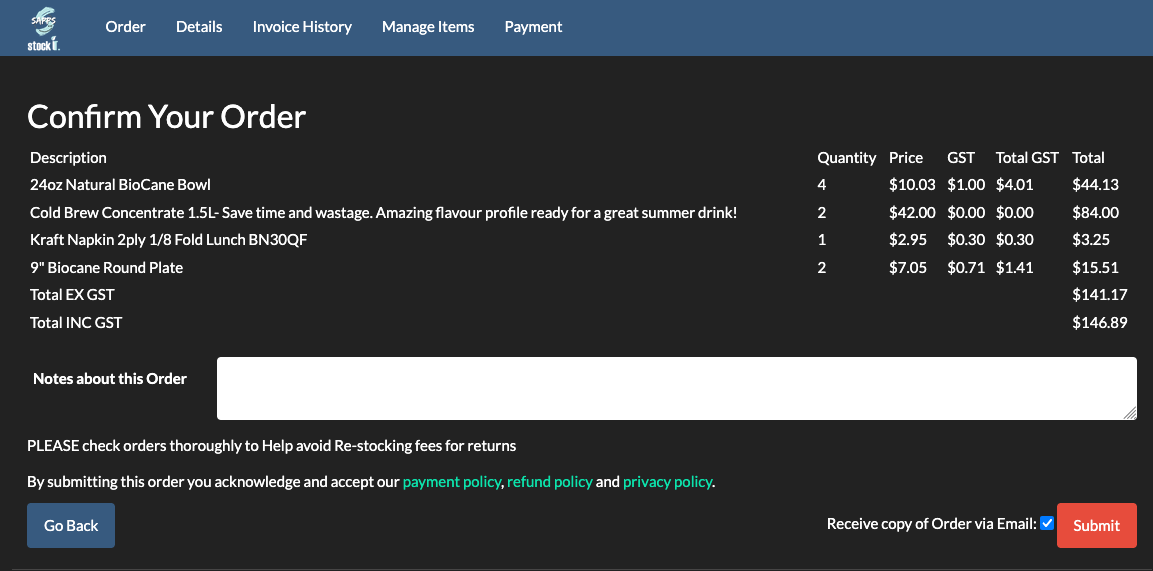
The operational record first. Live quantities across locations, movement-based history, reorder levels, purchasing with invoice matching, orders from capture through pick-and-pack to invoice. This is the backbone every enterprise suite also builds first — and it stands alone without the suite around it.
The accounting handoff second. Invoices push to the accounting system; payment status mirrors back. Compliance and money stay where the accountant works.
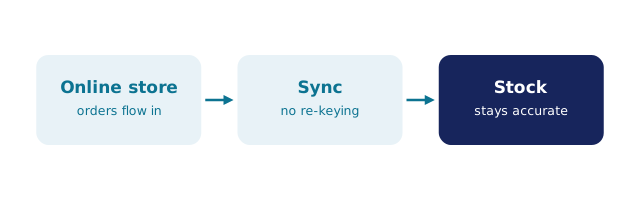
Automation at the seams third. Storefront order import, customer self-service, API access for the tools the business already uses — the integrations that stop the record drifting from reality at the edges.
Reporting, HR, and the governance layers come with scale, and mostly attach to the record rather than replace it. The definition of the enterprise category maps the vocabulary, and the ERP boundary question covers when the suite genuinely becomes necessary.
BSimple's answer, stated plainly
We build BSimple, so weigh that: it is not an enterprise suite and does not pretend to be one. It is operations-first business management software for wholesale, manufacturing, distribution and trade businesses — live multi-location inventory, batches and traceability, recipes and production runs, purchasing from demand with price-variance flags, customer ordering portals, invoices to Xero or MYOB (US integrations rolling out), plus a public REST API and MCP endpoint for the automation layer. No HR or payroll, no MRP scheduling, no native storefront — the enterprise-suite subjects are deliberately left to the tools built for them.
The pitch is the honest inversion of the category: instead of a suite that owns every process and an implementation to match, one operational record that works from $180/month AUD, adopted in days — the trial is the full product. When the business genuinely reaches enterprise complexity, the record it has been keeping is the same one the suite would demand; nothing has been painted into a corner.
Frequently Asked Questions
What is enterprise management software?
Software that manages a business's core functions in one integrated system — the ERP-class suites — plus, in marketing usage, almost anything labelled for companies. The genuine article integrates finance, supply chain, operations and people through a long, partner-led implementation.
Do small businesses need enterprise management software?
The needs, yes — accurate stock, clean purchasing, order fulfilment, trustworthy reporting. The suite, usually not: those needs are served first by an operations system with an accounting handoff, at a fraction of the cost and implementation weight. The suite waits for genuine multi-entity complexity.
What does BSimple do compared with an enterprise suite?
It runs the operational backbone — inventory, orders, purchasing, invoicing, batches, portals — on one record, and deliberately stops: accounting stays with Xero or MYOB, and HR, payroll and MRP scheduling are out of scope. ERP-class operations, without the suite.
When is the enterprise suite actually the right call?
At multi-entity, multi-country scale with complex manufacturing and compliance obligations — where one integrated system of record across everything outweighs the implementation cost. That trigger is organisational reality, not growth ambition.
How do I test the operations-first route?
Load real products into the trial and run the backbone: an order from portal to invoice, a purchase from demand to receipt, a stocktake with a correction. If the record holds, the enterprise question can wait until the business — not the marketing — demands it.

BSimple