
Guide / the starter template
A company management system template that works
Before software, there is structure: five registers, a few habits, and rules that keep them honest. Here is the template — and how it graduates into a real system.
The five registers
- Products: code, description, cost, location, calculated on-hand — the identity layer.
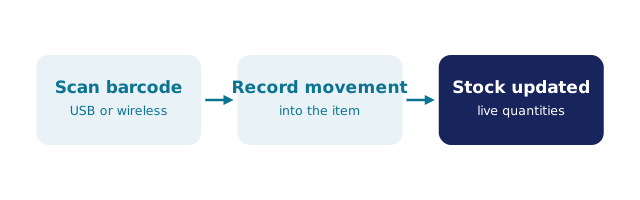
- Movements: one row per event — date, code, signed quantity, action, who. The only place quantities change.
- Suppliers and purchase orders: who was ordered from, what, when — the buying trail.
- Orders: customer, products, quantities, dates, status — the promise trail.
- Counts: date, section, counted, variance, explanation — the verification trail.
- The wider system: inventory management end to end maps the whole record this page sits in.
- 01The five registers
- 02The rules that make the template honest
- 03Where the template graduates into software
The rules that make the template honest
A register without rules is a diary. Three rules carry the whole template. Movements are the only input: on-hand is calculated from the movement register, never typed — so every quantity can be explained. Every movement names its document: the receipt names its purchase order, the pick names its order, the adjustment names its reason — orphan movements are where truth goes missing. Counts verify, they do not edit: a variance is recorded, explained, and then adjusted — the count register is an audit trail, not a shortcut.
With the registers come the habits: log at the moment of movement, reconcile weekly, review variances while the trail is fresh. The free inventory template guide builds this structure in spreadsheet form, and the Excel-and-scanner guide adds scanning to it.
Where the template graduates into software
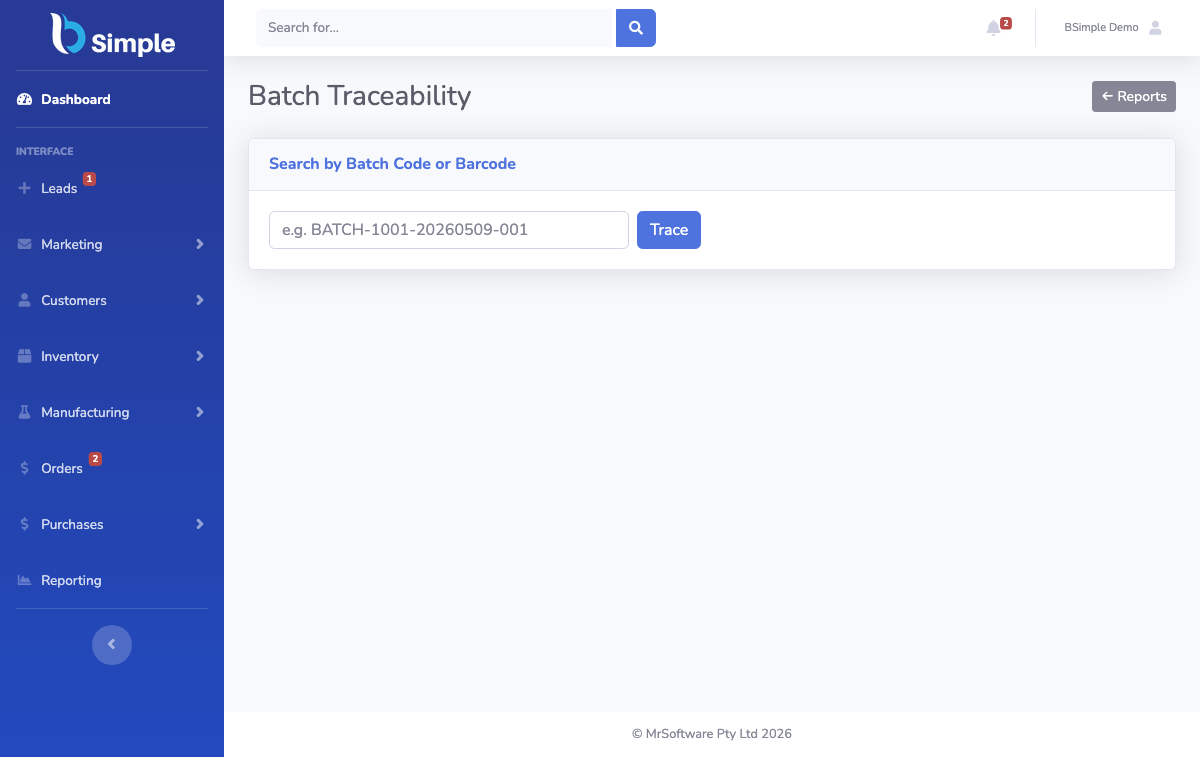
The template's ceiling is structural: one maintainer, no allocation, no shared live view. The graduation is natural, because the registers are the software's data model — products, movements, orders, purchase orders, counts map one-to-one onto a system of record. Moving means the registers stop being maintained by hand and become documents on a live record: allocation enforces the promise trail, purchasing links to demand, the audit trail is automatic, and the accounting handoff pushes approved invoices to Xero or MYOB.
We build BSimple, so weigh that: the free trial imports your template's registers — start here — and plans run from $180/month (AUD) once the fit is proven. The template phase is not a failure; it is where the data discipline gets built that makes software worth having. The types guide shows the categories waiting at the top of the ladder.
Frequently Asked Questions
What registers does a company management system need?
The five above: products, movements, suppliers and purchase orders, orders, counts. Together they answer what exists, how it moved, who it was bought from, who it was promised to, and whether the record is still true. Anything else — pricing, customers, batches — hangs off these.
Why must on-hand be calculated, never typed?
Because a typed number has no history: when it is wrong, there is nothing to check. A calculated on-hand derives from the movement register, so every discrepancy traces to events — which is the difference between a record you argue with and a record you query.
When should we move from template to software?
At the first structural failure: a second maintainer, an order promised against stale quantities, a variance the registers cannot explain. The registers export cleanly — the graduation is a data migration, not a rebuild. The vendor guide covers choosing where to migrate.
Does BSimple work from these registers directly?
Yes — the registers map to its data model: products, movements, orders, purchase orders, counts. Import them in the trial and run a real week; plans from $180/month (AUD) include the whole record, from the free trial onward.
BSimple