
Guide / for builders
Company management systems on GitHub — a field guide
The repos claiming to run "an entire company" are worth studying and rarely worth running. What they contain, the checks before deploying one, and the modular path that ages better.
The key facts
- "Company management system" repos promise everything: CRM, HR, inventory, invoicing, projects in one script — breadth that demos well and audits badly.
- The checks before running one: licence, activity, the schema test per module, and security — an all-in-one script holding customer and financial data is a large attack surface.
- The modular alternative ages better: one deep record per truth (inventory, accounting), integrated at the seams — the GitHub landscape per module maps it.
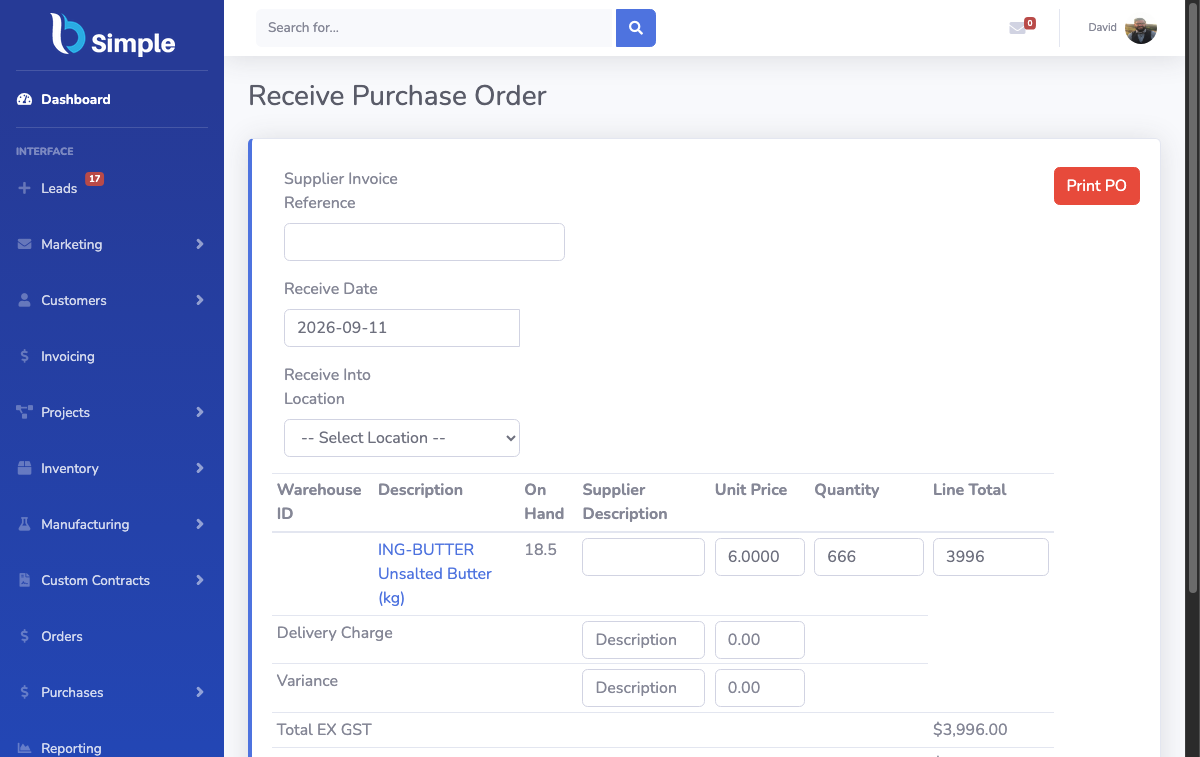
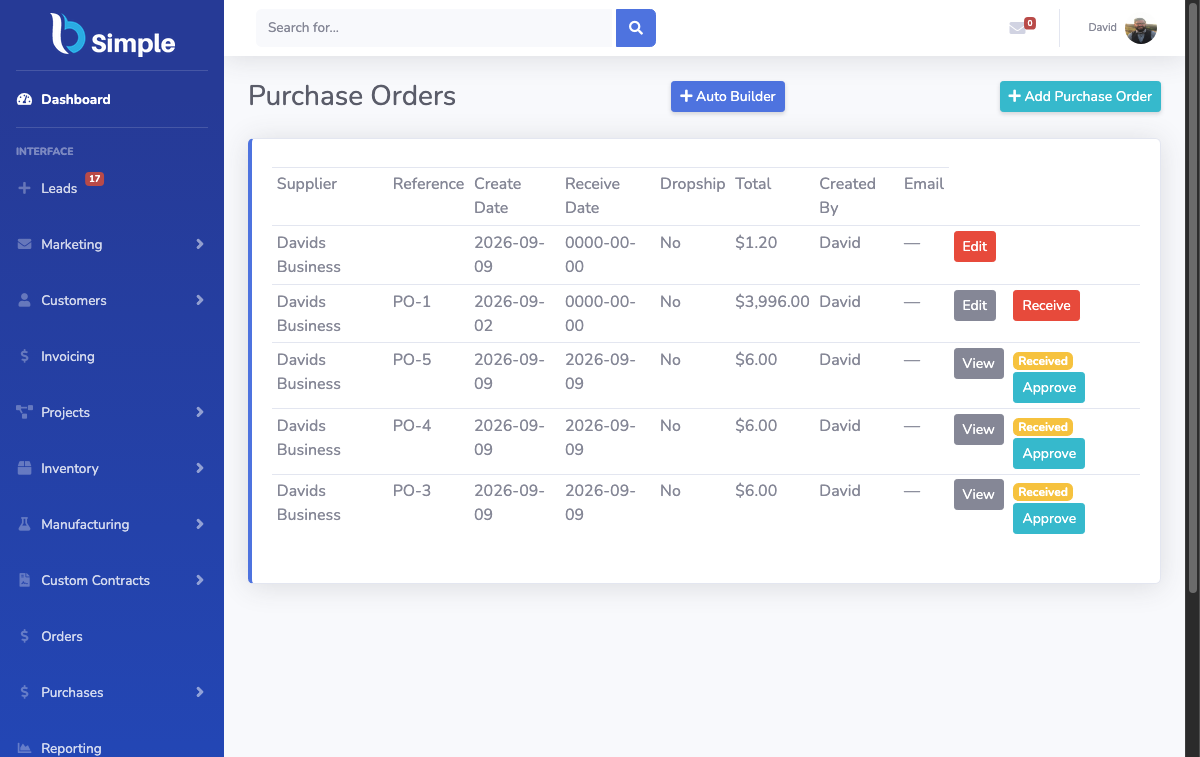
- BSimple is commercial and not on GitHub — stated plainly; it occupies one module's job deeply: the operations record.
- Context: the full inventory system holds the wider system, this page one stop in it.
- 01The key facts
- 02What "company management system" repos actually contain
- 03The checks before running any of them
- 04The modular alternative — and our stake in it
What "company management system" repos actually contain
Search GitHub for company management and you meet a distinctive genre: dashboard frameworks claiming CRM, HR, payroll, inventory, invoicing, projects and support tickets in one install — often marketplace-script ports, occasionally earnest solo projects. As studies in breadth they are interesting; as systems they share a structural weakness: every module is shallow, the data models do not interlock (inventory that does not truly connect to invoicing), and the security surface is enormous — one codebase holding customer lists, employee records and financial data, written by an author who has moved on.
That does not make the genre useless. It makes it learning material and scaffolding, not infrastructure. The inventory-specific landscape applies the same reasoning to the module this site knows best.
The checks before running any of them
Licence and provenance. MIT or Apache for freedom; GPL with obligations; none — walk away. A named author with recent commits and answered issues, or an anonymous archive you will maintain alone.
The schema test, per module. The inventory module check applies: movements and derived quantities, or editable totals? Apply it to every module you actually need — breadth with unsound cores is the genre's signature failure.
Security, seriously. One codebase holding everything is one breach holding everything: default credentials, unpatched dependencies, no HTTPS story. Isolate the deployment, change everything, and accept that patching is yours forever.
The tail. Auth, backups, import from your real data, reconciliation — the parts no repo ships. Budget the tail honestly; the project-planning page scopes it for the inventory module alone.
The modular alternative — and our stake in it
The pattern that ages better is one deep product per record: accounting in a real accounting platform, operations in a real operations record, connected at designed seams — reviewed handoffs, APIs, exports. Fewer regrets, because each record is maintained by someone whose job it is.
We build BSimple, so weigh that: it is commercial software, not on GitHub — the operations module of that modular picture, done deeply: live multi-location stock, batches, purchasing, order-to-invoice, customer portals, invoices pushed to Xero or MYOB (US integrations rolling out), from $180/$250/$399 per month AUD with the trial as the full product. Study the mega-scripts for breadth; run the deep ones for truth — the code-vs-product arithmetic prices the difference.
Frequently Asked Questions
Are there complete company management systems on GitHub?
Complete-looking, yes — breadth is the genre's selling point. The checks above (licence, schema per module, security, tail) usually reveal that breadth was demos, not depth. Study them; deploy them carefully at best.
Is BSimple on GitHub?
No — commercial software with no published source, stated plainly. It occupies one module's job — the operations record — as a maintained product rather than a study repo.
What is the biggest risk in an all-in-one GitHub script?
Concentration: one unmaintained codebase holding customer, employee and financial data is a single point of failure for the whole company. Modular records limit blast radius and keep maintenance honest.
Can we take one module out of a mega-repo and use it?
Sometimes, licence permitting — and it is the genre's best use: harvest the inventory module if its schema passes the movement test, then maintain it deliberately as your own. The code-reading guide shows what to check.
What does the modular path cost?
One subscription per record — BSimple is $180/$250/$399 AUD monthly for operations, plus your accounting platform — against the tail of maintaining an all-in-one alone. The trial prices the operations side on your products.

BSimple