
Guide / workforce boundary
Workforce systems and business management — the honest boundary
Rosters, timesheets, payroll: the workforce layer is its own discipline. What workforce systems do, where they connect to operations, and why BSimple deliberately does not build one.
The key facts
- A workforce system handles people-management: scheduling, time and attendance, leave, onboarding, and (via specialists) payroll.
- BSimple has no HR or payroll — deliberately. Workforce tools and operations tools share records best when each does its own job.
- The genuine connection points: who picked what (audit trail), who needs stock moved (task visibility), and adoption — systems fail when the team does not use them.
- The boundary is the feature: accounting stays with Xero/MYOB, workforce stays with workforce tools, operations truth lives here.
- 01The key facts
- 02What a workforce system actually is
- 03Where workforce meets operations — the real connections
- 04BSimple's boundary, stated plainly
What a workforce system actually is
The workforce layer manages people and their time: rosters and shift scheduling, clock-on/clock-off and attendance, leave requests, onboarding checklists, certifications and training records — with payroll usually handled by a specialist connected to it (in Australia, that ecosystem is its own market). It is a genuine discipline with real compliance weight, and it is categorically different from operations: one manages people and hours, the other manages stock and orders.
Suites that bundle both exist, and the bundle is the pitch — one vendor for everything. The cost of the bundle shows up as compromise: workforce features shallow enough to fit the suite, or operations features shallow enough to fit the bundle. The alternative is a deliberate boundary, which is the position below.
Where workforce meets operations — the real connections
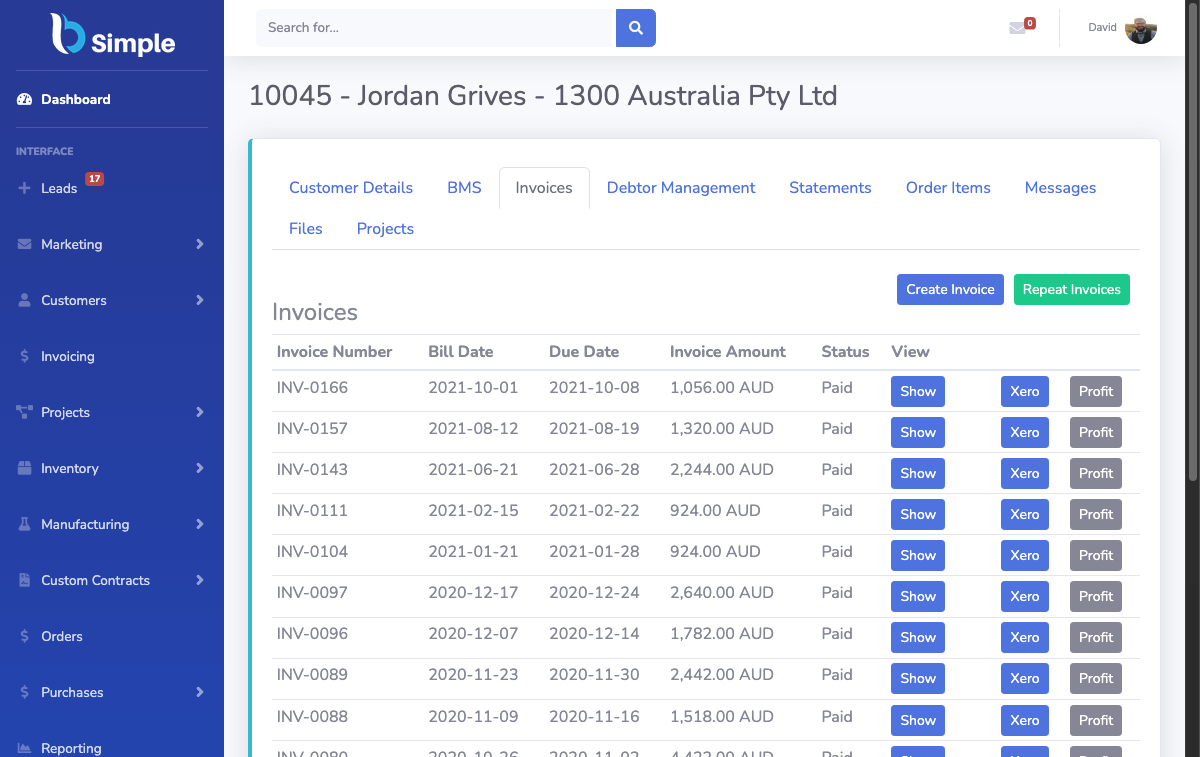
The audit trail answers the people questions. "Who received that delivery, who adjusted that quantity, who approved that invoice" — an operations record with a full transaction history already answers what workforce-style oversight is usually bought for, at least inside the warehouse. BSimple records every transaction with its author; the operations dashboard and history are the oversight.
Tasks need stock truth, not rosters. Picking, packing, counting and receiving are the operational "workforce" activities — and they belong to the record that holds the stock. A picker does not need a rostering app; they need the pick list to be right. The barcode and scanning layer is how floor work connects to the record.
Adoption is the shared failure mode. Both layers die the same death — staff working around the system. Whatever tools you run, the test is whether the floor records movements as they happen, not whether the org chart is digitised.
BSimple's boundary, stated plainly
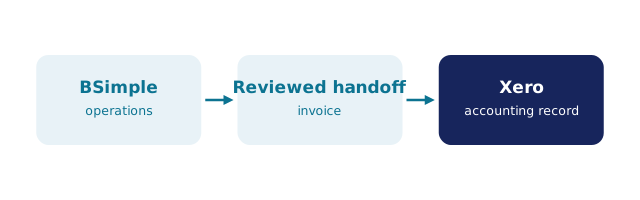
We build BSimple, so weigh that: no HR, no payroll, no rostering — deliberately. The workforce layer deserves a product that owns the compliance; BSimple owns the operational record for wholesale, manufacturing, distribution and trade businesses: live multi-location stock, orders, purchasing, invoicing, portals, with accounting handed to Xero and MYOB (US integrations rolling out). The division is the same one behind the accounting boundary: each system does the whole of its job, and the seams stay small. If you are mapping the wider category, the BMS definition and the software examples place the workforce layer among the others.
Frequently Asked Questions
Does BSimple include workforce or HR features?
No — no rostering, timesheets, leave or payroll, deliberately. Staff activity is visible where it touches stock: the audit trail records who did what to the record. For the people layer, a workforce tool is the right product.
Can we see which staff member did what in BSimple?
Yes — every transaction is attributable: receipts, adjustments, approvals and counts all carry their author. It is operational oversight, not HR monitoring, and that distinction is the design.
How does BSimple connect to payroll or workforce tools?
It does not, as a claimed integration — the layers are deliberately separate. If hours data matters to your books, your workforce and accounting tools own that exchange; BSimple's handoff is the operational record to the accounting system.
Is a bundled suite better than separate operations and workforce tools?
Bundles reduce vendor count and often deepen neither layer. The test is whether each layer still does its whole job inside the bundle — judge it per job, not per logo count.
What does BSimple cost, given it excludes HR?
$180/$250/$399 per month AUD with core operations in every plan. Excluding HR and payroll is part of why the price stays there — the trial shows what that focus buys on your products.

BSimple