
Guide / the decision
Who needs a business management system — and who does not yet
Four signals say yes: a second person needing the same truth, a second location, repeat orders at scale, numbers nobody can explain. No signals? Wait — honestly.
The key facts
- The need is triggered by shared truth, not headcount: the moment two people need the same number to be true at once, systems beat memory.
- The four signals: second person, second location, repeat orders at volume, and unexplained numbers in the current record.
- The honest no: one person, one site, slow volume — a disciplined spreadsheet is genuinely enough, and no vendor urgency applies.
- BSimple's stake is visible: we sell the system ($180/mo AUD up), so the counter-case is printed here, not buried.
- 01The key facts
- 02Signal 1 and 2: the second person, the second location
- 03Signal 3 and 4: repeat orders, unexplained numbers
- 04BSimple, for those who signalled yes
Signal 1 and 2: the second person, the second location
The second person. When one person ran the record, the spreadsheet worked because their head held the context: what was promised, what arrived, what the number meant. The moment a second person needs that truth — a salesperson checking stock while someone else packs, a bookkeeper reconciling while orders arrive — the file becomes a rumour mill. Shared truth is the first thing software does better than a document ever will.
The second location. A shop and a back room can share one number; a warehouse, a shop and two vans cannot. Each location holds real quantities that change independently, and "check out the back" becomes a phone call unless locations are first-class in the record. The multi-location pattern is where operations software starts earning its cost.
Signal 3 and 4: repeat orders, unexplained numbers
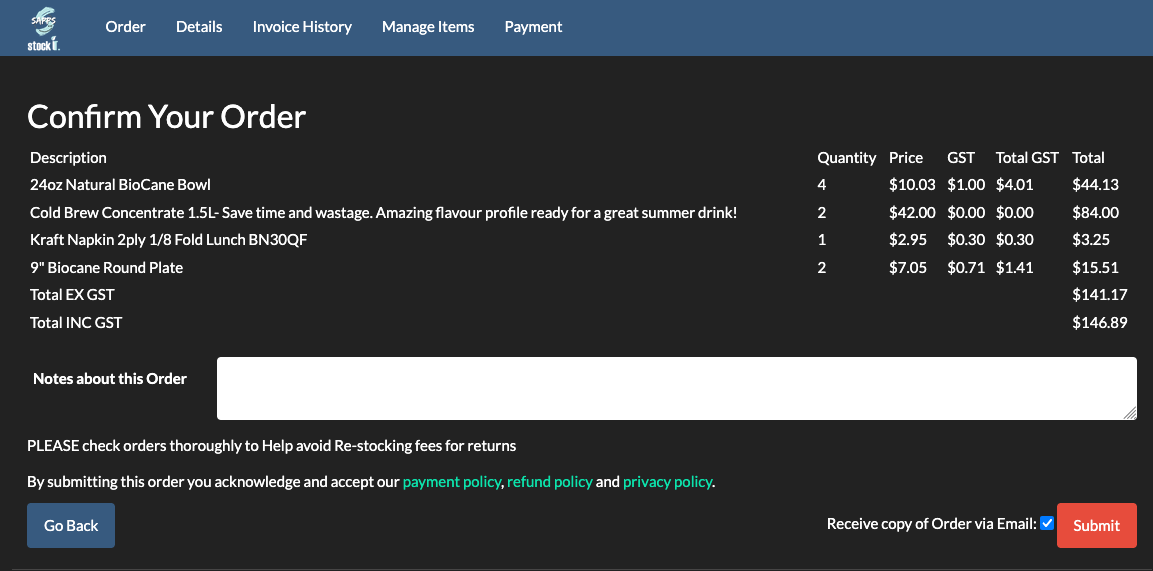
Repeat orders at volume. Customers who reorder the same lines at negotiated prices are an administration engine: transcription, price-checking, "did you get my email?". When repeats are weekly, a customer ordering portal turns the pattern into a strength — orders arrive checked against live stock, priced correctly, without a phone call.
Unexplained numbers. The record says 3; nobody can say why. One unexplained quantity is a curiosity; a pattern is a record that has stopped being a record. Software with movement histories and audit trails makes every number explainable — which is less a feature than the definition of a record. The failure patterns that justify the investment all trace back to this.
No signals yet? The honest answer is wait: one person, one site, slow volume is spreadsheet territory, and the stage-by-stage path maps when that changes.

BSimple, for those who signalled yes
We build BSimple, so weigh that. For businesses past the spreadsheet stage, BSimple runs the operational record — live multi-location quantities, multi-level stock and batches, purchasing from demand, order-to-invoice, portals for repeat wholesale buyers — with invoices pushed to Xero or MYOB (US integrations rolling out) and the audit trail behind every change. It is deliberately not an ERP (no MRP, no HR) and not free: $180/$250/$399 per month AUD, with the trial as the full product — because the four signals above are testable on your own products in an afternoon. The definition clarifies what a "system" includes beyond the software, and the wholesale context shows the signals at their loudest.
Frequently Asked Questions
Who needs a business management system?
Businesses where shared truth has outgrown memory: a second person needing the same numbers, a second location, repeat orders at volume, or unexplained quantities in the current record. None of these? A disciplined spreadsheet is the right tool.
Can a very small business benefit from one?
Usually not yet — and honesty here matters more than a sale. The smallest useful version is one person keeping a movements-based record; software earns its cost when sharing, locations or volume arrive.
Which signal is most urgent?
Unexplained numbers — they compound quietly and poison every decision made from the record. The others cost time; this one costs truth. Investigate, then decide.
Is BSimple for businesses of all sizes?
Its design centre is 10–200-person wholesale, manufacturing, distribution and trade businesses past spreadsheets. Below that, the trial will honestly feel like too much tool; above it, an ERP conversation is the right one.
How do we test whether we signal yes?
Run the trial with your products for a week and time the four signals: how often did someone need the truth at once, how often did a number lack an explanation? The evidence decides — that is rather the point.

BSimple