
Guide / planning
A business management system project, planned to finish
Projects fail by scope and sequence, not by effort. Plan by records, phase by dependency, budget the tail — a template that works for internal builds and vendor implementations alike.
The key facts
- Scope by records, not features: which truths will the system keep — stock, orders, money, people — and which stay with other systems.
- Phase by dependency: the record first, then the flows that feed it, then measurement, then automation. Screens and reports come last.
- Budget the tail: import, training, parallel running, and the first month's corrections — the part every plan underestimates.
- The buy path is the same plan: BSimple ($180/mo AUD up, trial) replaces build phases 2–4 with configuration — the records and sequencing still apply.
- 01The key facts
- 02Scope: decide the records before the features
- 03Phases: dependency-ordered, not ambition-ordered
- 04The buy path — the same plan, fewer phases
Scope: decide the records before the features
The plan starts with a written sentence per record: stock — will the system hold live quantities, for how many locations? orders — which intake channels, which fulfilment steps? money — kept here, or handed to the accounting platform (state it explicitly; the boundary must be a decision, not an accident)? people — kept here, or in the HR tool?
Then the refusals, written down with equal care: what this project will not attempt — no custom reporting beyond three reports, no integrations beyond the named two, no historical data before a cutoff date. The definition work and the ER thinking give the scope its structure; the refusals give it a finish line.
Phases: dependency-ordered, not ambition-ordered
Phase 1 — the record. Products, locations, parties, movements loaded and a baseline stocktake done. Nothing else works until quantities are true.
Phase 2 — the flows that feed it. Receiving and order intake on the new record; the old process retired for those two flows on a hard date. Partial adoption is how dual records are born.
Phase 3 — fulfilment and handoff. Picking, packing, invoice production and the accounting crossing — with the first month watched for mismatches daily.
Phase 4 — measurement and automation. Reports, reorder signals, portal rollouts to customers. Only after the record is trusted do the refinements help.
The tail, budgeted as a phase: importing history, training each role on their screens, parallel-running for one cycle, and the first month's corrections. The project-planning page scopes this tail for the build route; it exists on the buy route too, just smaller.
The buy path — the same plan, fewer phases
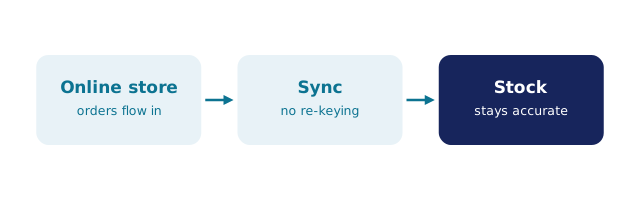
A vendor implementation follows the identical plan with phases 2–4 compressed into configuration: the records and sequencing are yours to decide either way, which is why this page serves both routes. We build BSimple, so weigh that: as a product it is phases 2–4 pre-built — live multi-location stock, batches, purchasing from demand, order-to-invoice, portals — leaving your project with scope, the baseline stocktake, training, and go-live. From $180/$250/$399 per month AUD, with the trial as phase zero: prove the record on your products before the plan commits to anything.
Frequently Asked Questions
How do we plan a business management system project?
Scope by records (with written refusals), phase by dependency (record, flows, fulfilment and handoff, measurement), budget the tail as its own phase, and assign one owner per flow. The plan works for builds and implementations alike.
What is the most common project mistake?
Going live on flows before the record is true — or worse, running both systems indefinitely. The baseline stocktake and the hard retirement date for the old process are the two decisions that make projects stick.
How long should the project take?
Weeks for a scoped implementation, months for a build — and the tail is a third to a half of either. Plans without a tail estimate are wishful; the first month's corrections always arrive.
Should we customise the system during the project?
Minimally, and never before the record is trusted. Customisation before adoption encodes assumptions that will be wrong; the questionnaire discipline helps distinguish needs from preferences first.
How does BSimple fit into this plan?
As phases 2–4 pre-built: the record, flows and handoff are the product; your project is scope, baseline, training, go-live. The trial is phase zero — free, full-featured, and the cheapest risk reduction available.

BSimple