
Guide / enterprise order systems
What is SAP order management? An honest framing
We will not document another company's product. What this page does: explain the category the phrase points to, who genuinely needs that scale, and the SME pattern behind the same job.
The straight answer
- SAP is an enterprise ERP vendor; "SAP order management" refers to the order-handling capability inside its suites — orders, fulfilment, billing at enterprise scale.
- We do not document SAP's modules — product details belong to SAP; second-hand summaries rot and mislead.
- What this page does: describe the category honestly, name who needs it, and show the SME-shaped pattern that does the same daily job lighter.
- BSimple is the SME pattern — and says plainly that it is not an SAP-class system.
- Where it fits: this page is one step of the order management walkthrough.
- 01The straight answer
- 02The category the phrase points to
- 03The same job, SME-shaped
The category the phrase points to
In enterprise ERP, order management is not a standalone tool — it is the order-to-cash backbone of the suite: orders captured across channels, allocated against enterprise inventory, orchestrated through fulfilment, billed, and reconciled into the financial core. The defining characteristics are scale traits: configuration depth (pricing procedures, approval hierarchies, multi-entity rules), integration breadth (EDI with major retailers, logistics partners, group ledgers), and administration — dedicated teams whose job is running the system.
Who genuinely needs it: organisations with multiple legal entities, global supply chains, thousands of orders a day across channels, and the staff to govern the configuration. For them, ERP-class order management is correct and the alternatives are compromises. For everyone else, it is buying a locomotive to run a delivery van — the enterprise list, read honestly covers that evaluation, and the order management systems list maps the lighter categories.
The same job, SME-shaped
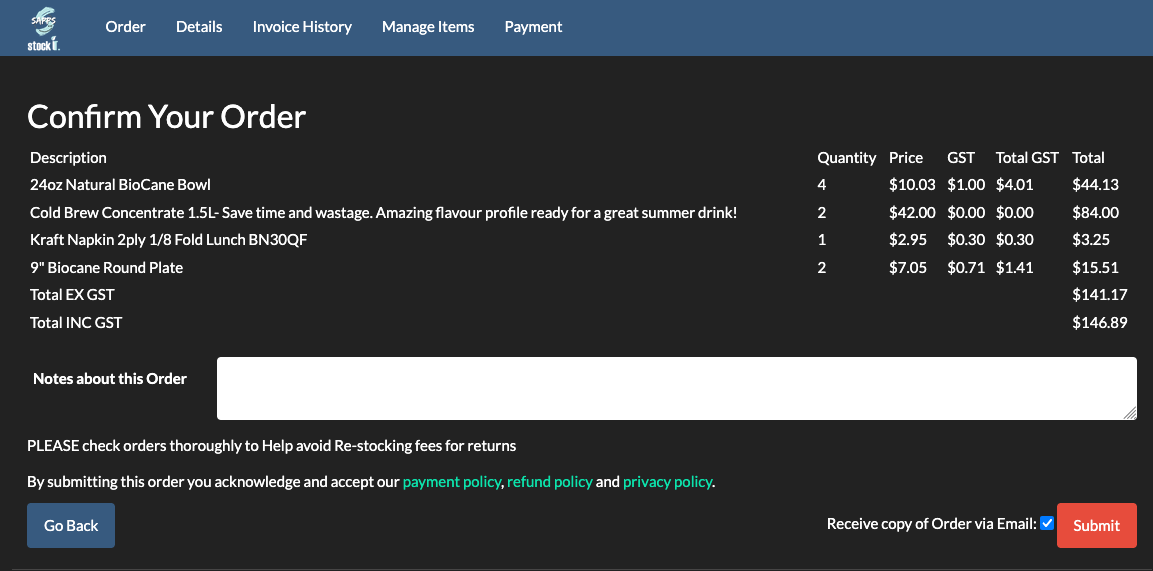
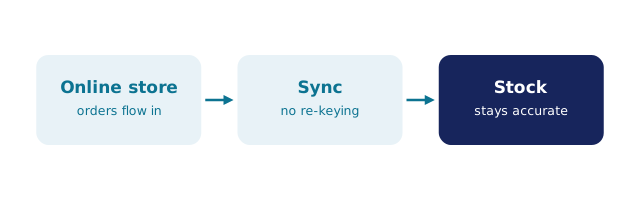
Strip away the enterprise scale and the daily job of order management is the same everywhere: orders allocate against live stock — no overselling; picking and packing run against the order — with packing slips and partial shipments handled; invoices flow to the ledger — pushed on approval, payment status mirrored back; purchasing answers the shortfalls — purchase orders raised from demand. The difference is who maintains it: an SME system assumes the business runs the software in hours a week, not a department in hours a day.
That is BSimple's shape: orders, stock, purchasing and invoicing on one record, the accounting handoff to Xero or MYOB designed in, a customer ordering portal for trade buyers — from $180/month (AUD) with a free trial. What it deliberately lacks is the SAP-class pieces: multi-entity ledgers, EDI ecosystems, configuration governance. What order management software covers defines the category BSimple sits in.
Frequently Asked Questions
Why does this page avoid describing SAP's modules?
Because vendor products change faster than second-hand pages, and a wrong feature claim is worse than none. The honest contribution here is the category shape and the fit question — which are stable — with SAP's own documentation as the source for SAP's own details.
Is BSimple an alternative to SAP order management?
For an enterprise evaluating SAP, no — the scale requirements are real and different systems answer them. For a small-to-medium product business that searched SAP because it is what large companies use, yes: the same daily job at SME scale, from $180/month (AUD). The size question comes first.
What does SAP-class order management cost an SME?
Beyond licence figures — implementation partners, configuration projects, and administrators are the recurring cost lines. The honest comparison is total cost of running, not sticker price; most SMEs conclude the lighter category serves their actual order volume better.
Can a business start with BSimple and move to SAP later?
Yes — that is the normal growth path for product businesses. BSimple keeps one clean record with usable exports and an API, designed for a handoff rather than a hostage situation. Moving because of genuine scale is success; the vendor guide includes the exit test so the door stays open.
BSimple