
Guide / the practice, defined
What is inventory, and what is inventory management?
Inventory is the stuff; inventory management is the weekly cycle that keeps it true and turning. Here is the practice, step by step — and what software has to do with it.
The short answer
- Inventory is everything a business owns for sale or for making what it sells.
- Inventory management is the repeating cycle that keeps it healthy: buy, receive, store, fulfil, count, review.
- The cycle runs on one record — the moment each step keeps its own version, the versions argue.
- BSimple runs the cycle for small-to-medium product businesses, from $180/month (AUD) with a free trial.
- 01The short answer
- 02The inventory, defined
- 03The practice, as a repeating cycle
- 04Where BSimple fits
The inventory, defined
Inventory is everything owned with the intention to sell or to make what sells: finished goods, components, packaging, work in progress, goods in transit. Two lenses look at it. The accounting lens sees an asset — money in another form, valued on the balance sheet, verified at year end. The operations lens sees objects in places — units on shelves, in vans, on the production floor — each movement a decision. The management discipline exists to keep the two lenses showing the same picture, because the alternative is discovering the difference at the count and calling it shrinkage.
The practice, as a repeating cycle
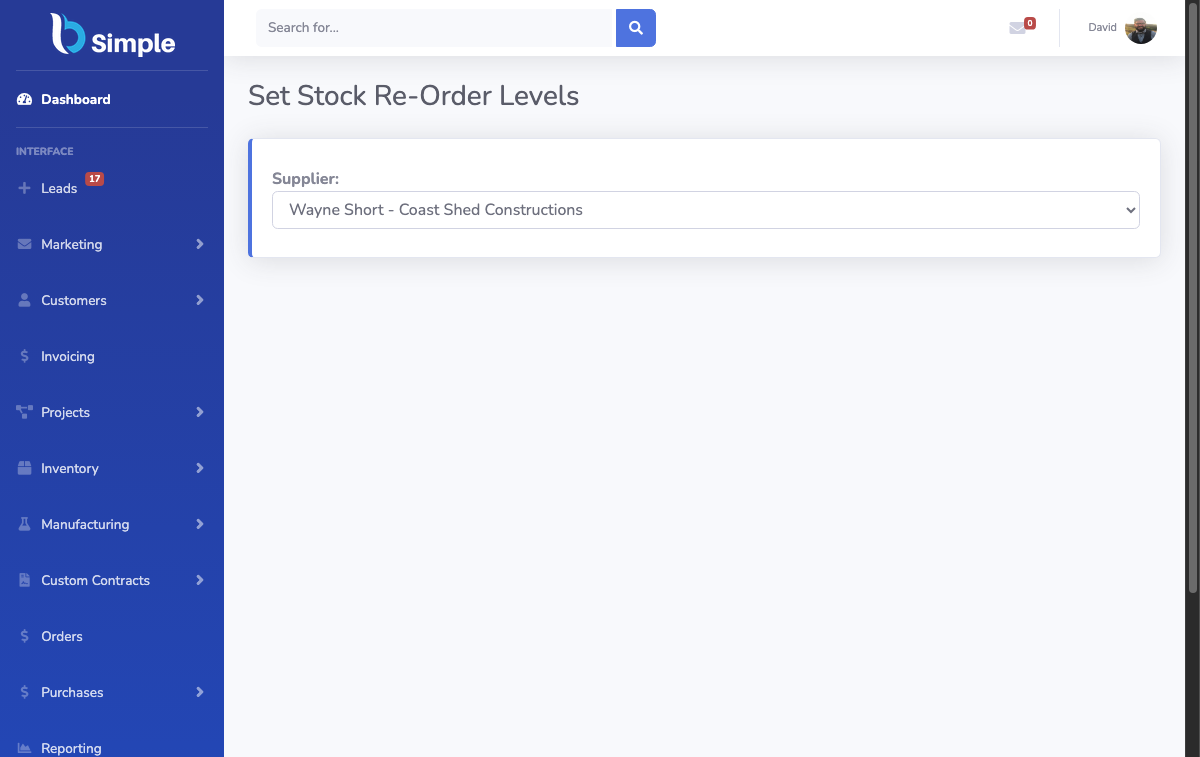
Buy — demand is signalled (reorder levels, shortfalls) and purchase orders raised, deliberately. Receive — goods counted against the order as they arrive; variances resolved on the day. Store — stock put away where the record says it is; transfers between locations leaving trails. Fulfil — orders allocated against live quantities, picked, packed, invoiced — the invoice carrying the same numbers into the ledger. Count — slices verified on a rolling plan; variances explained from the movement history, then adjusted. Review — what turned, what sat, what the next cycle should buy differently.
The practice is a cycle, not a project — it repeats weekly, and its health shows up as questions answered in seconds: what do we have, what did it cost, where did it go, what should we buy. The stock-management sibling covers the same cycle from the physical side, and the vocabulary page separates the terms.
Where BSimple fits
We build BSimple, so weigh that. It runs the cycle on one record for small-to-medium wholesale, manufacturing, distribution and trade businesses: purchase orders from demand, goods receipts updating live quantities, orders allocating and picking from the same record, invoicing handed to Xero or MYOB, counts from any phone browser, reporting views for the review step — with recipes and batches where making is part of the cycle. Plans start at $180/month (AUD), and the free trial runs one loop with your own goods.
The boundary: not an ERP — no HR, payroll or MRP scheduling — and not a replacement for the accounting system. The inventory management overview shows the record the cycle runs on.
Frequently Asked Questions
What is the difference between inventory and inventory management?
Inventory is the thing — the goods owned for sale. Inventory management is the practice — the cycle of buying, receiving, storing, fulfilling, counting and reviewing that keeps the thing healthy. Software is the tool that runs the cycle on one record instead of six documents.
How often should the cycle repeat?
The full cycle runs as often as you buy and sell; the verification slice (counts) runs on its own rolling plan — weekly slices are common. The health check is simple: can each step be answered today, or only as of the last time someone updated the sheet?
What does the review step actually review?
Turnover and trouble: what sold, what sat, which lines caused variances or shortages, which suppliers slipped. It is the step that turns the cycle from maintenance into strategy — and it is only as good as the record the other steps kept.
Can the cycle run without software?
Briefly, and for one maintainer — the spreadsheet cycle is a legitimate phase. The cycle breaks where the steps disagree: allocation, purchasing signals and shared counts need one record, which is what software contributes. The free ladder marks the transition honestly.

BSimple