
Guide / गोदाम प्रबंधन
Warehouse system examples, in Hindi and English
A warehouse management system — in Hindi, गोदाम प्रबंधन प्रणाली — is the same machine everywhere: one record of what is in the godown, what moves, and what must be reordered. The examples below explain it in Hindi terms, with an honest note about language support.
The key facts
- The Hindi vocabulary maps cleanly: गोदाम (godown/warehouse), स्टॉक (stock), चालान (challan/dispatch note), पूर्ति (replenishment) — the concepts are language-independent.
- Example 1, wholesale distribution: suppliers in, mixed cartons out, dispatch papers that match the record.
- Example 2, manufacturing: raw material stores feeding production, finished goods out.
- The honest boundary: BSimple's interface and support are in English — we do not claim a Hindi localisation, and pages that promise one should be read with care.
- The full picture: how the inventory record works is the hub page for everything above.
- 01The key facts
- 02Example 1 — the wholesale godown (थोक वितरण)
- 03Example 2 — the factory store (कारखाने का स्टोर)
- 04The pattern behind the examples — and the language question
Example 1 — the wholesale godown (थोक वितरण)
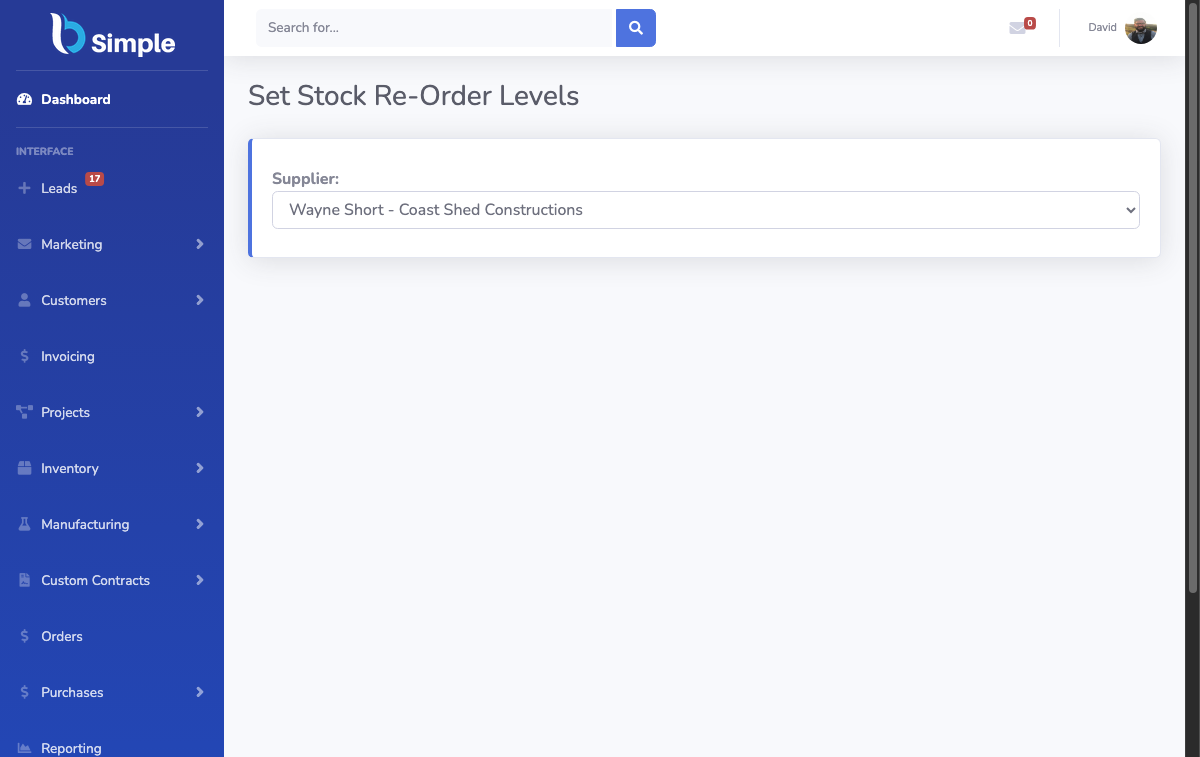
A distributor receives full cartons from suppliers, breaks them into customer-sized mixed orders, and dispatches against a challan. The system's job: quantities live per location so the godown floor and the office see the same स्टॉक; picking produces the dispatch paper (चालान) from the same record the order was taken on; and what a customer was promised matches what the shelf actually held. When this runs on paper, the same information is written three times — receipt, bin card, dispatch — and all three disagree within a month.
In BSimple this is the wholesale flow directly: goods receipt updates stock, orders move through picking and packing to an approved invoice, and the accounting system receives the finished record. Warehouse system examples by company type extends this walkthrough to more setups.
Example 2 — the factory store (कारखाने का स्टोर)
A manufacturer runs two stock problems at once: raw materials entering production, and finished goods leaving it. The store issues material against a recipe (a bill of materials), production converts it, and finished stock arrives back with its own batch and use-by details. The system's job is the thread between them: issue the right quantities, know which batch of output consumed which lots, and flag shortages before the run starts rather than mid-shift.
That recipe-to-run-to-batch flow is built into BSimple — recipes with versioning, production runs with shortage checks, batches carrying use-by dates — which is why manufacturers are a core audience alongside distributors.
The pattern behind the examples — and the language question
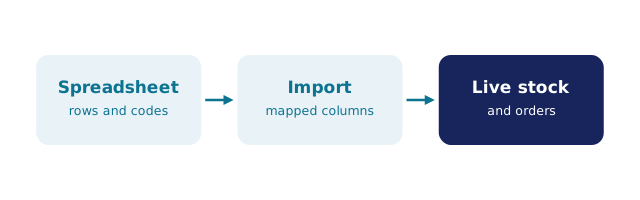
Strip the specifics and every warehouse system does the same four things: receipt (आगमन) raises the quantity against the right lot; storage keeps quantities truthful per location; issue (उत्सर्जन/dispatch) lowers them against the right order; replenishment (पूर्ति) raises the next purchase order before the shelf empties. If a proposed system cannot do those four against one shared record, the examples do not matter.
On language, plainly: BSimple's interface, documentation and support are English, and we do not claim Hindi documentation or a localised portal. Teams whose working language includes Hindi commonly run the system in English alongside their own processes — but test that with your own team during the free trial rather than trusting any feature matrix, ours included. What a WMS looks like across industries is a useful second reference before deciding.
Frequently Asked Questions
What is a warehouse management system in Hindi (गोदाम प्रबंधन प्रणाली क्या है)?
गोदाम में रखा सामान — कितना, कहाँ, कब आया, कब गया — इसका एक सच्चा रिकॉर्ड रखने वाली प्रणाली। In English: the system that keeps one true record of receipt, storage, issue and replenishment for a warehouse.
Does BSimple support the Hindi language?
No — the interface, documentation and support are in English. We would rather say that plainly than promise a localisation that does not exist. The concepts above are language-independent, and the trial is the honest test for your team.
What is a challan in warehouse terms?
The dispatch paper that travels with goods leaving the godown. In a system, the challan should be produced from the same order record the customer used — not rewritten by hand — so dispatch and invoice never disagree.
Can barcode scanning work with this?
Yes — BSimple is browser-based, so standard barcode scanners that type into any web page work with it. Barcode scanning in warehouse inventory covers the workflow in detail.
Is BSimple suitable for a distribution business in India?
The inventory, ordering and warehouse workflows fit distribution anywhere; accounting support is the constraint. BSimple hands accounting to Xero and MYOB, with US accounting integrations rolling out — for India-specific accounting and GST filings, the books would stay with your local system or accountant.

BSimple