
Guide / unified, honestly
Unified business management software
"Unified" should mean one record — not one login over five stitched apps. Here is the honest test for unification, and how BSimple runs one operational record with the accounting handoff beside it.
The key facts
- The honest test: does data live once — or does "unified" mean one login over apps that sync copies?
- What a real unified record carries: inventory, purchasing, orders, customer portal, invoicing, reporting — one dataset, one audit trail.
- The boundary worth keeping: accounting stays a connected system of record (Xero/MYOB), not a module inside the marketing stack.
- BSimple is unified on the operations side: one record, from $180/month (AUD), free to trial.
- 01The key facts
- 02What "unified" should mean
- 03What a unified record changes day to day
- 04Where BSimple is unified — and deliberately not
What "unified" should mean
The word has been stretched by marketing, so restore the definition: a unified system holds each fact once. The quantity of a product exists in one place; an order references it; an invoice references the order; a payment mirrors back onto the same order. Every module reads the same dataset — there is nothing to synchronise, because there is nothing copied.
The imitation version is "one login, many apps": CRM here, inventory there, invoicing somewhere else, connected by integrations that push copies around on schedules. It feels unified at the login screen and behaves like a relay race at month end — each integration a place where copies drift and someone reconciles. The honest test is embarrassingly simple: change a quantity, then count how many places needed to hear about it.
What a unified record changes day to day
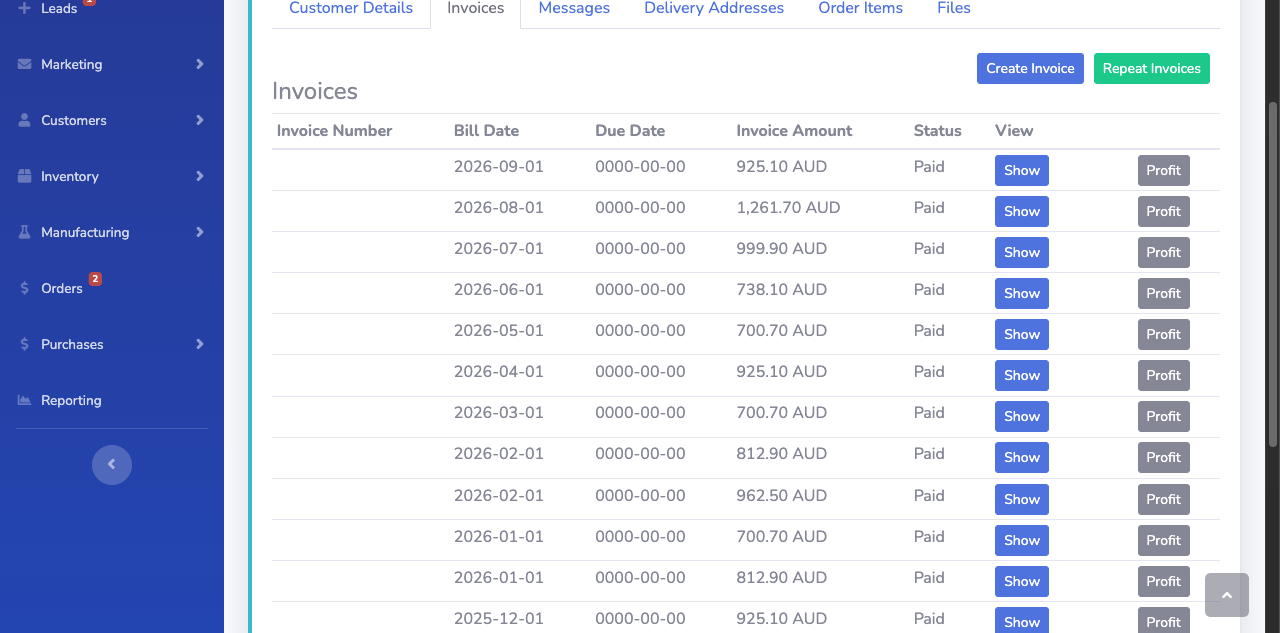
- The portal shows true stock. Customers order against the same quantities the warehouse picks from — overselling becomes structurally impossible, not a setting.
- The invoice is born, not typed. The checked order becomes the invoice without re-entry; approval is a decision, not a data-entry chore.
- One audit trail. Every movement and approval carries its user and timestamp — "what happened here" is a query, not an investigation.
- Reporting reads reality. Order, invoice and stock values come from the same dataset, so the numbers agree without a meeting.
These are exactly the promises stitched-together apps make and cannot keep — the seam is the product. The system diagram draws the unified shape; what a BMS is defines it; the web-application view covers the delivery.
Where BSimple is unified — and deliberately not
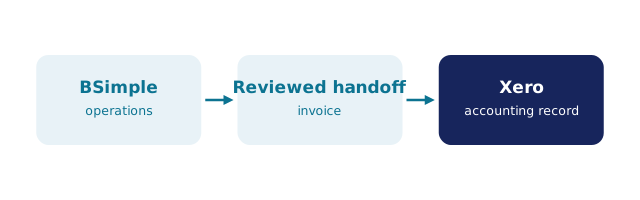
We build BSimple, so weigh that. Operations are unified: inventory, purchasing, orders, the customer portal, recipes and batches, stocktakes, invoicing and reporting on one dataset with one audit trail — no syncs between BSimple and itself. Plans start at $180/month (AUD), every feature in the core plans.
The deliberate exception is accounting: the books stay in Xero or MYOB as the connected system of record, with approved invoices pushing across and payment status mirroring back. That boundary is not a failure of unification — it is the correct division, because compliance and payments belong where the accountant works. The trial is the test of the claim: change something in one place and watch every view agree.
Frequently Asked Questions
What is unified business management software?
Software where every operational fact lives once — inventory, purchasing, orders, portal, invoicing and reporting on one dataset with one audit trail. Not one login over several apps that sync copies; the copies are the tell.
Is BSimple truly unified, or stitched integrations?
Unified on the operations side: one dataset, one audit trail, nothing to synchronise. The accounting system stays outside by design — connected via the invoice handoff — because compliance belongs to Xero or MYOB, not to the operations record.
Does unified software replace the accountant?
No — it feeds the accountant. Approved invoices push to the accounting system, payment status mirrors back, and GST and filing stay exactly where they were. Unification is about operational truth, not about absorbing the books.
How do I test a "unified" claim?
Change a quantity in a trial and count the views that update: BSimple updates all of them, immediately, because there is only one place the quantity lives. Apps that sync copies will show you the delay instead.

BSimple