
Guide / web applications
Business management as a web application
The promise of a web app is no install, no version drama, and the same record from any device. The part worth judging is not the browser — it is whether the application holds one record or five.
The key facts
- The browser advantage: nothing to install or update, one URL, the same view from office, warehouse and phone.
- The real question: one shared record — or several apps stitched together by export?
- What a proper web application needs beyond pages: tenant isolation, audit trail, scoped API access, backups.
- BSimple is a web application: inventory, orders, purchasing, invoicing and portal in the browser, from $180/month (AUD).
- 01The key facts
- 02What "web application" should mean here
- 03What to check before signing in
- 04How BSimple works in the browser
What "web application" should mean here
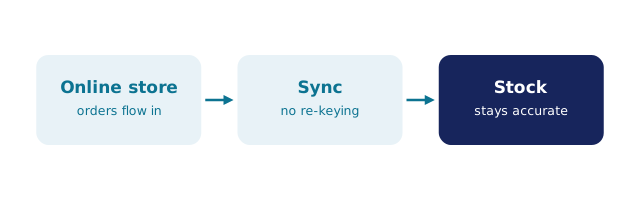
A web application for business management is judged on three things, none of which is the design. First, immediacy: does the number on screen change when the work happens — a receipt posted in the warehouse, an order packed, a payment mirrored from accounting? Second, consistency: is everyone — salesperson, picker, bookkeeper — reading the same record, or reconciling copies of it? Third, availability: can the system be reached from wherever the work is, without a VPN or a desktop install?
Desktop software fails the third; multiple disconnected web tools fail the second; spreadsheets shared by link fail the first. The honest definition of a business management web application is all three: immediate, shared, and everywhere.
What to check before signing in
- One record or many? If stock, orders and invoicing are separate apps with "integrations", every integration is a reconciliation job in disguise. What a business management system is covers the architecture.
- Audit trail. Who changed the quantity, when, and why — recorded by the system, not reconstructable by memory.
- Tenant isolation and backups. The unglamorous platform facts; ask directly.
- An API. A modern web application is a platform: scoped keys and read access (BSimple's public REST API serves stock, reorder, suppliers, stocktakes, purchase orders, transfers) mean your own tools and AI assistants can work with the record.
- The accounting boundary. Approved invoices push to Xero or MYOB, payment status mirrors back — defined, documented, testable.
How BSimple works in the browser
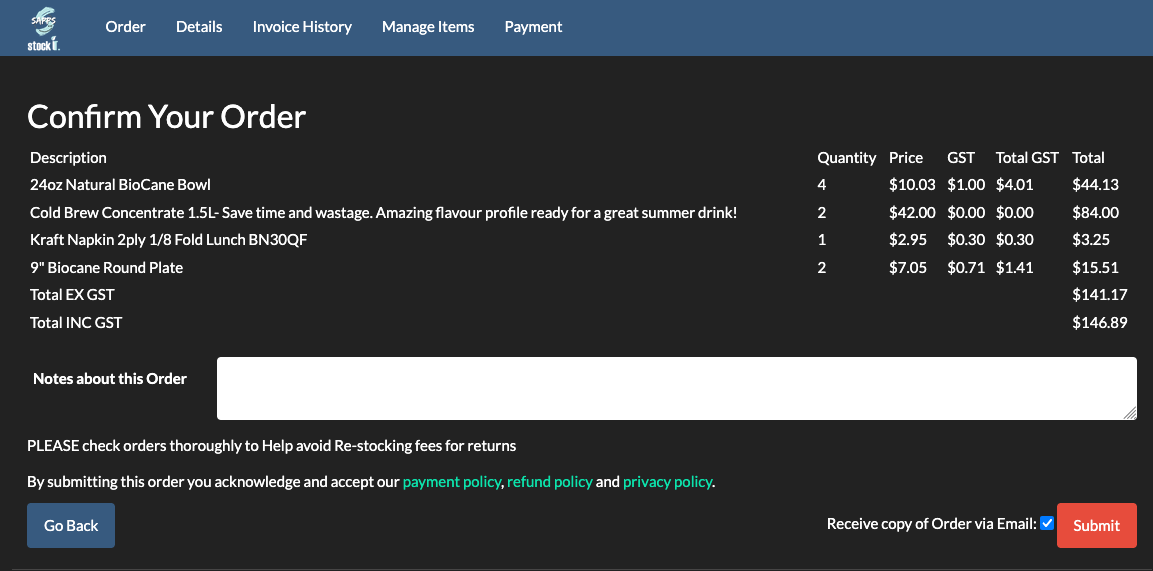
We build BSimple, so weigh that. It is a cloud web application in the plainest sense: open the URL and work — no install on any machine, counts and receiving from phone browsers, multi-location stock with tenant isolation and an audit trail underneath. The record carries inventory, purchasing, orders, the customer portal, invoicing and reporting; the process comparison shows how that differs from BPM-style workflow tools, and the features overview walks each module.
Being a web application also means the demo and the product are the same thing: the trial is the full system with your own data, from $180/month (AUD) if it fits. Judge it on the three tests above — immediacy, consistency, availability — with your own products rather than a scripted tour.
Frequently Asked Questions
What is a business management web application?
Business software that runs entirely in the browser — stock, orders, purchasing, invoicing and customer portal on one shared record, reachable from any device. The web part is the delivery; the one-record part is the substance.
Is a web application enough for warehouse work?
Yes — receiving, picking and counts run from phone and tablet browsers against the live record. The honest check is connectivity in your building: test your actual dead zones during a trial rather than trusting a datasheet.
Is BSimple a web application?
Yes — cloud-only, browser-based, nothing to install. It carries the operational record (inventory, orders, purchasing, invoicing, portal) with the accounting handoff to Xero or MYOB, plans from $180/month (AUD), and there is no on-premise edition.
Can our own tools connect to it?
Yes — a public REST API with scoped keys exposes read projections for stock, reorder positions, suppliers, stocktakes and purchase orders, plus an MCP endpoint for AI assistants. Writes stay in the product so the audit trail stays intact.

BSimple