
Guide / BSimple
Stock Order List with Xero
Rather than juggling spreadsheets across email inboxes and USB drives, a proper stock order list gives you real-time visibility into what's coming in, what's going out, and what needs reordering urgently.
- Centralised purchase order management with real-time supplier visibility and delivery tracking
- Automatic PO generation based on reorder points, lead times, and sales velocity
- Negative inventory tracking preventing overselling and customer disappointment
- Seamless Xero integration syncing orders with accounting records automatically
- Customer ordering portal allowing wholesale customers to place orders directly
- Stocktake management integration for EOFY accuracy and GST compliance
- Supplier performance reporting identifying cost savings and reliability opportunities
A stock order list is the backbone of efficient inventory management for Australian wholesalers, manufacturers, and distributors. It's essentially a comprehensive record of all purchase orders, stock movements, and supplier communications in one centralised location. Rather than juggling spreadsheets across email inboxes and USB drives, a proper stock order list gives you real-time visibility into what's coming in, what's going out, and what needs reordering urgently.
For a deeper dive into how this all fits together, see our order management software guide. To understand how a stock order list differs from a stock order book, our stock order book explained guide is helpful.
For businesses like Sydney coffee roasters managing seasonal demand or Melbourne breweries coordinating complex ingredient orders, having everything in one place isn't just convenient—it's critical. A stock order list tracks supplier details, order quantities, delivery dates, and pricing information. When you're coordinating with multiple suppliers across different lead times, you need a system that doesn't rely on memory or scattered notes. BSimple's stock order list integrates seamlessly with Xero integration, meaning your purchase orders automatically sync with your accounting records. No more manual data entry, no reconciliation headaches come EOFY stocktake time.
The real power emerges when your stock order list connects to your broader inventory system. You can see which orders are pending, which have been delivered, and which are stuck with suppliers. This visibility prevents the nightmare scenario where you think stock is arriving next week, but it's actually delayed by a month. Australian SMBs operating on tight margins can't afford that kind of surprise.
- 01Streamline Your Purchasing with Integrated Stock Orders
- 02Prevent Stockouts with Negative Inventory Tracking
- 03Xero Integration for Seamless Financial Management
- 04Strategic Advantages Beyond Daily Operations
Streamline Your Purchasing with Integrated Stock Orders
Managing stock orders manually is like trying to run a business with one hand tied behind your back. Every minute spent chasing supplier confirmations or updating spreadsheets is a minute you're not spending on growing your business. That's where automation comes in. BSimple's stock order list automates the entire purchasing workflow, from identifying when stock falls below reorder points through to generating purchase orders automatically.
Imagine this: your distribution centre in Brisbane runs low on a key product. Instead of someone manually checking inventory levels and emailing the supplier, BSimple automatically generates a purchase order based on your predefined reorder rules. The system considers your lead times, current stock levels, and sales velocity to determine exactly when and how much to order. This just-in-time inventory approach means you're not tying up cash in excess stock, but you're also not running out when customers need product.
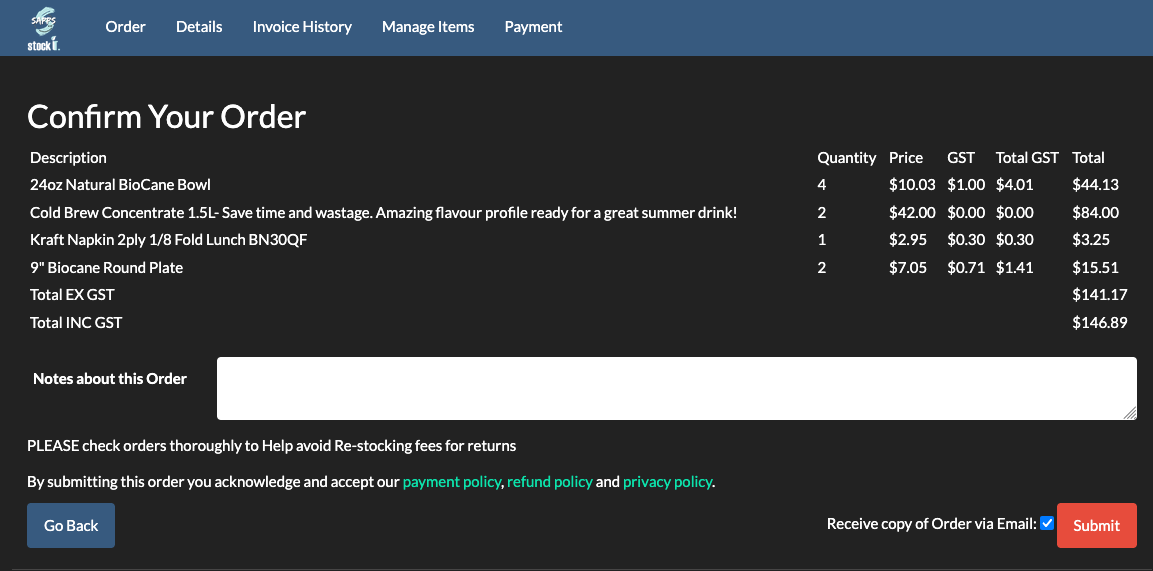
The customer ordering portal adds another layer of efficiency. Your wholesale customers can place orders directly through the portal, which automatically populates your stock order list and triggers your internal procurement process. A manufacturing business in Perth can receive orders from their customers at 2 AM, and by the time the team arrives at 8 AM, the system has already flagged what needs to be ordered from suppliers. That's the kind of operational efficiency that compounds over time and directly impacts your bottom line.
Automation also reduces human error. When your stock order list is manual, you're dealing with transcription errors, forgotten orders, and duplicate entries. Automated systems eliminate these friction points entirely. Your team can focus on strategic decisions—which suppliers offer better terms, where can we consolidate orders to save freight costs—rather than administrative busywork.
Prevent Stockouts with Negative Inventory Tracking
One of the biggest pain points for Australian wholesalers and manufacturers is managing negative inventory situations. You've probably experienced this: a customer places an order, you think you have stock, but then you discover it's already allocated or the shipment from your supplier is delayed. Suddenly you're in a scramble to find alternative stock or negotiate with the customer.
BSimple's stock order list includes negative inventory tracking, which flags these situations before they become crises. The system shows you not just what you have in hand, but what's committed to existing orders and what's on order from suppliers. This three-dimensional view of your inventory prevents overselling and keeps your customer relationships intact. When you can confidently tell a customer their order will arrive on Tuesday because you've already confirmed it with your supplier, that's the kind of reliability that builds loyalty.
For manufacturing businesses particularly, this capability is invaluable. You might have raw materials arriving from multiple suppliers on different schedules, all feeding into production runs. A stock order list that tracks negative inventory ensures you don't start manufacturing a batch only to discover mid-production that a critical component won't arrive for another week. The financial impact of that kind of disruption can be substantial.
The stocktake management integration means your stock order list stays accurate even through your EOFY counts. Many Australian businesses dread stocktake season because it inevitably reveals discrepancies between what the system says and what's physically there. BSimple's approach reconciles these differences systematically, so your stock order list remains your source of truth. That accuracy compounds: better inventory data means better ordering decisions, which means better cash flow management.
Xero Integration for Seamless Financial Management
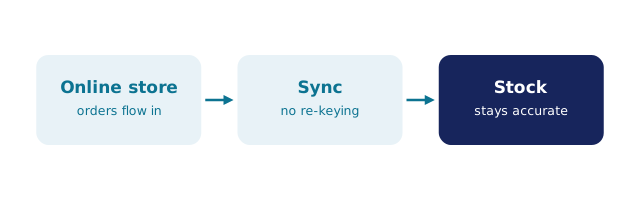
Xero integration is where BSimple's stock order list truly shines for Australian businesses. Most wholesalers and distributors already use Xero for accounting, so having your stock orders sync directly with your financial records eliminates a massive administrative burden. When you generate a purchase order in BSimple, it automatically creates the corresponding entry in Xero. When your supplier invoice arrives, it matches against the original PO automatically.
This integration matters more than you might think, especially come tax time. For GST compliance and EOFY reporting, your inventory records need to match your financial records precisely. If you're managing stock orders in one system and accounting in another, you're creating a reconciliation nightmare. BSimple eliminates that problem entirely. Your purchase orders, supplier invoices, and inventory adjustments all flow through one integrated system, making your accountant's job significantly easier and reducing the risk of compliance issues.
The cost savings here are real. A distribution business in Adelaide managing stock orders across multiple suppliers can consolidate their tech stack, reducing subscription costs and training overhead. More importantly, your team spends less time on administrative work and more time on value-adding activities. A warehouse manager in Brisbane isn't spending Friday afternoons reconciling spreadsheets; they're optimising supplier relationships or analysing sales trends to improve ordering accuracy.
Real-world example: a manufacturing business with multiple warehouse locations can use BSimple's centralised stock order list to coordinate orders across all sites. Head office can see exactly what each location has ordered, what's in transit, and what's been received. This visibility prevents duplicate orders and ensures efficient use of freight budgets. When you're managing inventory across Sydney, Melbourne, and Brisbane, that kind of coordination is essential.
Strategic Advantages Beyond Daily Operations
For a closer look at how these capabilities fit together, our warehouse management software guide ties it all together. The strategic advantages of a well-implemented stock order list extend beyond day-to-day operations. When you have accurate, real-time data about your orders, suppliers, and inventory movements, you can make informed business decisions. You can identify which suppliers consistently deliver on time and which ones create bottlenecks. You can spot seasonal patterns in your ordering and adjust your strategy accordingly. A Melbourne brewery might notice that certain ingredients are always delayed during winter months, prompting them to order earlier or find alternative suppliers.
BSimple's stock order list gives you the data foundation for these strategic insights. You can generate reports showing supplier performance, order cycle times, and cost trends. Over time, this intelligence helps you negotiate better terms with suppliers, identify opportunities to consolidate orders and reduce freight costs, and make more accurate demand forecasts. For Australian SMBs operating in competitive markets, these advantages compound into genuine competitive benefits.
The customer portal integration also creates strategic opportunities. By giving your wholesale customers visibility into their own orders and availability, you're building stronger relationships and reducing support requests. A customer can log in and see exactly when their order will arrive rather than emailing you repeatedly for updates. That's not just efficient; it's the kind of service that differentiates you from competitors who still rely on email and phone calls.
Looking forward, having a robust stock order list system positions your business for growth. Whether you're planning to expand into new markets, add new product lines, or increase your wholesale customer base, you need systems that scale. BSimple's inventory management capabilities grow with your business, so you're not rebuilding your processes every time you hit a new revenue milestone. That's genuine operational leverage for Australian businesses ambitious about growth.

Frequently Asked Questions
What is a stock order list used for?
A stock order list tracks all purchase orders, supplier communications, delivery dates, and inventory movements in one centralised location. It helps wholesalers and manufacturers manage reordering, prevent stockouts, and maintain accurate inventory records for financial reporting and GST compliance.
How does BSimple's stock order list integrate with Xero?
BSimple automatically syncs purchase orders with Xero, eliminating manual data entry. When you create a PO in BSimple, it flows directly to Xero. Supplier invoices match against orders automatically, simplifying EOFY reconciliation and ensuring your inventory records align with financial records.
Can BSimple prevent overselling and negative stock situations?
Yes. BSimple tracks negative inventory, showing what's in hand, what's committed to orders, and what's on order from suppliers. This three-dimensional view prevents overselling and alerts you before stock issues become customer problems.
How does the customer ordering portal improve efficiency?
Your wholesale customers place orders directly through the portal, which automatically populates your stock order list and triggers procurement processes. This reduces manual order entry, prevents transcription errors, and speeds up your purchasing cycle.
What happens to my stock order list during EOFY stocktake?
BSimple's stocktake management feature reconciles physical counts with system records systematically. This ensures your stock order list remains accurate and reliable for financial reporting, GST compliance, and tax purposes throughout the year.
Is a stock order list important for manufacturing businesses?
Absolutely. Manufacturing businesses depend on coordinating materials from multiple suppliers with different lead times. A stock order list prevents production delays by ensuring all components arrive when needed and prevents starting production runs without confirmed material availability.
How can a stock order list help reduce costs?
By tracking supplier performance, consolidating orders, and identifying seasonal patterns, you can negotiate better terms, reduce freight costs, and improve demand forecasting. Over time, these efficiencies directly improve your bottom line and cash flow management.
BSimple