
Guide / parts, honestly
Spare parts inventory: the free download, honestly
A parts business lives on two facts per line: what fits what, and whether it is on the shelf. Free downloads cover the list; the fitment and reorder discipline is where paid systems start — and where the trial comes in.
The key facts
- The free download is a spreadsheet: part number, description, bin, quantity — honest while one person maintains it.
- What parts stock adds: fitment data, supersession chains, fast/slow mover splits, and counts across thousands of lines.
- What free tools rarely include: purchasing from reorder points, price variance, and scanning that posts real transactions.
- BSimple is not free: plans from $180/month (AUD), free to trial — live stock, supplier purchasing, counts and invoicing on one record.
- 01The key facts
- 02What the free options actually cover
- 03What spare-parts inventory actually needs
- 04Trying the real thing for free
What the free options actually cover
The honest free download is a spreadsheet: part number, description, bin location, quantity on hand, cost. For a one-person workshop or a small counter, it works — the record is the person who maintains it. Its ceilings are the usual ones: two people editing at once, quantities trusted only right after a count, and reordering driven by memory of what sold.
Free tiers of inventory tools move the list into a database with search and mobile counts, at caps that land on users and history. What free almost never includes is the purchasing half — reorder points that raise supplier orders, goods receipts updating stock, price variance caught before payment — and scanning that posts real transactions rather than notes. Those gaps matter more in parts than most trades, because parts move through receiving, counter sale and workshop issue every day.
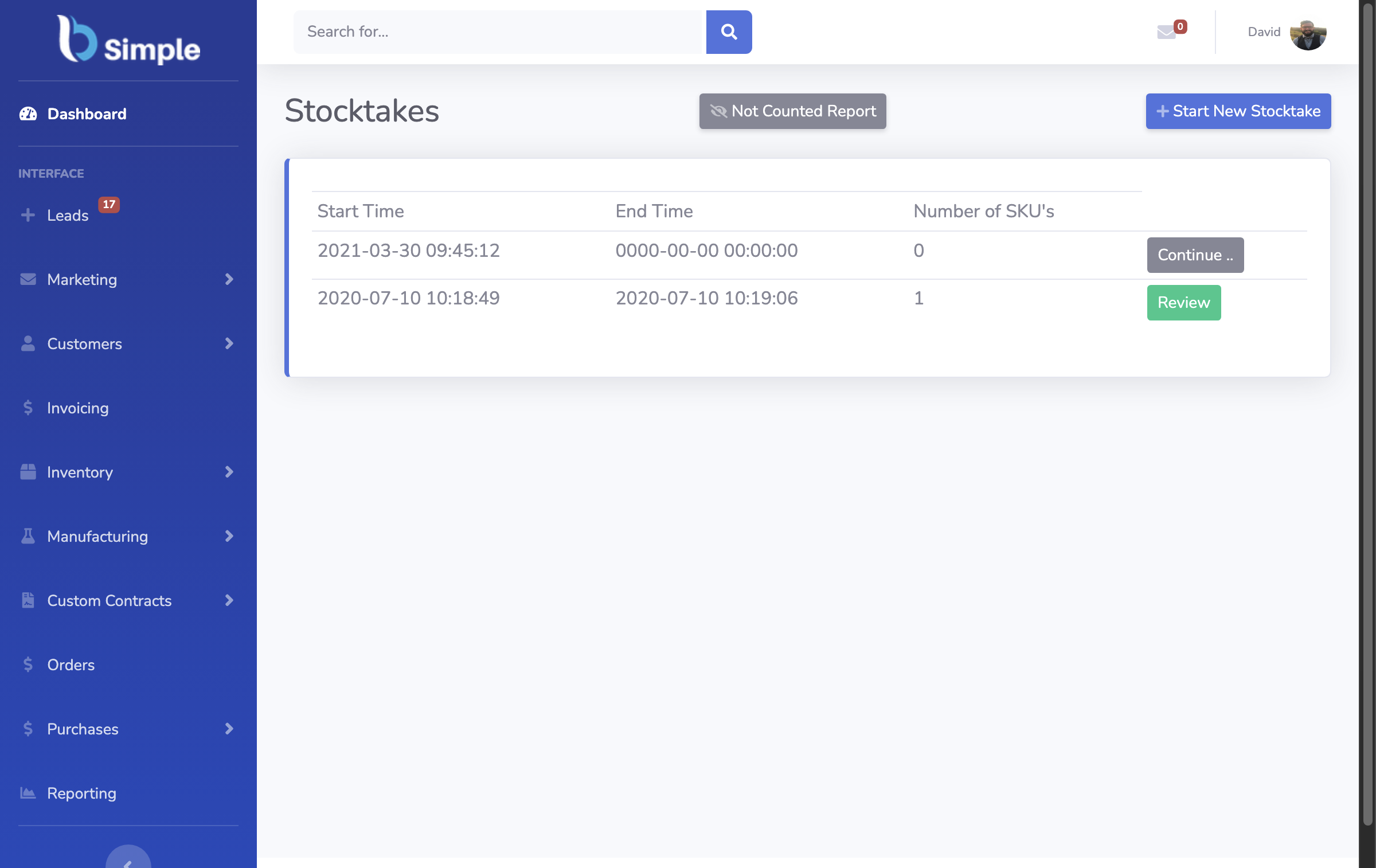
What spare-parts inventory actually needs
- Search that finds the part anyway. Thousands of lines, several naming habits, and a customer waiting — the catalogue must be findable by number, name and supplier code.
- Fitment and supersession. What fits what, and what replaces what when a part is superseded — the knowledge a spreadsheet keeps in one person's head.
- Reorder points that match turnover. Fast movers stay on the shelf; slow movers do not eat the cash. The record should split them, and raise purchases from the gaps.
- Counts that do not close the counter. Cycle counts by bin, with variances adjusted deliberately, keep thousands of lines honest without a weekend freeze.
- Scanning at the movements. Scanning receiving, issue and counts is what keeps a parts ledger honest at that volume.
Enterprise parts systems add fitment databases and dealer networks; a small operation does not need them to run the list above properly.
Trying the real thing for free
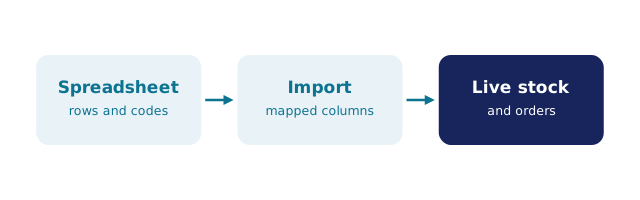
The closest honest equivalent to a free download of a real system is a trial with your own catalogue. Load a few hundred part numbers (import from the spreadsheet you already keep), set reorder points on the fast movers, receive a supplier order, count a bank of bins, and issue parts against a job. BSimple runs that loop on one record with invoicing and the Xero or MYOB handoff attached — plans from $180/month (AUD), trial free.
For more on the category, the auto-parts inventory guide covers vehicle-parts operations specifically, and the free tools worth trying maps what the market's free options genuinely include.
Frequently Asked Questions
Is there a free download for spare-parts inventory?
A spreadsheet template, genuinely — and for a one-person operation it is a legitimate answer. Free tiers of tools add search and mobile counts with caps. The purchasing, supersession and scanning layer that parts businesses run on is the paid product nearly everywhere.
Is BSimple free?
No — plans start at $180/month (AUD). The trial is free and is the full product: import part of your catalogue, set reorder points, and run a count before deciding whether the paid record earns its keep.
Can I import my existing parts list?
Yes — import from spreadsheet into live product records, which is the standard first step in a trial. Starting from the list you already keep is faster and more honest than rebuilding the catalogue inside demo data.
Do we need barcode scanning for a parts operation?
Not at low volume, and almost always once lines run into the thousands and parts move through counter and workshop daily. Part numbers are exactly the data humans mis-read — scanning removes the error class rather than managing it.

BSimple