
Guide / definition
Operations management system (OMS)
An operations management system is the software record a physical business runs on: stock, orders, purchasing and fulfilment on one truth. What it holds, how it differs from the ERP and BPM labels nearby, and how to tell a real one from a dashboard.
The key facts
- The definition: an OMS keeps the operational record — what stock exists, what customers ordered, what suppliers owe, what state every order is in — and moves goods through their life cycle on that record.
- The acronym tangle: OMS also means order management system (the fulfilment subset) and, in finance, a trading order router — context decides which.
- The neighbouring labels: an ERP bundles the OMS with finance and HR; a BPM layer routes approvals over the top. The OMS is the record; they are the wrapper.
- BSimple's position: an operations management system for wholesale, manufacturing, distribution and trade — deliberately lighter than an ERP, from $180/month AUD.
- 01The key facts
- 02What an operations management system actually holds
- 03The acronym tangle, untangled
- 04How it relates to ERP and BPM
- 05How to tell a real OMS from a dashboard
What an operations management system actually holds
Four records, one truth. Stock: quantities by product and location, derived from an append-only movement history — receipts, sales, adjustments, transfers — so the shelf and the screen agree because they are the same calculation. Orders: customer orders as stateful records moving from received through allocated, picked and packed to invoiced, each transition recorded with an actor and a time. Purchasing: supplier orders raised from demand — reorder levels against live stock — with goods receipts that write the inbound movements and price-variance flags that keep invoices honest. Fulfilment: the pick lists, delivery slips and status trails connecting the first three to the physical world.
The test of a real OMS is not the dashboard on top; it is whether those four records are one database or four spreadsheets in integration costumes. When they are one, "can we promise this delivery?" and "what did that order cost?" are queries, not archaeology.
The acronym tangle, untangled
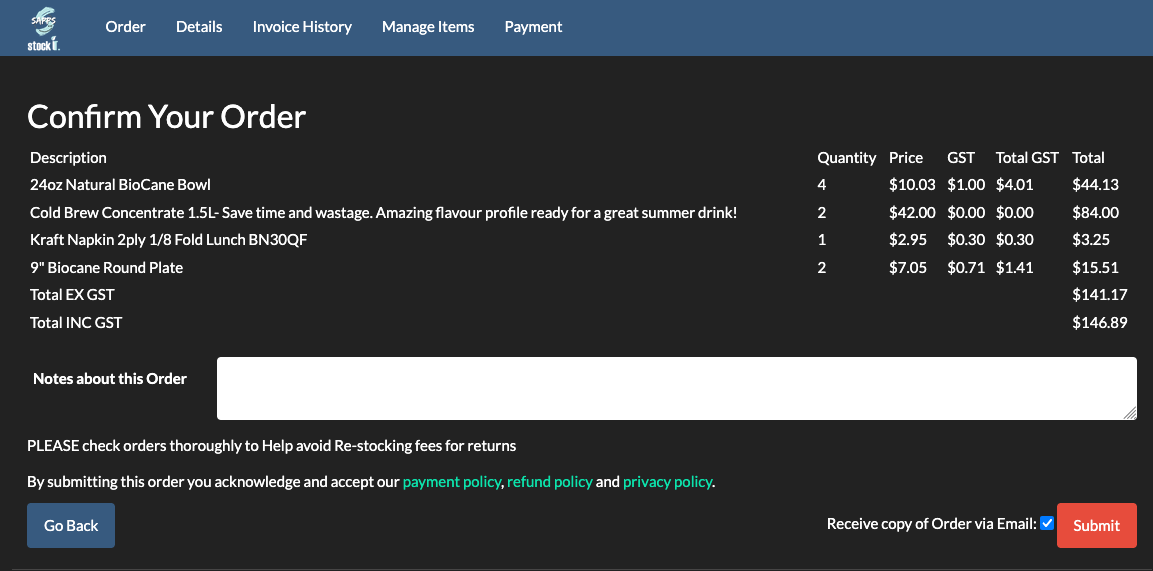
OMS as order management system is the subset: the customer-order record and its path through fulfilment. Many products use the acronym this way — the order-management meaning in detail. OMS as operations management system is the superset this page describes: order management plus the stock and purchasing records underneath. OMS in trading is a different industry entirely — software routing buy/sell orders to financial markets, covered separately and honestly.
The three share a state-machine heart — orders as records, moved by events, with audit trails — and nothing else. Vendors exploit the ambiguity; resolve it by asking which records the system actually holds.
How it relates to ERP and BPM
The ERP suites bundle an OMS-shaped core with finance, HR and manufacturing planning — one vendor, one implementation project, one system of record for everything. The trade is weight: months of configuration and specialist administration in exchange for total integration. The BPM layer approaches from the other side: workflow engines that route approvals and tasks across whatever systems exist — useful for office processes, unable to hold the operational record themselves.
The OMS sits deliberately between: deep enough to run the physical operation truthfully, light enough to adopt without a programme. That is the position BSimple occupies for wholesale, manufacturing, distribution and trade businesses: live multi-location stock, batches and traceability, purchasing with price-variance flags, customer ordering portals, orders through pick-and-pack to an approved invoice that lands in Xero or MYOB (US integrations rolling out) — and explicitly not the ERP subjects: no HR, no payroll, no MRP scheduling. From $180/month AUD, with the trial as the full product.
How to tell a real OMS from a dashboard
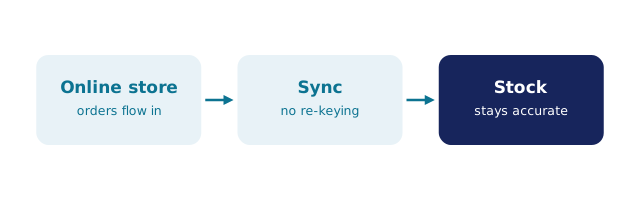
Three questions cut through the category's marketing. Where do movements live? If stock is a table someone types into, the rest is decoration. What happens on cancellation? A real OMS releases reservations cleanly and the freed stock is immediately promiseable — the failure path is designed, not discovered. Where does the invoice come from? From the checked order, pushed to the accounting system, payment status mirrored back — not re-keyed. An afternoon running all three on your own products beats a quarter of demos.

Frequently Asked Questions
What does OMS stand for in business software?
Both "order management system" — the fulfilment subset — and "operations management system" — the fuller record spanning stock, orders and purchasing. In finance it means a trading order router. Ask any vendor which of the three they mean; the answer reveals the product.
Is an OMS the same as an ERP?
No — the ERP bundles the operations record with finance, HR and production planning; the OMS is that operations record standing alone, with accounting handed to a dedicated system. ERPs suit multi-entity complexity; a focused OMS suits businesses that need the record to be true without the programme.
What should an operations management system include?
At minimum: movement-based stock across locations, order state tracking from receipt to payment, purchasing raised from demand, and fulfilment tooling — pick lists, delivery slips, status trails. Traceability, batches and portals are the usual next layer.
Does BSimple qualify as an OMS?
Yes, in the operations sense: it holds the stock, order and purchasing records as one truth, with portals, batches and traceability in the core plans — and it deliberately stops short of ERP subjects like HR and MRP scheduling, from $180/month AUD.
How do I evaluate an OMS quickly?
Three probes: where movements live, what happens when a reserved order cancels, and whether the invoice reaches the books without re-keying. The trial lets you run all three on your own products — the only demo that counts.
BSimple