
Guide / industry layers
Operations management systems in oil and gas — the honest map
In this industry, "operations management" means plant control, asset integrity and HSE at enterprise scale — a different universe from stock records. What the layers are, and who they are for.
The key facts
- In oil and gas, "operations management system" means plant-scale control: SCADA and instrumentation, asset integrity, HSE compliance, production accounting, logistics.
- These are enterprise, regulated systems — weight, certification and budgets that SMB software cannot and should not pretend to cover.
- BSimple's honest slot is narrow: the suppliers and distributors around the industry — parts, consumables, equipment trade — not the operators.
- The general lesson transfers: one operational record, movement discipline, audit trails — at whatever scale your business actually is.
- 01The key facts
- 02What "operations management" means in this industry
- 03Where BSimple genuinely fits — and where it does not
- 04The general lesson, at any scale
What "operations management" means in this industry
Oil and gas operations run on layers of specialised, regulated systems: SCADA and control systems watching wells, pipelines and plants in real time; asset integrity management for pressure equipment, inspection schedules and corrosion; HSE systems where an incident report is a legal event; production accounting measuring hydrocarbons from wellhead to shipment; and logistics coordinating marine, road and pipeline movements. Vendors in this space sell to enterprises, certify against industry standards, and price accordingly — because a mistake is measured in environmental and human terms, not stockouts.
The phrase "operations management system" in this industry therefore has little to do with the stock-and-orders meaning this site usually discusses — the OMS vocabulary page separates the meanings, and the honest advice for anyone shopping in this category is: it is enterprise territory, evaluated with industry consultants, not feature matrices.
Where BSimple genuinely fits — and where it does not
We build BSimple, so weigh that: it does not serve oil and gas operators — no SCADA, no asset integrity, no HSE, no production accounting, and no claim to regulated-industry certification. Pretending otherwise would be the least honest sentence this site could publish.
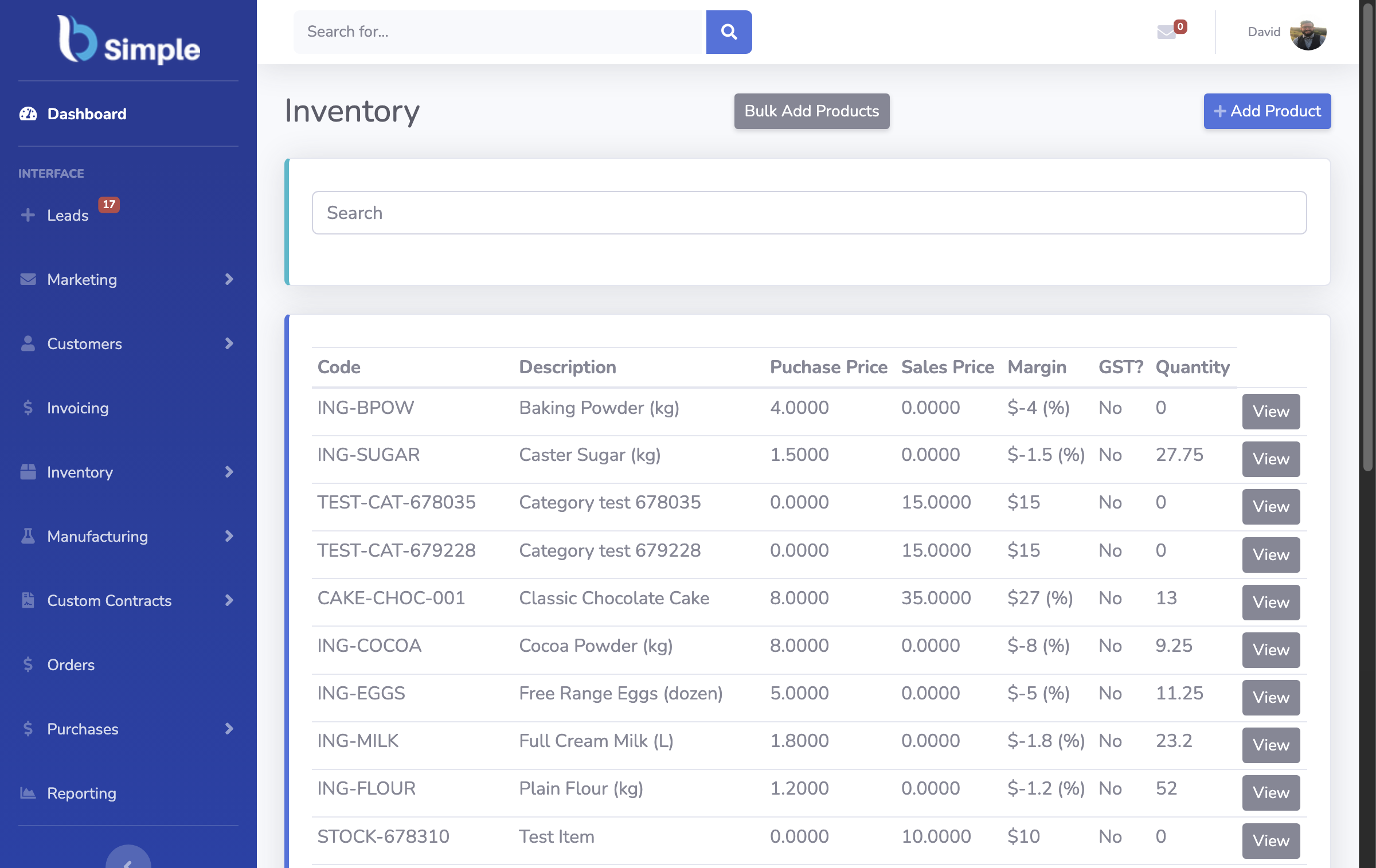
The genuine slot is narrow and worth stating: the businesses that supply and service the industry — distributors of parts, consumables, safety equipment and tools; workshops maintaining equipment; trade suppliers moving goods between locations. For those, the operations record is the same machine as everywhere else: live multi-location stock, batch tracking, purchasing from demand, customer portals for trade buyers, invoices to Xero or MYOB (US integrations rolling out) — from $180/$250/$399 per month AUD, with the trial as the test. The hardware-and-tools angle and the asset-tracking mechanics cover the record patterns such suppliers need.
Get started with BSimple
The general lesson, at any scale
Strip the industrial scale and the industry's discipline reduces to principles every business can borrow: instrument the real movements (what you do not record, you cannot manage), keep one record (the alternative is two systems arguing), make audit a by-product (every change attributed, automatically), and treat safety-critical and compliance-critical data as first-class. Software can enforce some of that — BSimple's guardrails and audit trail are the SMB version of the same idea — but the discipline comes first, and the industry that invented it is the proof. The ERP-weight comparison covers where heavier systems earn their cost in ordinary industries.
Frequently Asked Questions
Does BSimple work for oil and gas operators?
No — operators need plant control, asset integrity and HSE systems at enterprise, regulated scale, which BSimple does not provide or pretend to. Its slot is the supply businesses around the industry, not the industry itself.
What is an operations management system in oil and gas?
The family of systems controlling and monitoring operations: SCADA, asset integrity, HSE, production accounting and logistics — enterprise products, certified processes, and budgets to match. A different universe from stock records.
Can BSimple track parts for an oilfield services business?
Yes — parts, tools and consumables across stores and vans, with batches, reorders and job history, is squarely what it does. The regulated operations of the clients remain their own systems.
Why does this page decline a market it could half-serve?
Because half-serving a regulated industry is worse than declining it — compliance gaps surface at the worst moments. The boundary is stated so the evaluation starts honestly.
Where do we go from here if we are a supplier to the sector?
The trial with your real parts and one job; the inventory guide for the wider picture. The record either earns its cost on your volumes in a week, or it does not.

BSimple