
Guide / accounting boundaries
Inventory software that works with QuickBooks
"Works with" has a floor: invoices cross without re-keying, quantities stay true on both sides, and reconciliation survives contact. Here is what to demand — and BSimple's status stated plainly: Xero and MYOB today, US accounting integrations rolling out.
The key facts
- The floor for "works with": invoices to accounting without re-entry, quantities true on both sides, payment status mirroring back.
- BSimple's status: the established accounting handoff is Xero and MYOB; US accounting integrations are rolling out — we do not claim finished QuickBooks support.
- The QuickBooks family matters: Online and Desktop are different integrations with different tooling — check which one your books actually live in.
- The honest fork: if QuickBooks is a hard requirement today, tools built around it are the right aisle; if the record is the pain, the boundary decision can wait for the integration.
- The wider system: inventory management end to end maps the whole record this page sits in.
- 01The key facts
- 02What "works with QuickBooks" should mean
- 03BSimple's status, stated plainly
What "works with QuickBooks" should mean
Plenty of products claim the phrase for an export button. The floor is three tests, and they are the same for any accounting system: invoices cross without re-entry — an approved order becomes an invoice in the books, tax handled, no human retyping; truth flows both ways — the operational record deducts stock from real movements while payment status (paid, voided, credited) mirrors back from the books; and reconciliation survives — part-paid, split and joined supplier invoices, and tax amounts reconcile without a spreadsheet bridge. A product that passes none of the three but exports a CSV does not work with your accounting; it cooperates with it occasionally, on your time.
One check before shortlisting: which QuickBooks? Online and Desktop are different platforms with different integration ecosystems, and a product "working with QuickBooks" may mean only one of them. The Desktop-specific question and the QuickBooks Online angle cover each branch.
BSimple's status, stated plainly
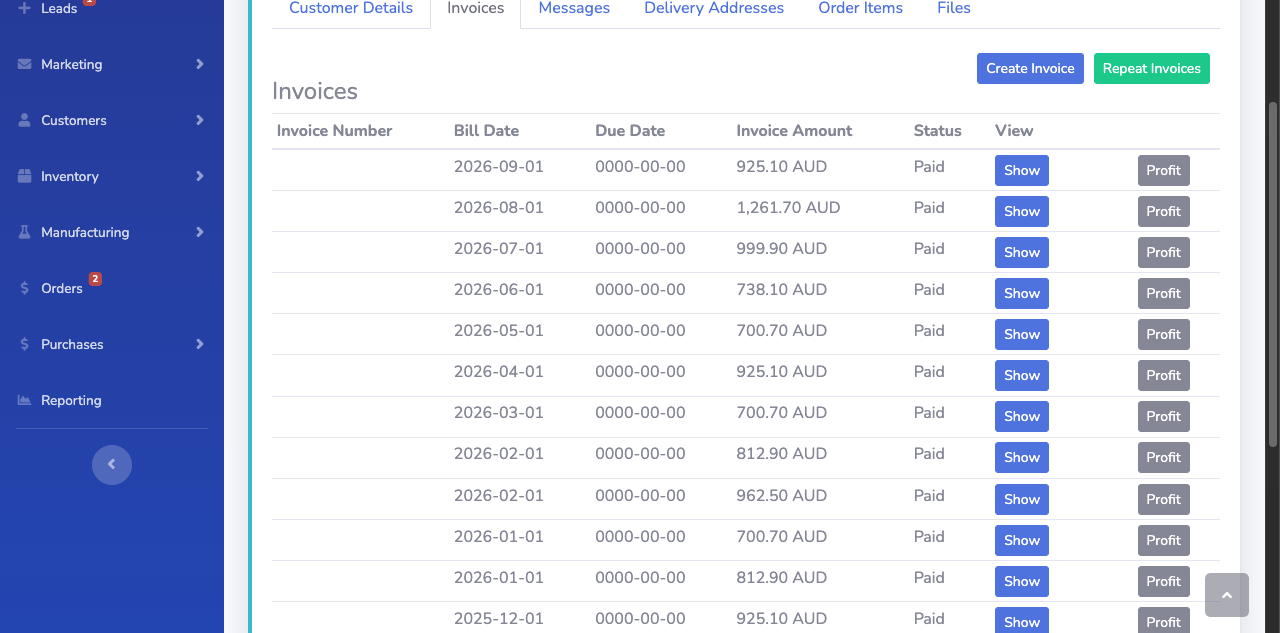
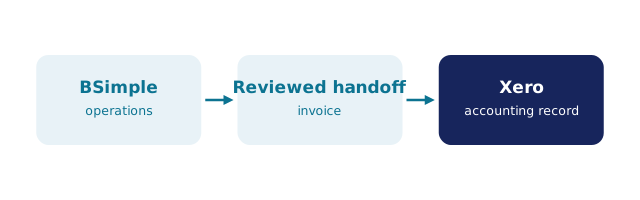
We build BSimple, so weigh that. Its accounting boundary is deliberate: BSimple holds the operational record — live quantities across locations, purchasing from demand, batch tracking, order-to-invoice, customer portals — and hands reviewed records to the accounting system rather than replacing it. Today that handoff is established with Xero and MYOB: invoices push after approval, payment status mirrors back, purchase orders reconcile with GST handling, and contacts import selectively. US accounting integrations are rolling out; until QuickBooks support is generally available we will not claim it, and the current status is one honest question away — ask us.
The choice this creates is real and worth framing rather than hiding. If QuickBooks is a hard requirement today, the tools built around QuickBooks synchronisation are the right aisle — a vendor whose handoff matches your books beats a better record that does not. If the pain is the record itself — untrusted quantities, overselling, re-keying between systems — then the boundary can be handled deliberately while the integration matures. Accounting and the operations split explains why the boundary exists at all, and the trial runs the operational side on your real products in an afternoon.
Frequently Asked Questions
Does BSimple work with QuickBooks today?
Not yet as a finished integration. The established handoff is Xero and MYOB, with US accounting integrations rolling out. We will not claim QuickBooks support that does not exist — check the current status with us before deciding.
Why not just run accounting inside the inventory system?
Deliberately no: tax compliance is a full-time discipline with its own update cycles. BSimple keeps the operational record accurate and hands reviewed invoices to the accounting system, where your accountant already works.
What does the Xero/MYOB handoff include?
Invoice push after approval, payment-status mirroring back to the operational record, purchase order reconciliation with GST-inc/ex-GST handling, and selective contact import — an accountant who receives reviewed records, not cleanup work.
How do we test any claimed QuickBooks integration?
The floor, run for real: push one invoice, mark it paid in the books, receive one supplier invoice with a partial payment. If all three cross without re-keying, the integration works; if any fails, you have found the workarounds early.
Should we switch accounting systems to use BSimple?
That is a bigger decision than software — books move for compliance, banks and history, not for an inventory feature. Many businesses run the operational record with a deliberate boundary while the US integrations roll out; price both paths honestly before choosing.

BSimple