
Guide / free tools
Free inventory management tools
The honest answer first: BSimple is not free — it is paid software from $180/month AUD with a full-product trial. The genuinely free tools that do exist (spreadsheet, free tiers, open source) are real options, and each has a cost that arrives after the download.
The key facts
- BSimple's position: not free — Starter $180, Professional $250, Organisation $399 AUD monthly, full-product trial, no feature-capped free tier. Claimed plainly rather than dressed up as "free tools".
- The genuinely free three: a movement-based spreadsheet, free tiers of paid products, self-hosted open source.
- The hidden bill, by route: hours of manual entry and drift (spreadsheet), caps at growth points (free tiers), hosting and maintenance (open source).
- The honest sequence: spreadsheet until it hurts → free tier until it caps → a paid trial before workarounds calcify.
- The full picture: how the inventory record works is the hub page for everything above.
- 01The key facts
- 02What is genuinely free, and what it does well
- 03How to judge a "free" claim in five minutes
- 04BSimple's position, stated plainly
What is genuinely free, and what it does well
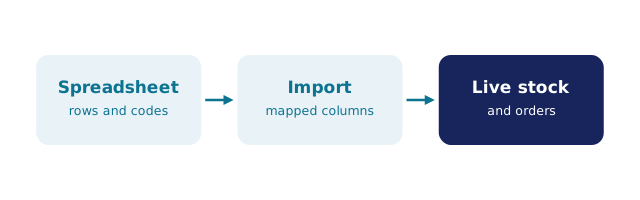
The spreadsheet. Movement-based and honestly kept — products, an in/out log with signed quantities, stock derived by formula — it carries a single-location business further than most people expect. Its price is paid in hours: manual entry, drift correction, and the monthly re-keying into the books. The free-in-Excel build gives the pattern.
Free tiers. Real software with real structure, capped by design at growth points — order volume, user count, or the accounting export. For a business below the caps, genuinely useful; for one above them, a migration delay. Read the gated list before committing data.
Open source. Free to license, self-hosted by you: hosting, patching, backups and upgrades are the cost, and someone must own each by name. The open-source comparison and the free-stock-tools route name the checks.
What none of the three gives you is the thing paid tools actually charge for: a record that stays true under multiple users, with an audit trail and an accounting handoff. That is not greed; it is the work the price funds.
How to judge a "free" claim in five minutes
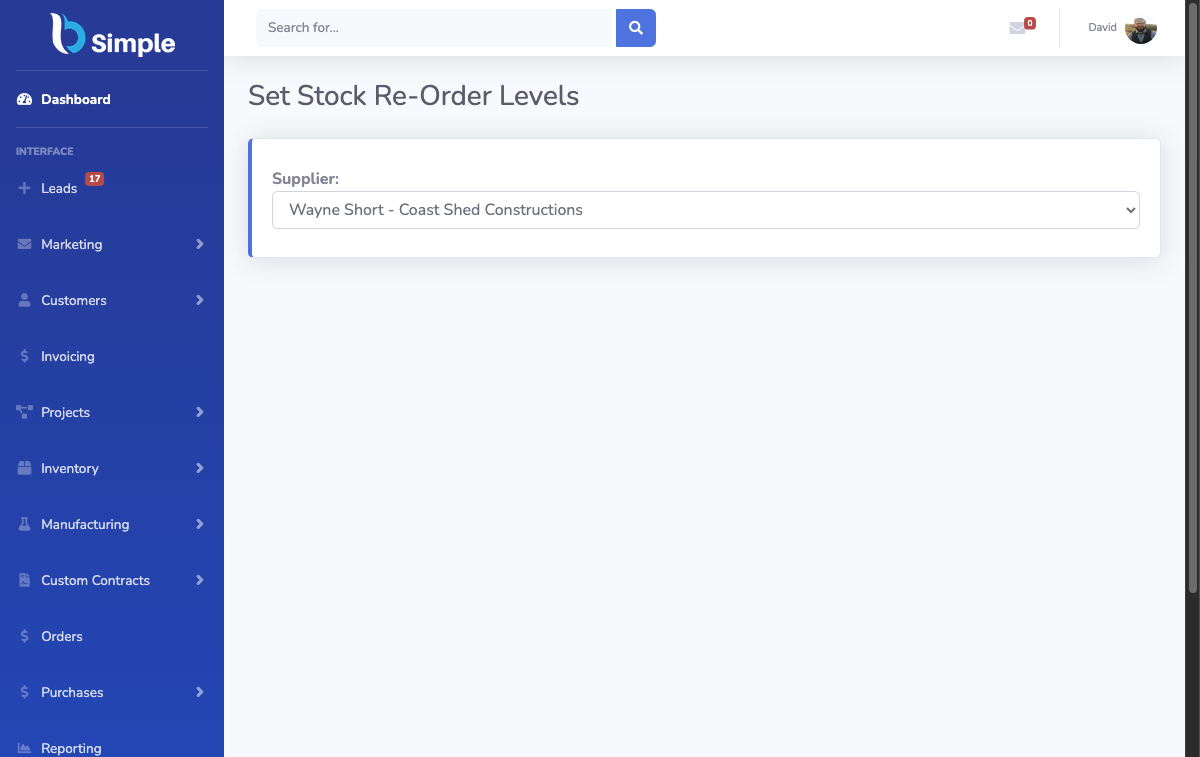
Find the cap. Every free tool has one — storage, orders, users, exports, or the specific feature you searched for. If the cap is not visible, it is the pricing page's job to hide it.
Find the handoff. Sell one item, follow the record into your accounting setup, count the manual steps. A free tool that re-keying eats is not free; it is invoiced in hours.
Find the owner. Who corrects the record when the count drifts, who applies security patches, who answers when the tool breaks the week before a big order? A tool without an accountable person is a spreadsheet with extra steps — the cost arithmetic differs by market, but the pattern does not.
BSimple's position, stated plainly
We build BSimple, so weigh that: it is paid software — Starter $180, Professional $250, Organisation $399 AUD per month — with every operational feature in the core plans: live multi-location stock, purchasing with price-variance flags, customer ordering portals, batches and traceability, invoices handed to the accounting system. There is no free tier, because a free tier would cap exactly the capabilities growing businesses need; instead there is a free trial of the full product, uncapped, so the comparison against any free tool can happen on your own data.
The honest sequencing advice: start with the spreadsheet, move to a free tier when it caps, and run a trial of a paid system before the free tool's workarounds become staff habits. The right moment to pay is when the record must be trusted by someone who did not type it — and the wrong moment is never tested at all.
Frequently Asked Questions
What inventory management tools are actually free?
A movement-based spreadsheet, free tiers of paid products (within their caps), and self-hosted open source. All three are legitimate starting points, and all three charge later — in hours, in migration, or in maintenance.
Is BSimple free?
No — plans run $180/$250/$399 AUD monthly. There is a free trial of the entire product, which is the honest way to evaluate software that is not free: everything available, nothing pretend.
What is the catch with free inventory tools?
Three usual catches: caps placed exactly at growth points, manual re-keying into accounting, and nobody accountable when the record drifts. None is hidden — but all are easy to meet for the first time at the worst moment.
Can a free tool handle stocktakes and reorder alerts?
A disciplined spreadsheet can approximate both: count sheets reconciled by hand, reorder levels with conditional formatting. What it cannot do is count for you, or chase a variance to a cause — the inventory management comparison shows how paid free-tiers gate exactly those.
When should a business stop relying on free tools?
When the stock figure must be trusted by someone who did not type it, or when the weekly hours spent maintaining the free tool exceed the price of a maintained system. Test that moment on real data with the trial rather than waiting for the free tool to fail publicly.
BSimple