Guide / lessons from the big
Zara's inventory management system, translated
Zara's supply chain is the most-studied inventory operation in retail. You cannot buy it, and most of it is out of scale for small business — but three principles behind it transfer directly, and one of them is free.
The key facts
- The famous model, in brief: small initial batches, tight feedback from stores, rapid in-house production and replenishment — scarcity by design, speed as the moat.
- The engine behind it: sell-through data from every store flowing to design and production daily — the inventory record as a decision system, not a ledger.
- What does not transfer: vertical integration, dedicated logistics, store network scale.
- What does: small batches, live sell-through visibility, and reorder discipline — the first costs nothing, and the third is what BSimple automates.
- Where it fits: this page is one branch of the inventory management guide.
- 01The key facts
- 02How the Zara model works — the parts worth studying
- 03The three principles that transfer to your business
How the Zara model works — the parts worth studying
Fast fashion's textbook case works because inventory is treated as a stream of small decisions rather than two big bets. Designs go to stores in small initial batches; sell-through tells the system what deserves a second run; replenishment happens in days, not seasons; and deliberate scarcity keeps markdowns low and store visits frequent. Underneath, the plumbing is vertical: in-house production for fashion-sensitive lines, dedicated logistics, and a cadence that ships to stores on a weekly rhythm. None of this is secret — it has been described in business schools and supply-chain literature for two decades — and none of it is a software purchase.
The part that is genuinely a system: the record. Store-level sell-through reaches design and production while the garment is still relevant. Zara's advantage is not predicting demand perfectly; it is shortening the distance between "what sold" and "what to make next" until being wrong is cheap.
Get started with BSimple
The three principles that transfer to your business
- Small first batches. Order the smallest quantity that tests the hypothesis — the discount bin is the receipt for over-confidence. This principle costs nothing and works at any scale.
- Live sell-through, not month-end guesses. The decision "reorder or markdown" needs current quantities and sales on one record, not a reconciliation meeting. Whatever system holds your stock should answer "what is selling and what is sitting" in one screen.
- Reorder as a reflex, not a project. When reorder levels trigger purchase orders from demand — rather than from a person remembering — the Zara loop exists at small scale: sell, see, restock, repeat.
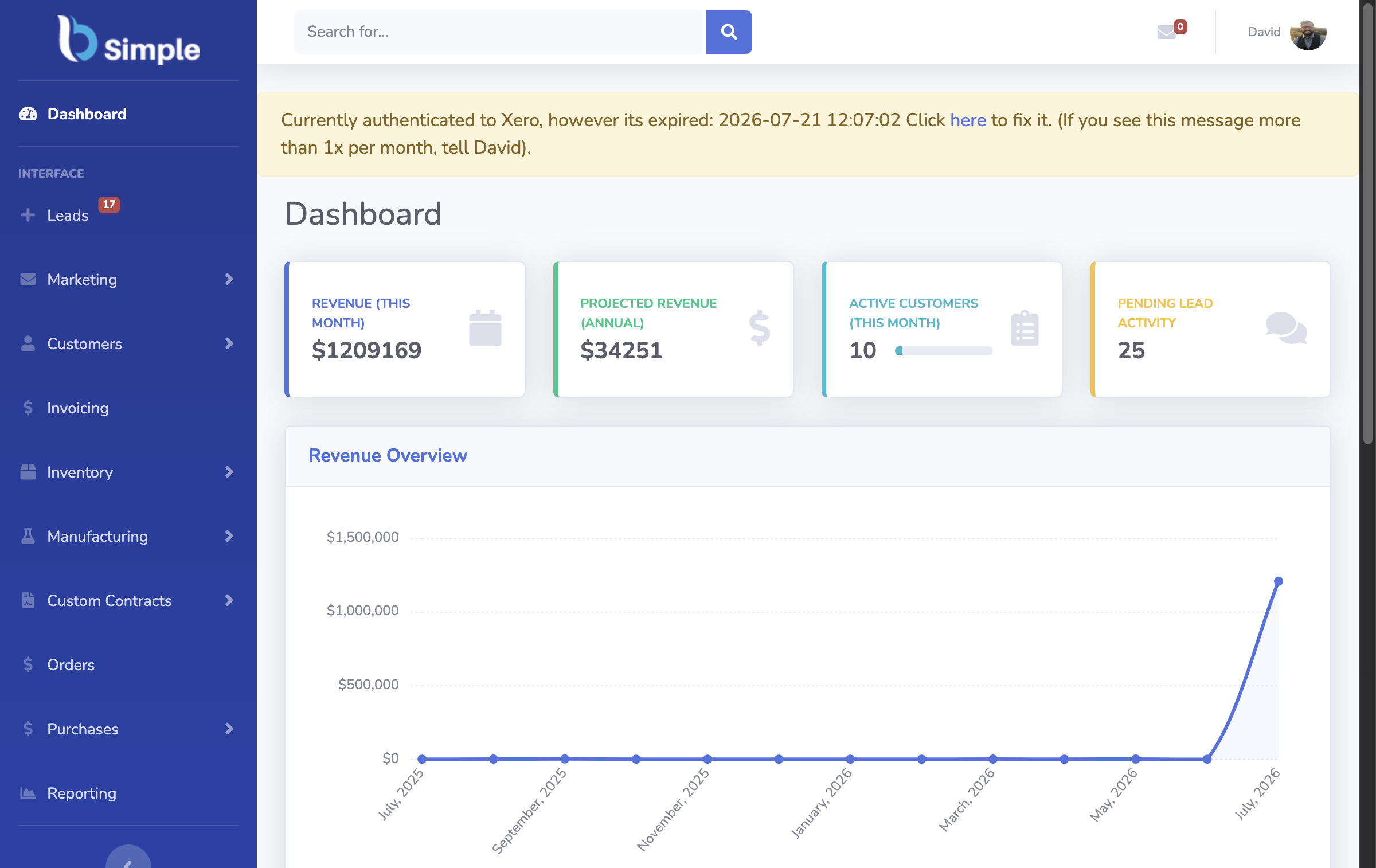
We build BSimple, so weigh that. It is the small-business version of that plumbing: live quantities across locations, reorder levels that raise purchase orders from real demand, batch tracking where provenance matters, and the accounting handoff to Xero or MYOB. From $180/month AUD — the trial runs the loop on your own products. Inventory forecasting, the adjacent skill and tracking systems in practice cover the surrounding ground.
Frequently Asked Questions
What inventory management system does Zara use?
Zara's operation is built on proprietary, vertically integrated systems described publicly only in outline — store sell-through feeding in-house design and production. No vendor sells "the Zara system", and any vendor implying so is decorating a brochure.
Is Zara's approach RFID-based?
RFID store-level stock tracking is widely reported as part of fast-fashion operations at Zara's scale, alongside its logistics network. The principle that matters for small business is the live record, not the tag technology — barcodes deliver that principle too.
Can a small business copy the Zara model?
The three principles — small batches, live sell-through, reorder discipline — transfer directly. The vertical integration, dedicated logistics and store network do not. Copy the decision loop, not the infrastructure.
What is the small-business version of Zara's "short feedback loop"?
One record where sales and stock live together, so "reorder this week or mark it down" is a decision made from the screen — not from a reconciliation. In BSimple, reorder levels and demand-driven purchase orders are exactly that loop, automated.
Does BSimple suit fashion and apparel businesses?
Wholesalers, importers and producers fit directly: multi-level stock (sizes and packaging), batch tracking, portal ordering for stockists. Retail counter sales need a POS alongside — start the trial with your real range to see the fit.
BSimple