
Guide / forecasting, honestly
Inventory and forecasting software: the honest split
Forecasting is a claim; reordering is a mechanism. Here is the difference, what a reorder-driven record genuinely does for planning, and the boundary BSimple draws — no statistical forecasting engine, no black boxes.
The key facts
- Forecasting means predicting demand before it shows in orders; reordering means responding to demand already visible in the record.
- BSimple is reorder-driven, not forecasting-driven: PAR/reorder levels, shortage checks before runs, purchasing raised from demand.
- No statistical forecasting engine, no black boxes — we do not claim AI demand prediction.
- What the record does provide: reporting views, live quantities and order history that make any forecasting method — spreadsheet or specialist — honest.
- 01The key facts
- 02What forecasting software claims to do
- 03What BSimple does — and the line we draw
- 04Choosing: forecasting engine or reorder-driven record
What forecasting software claims to do
Forecasting tools predict future demand from sales history — seasonality, trends, lead times — and turn the prediction into recommended orders. Done well and checked often, that is genuinely valuable; done badly, it is confident auto-purchasing of stock nobody needed. The evaluation questions are always the same: what inputs feed the model, what accuracy was measured, who owns a wrong prediction, and can a human override the order before money moves.
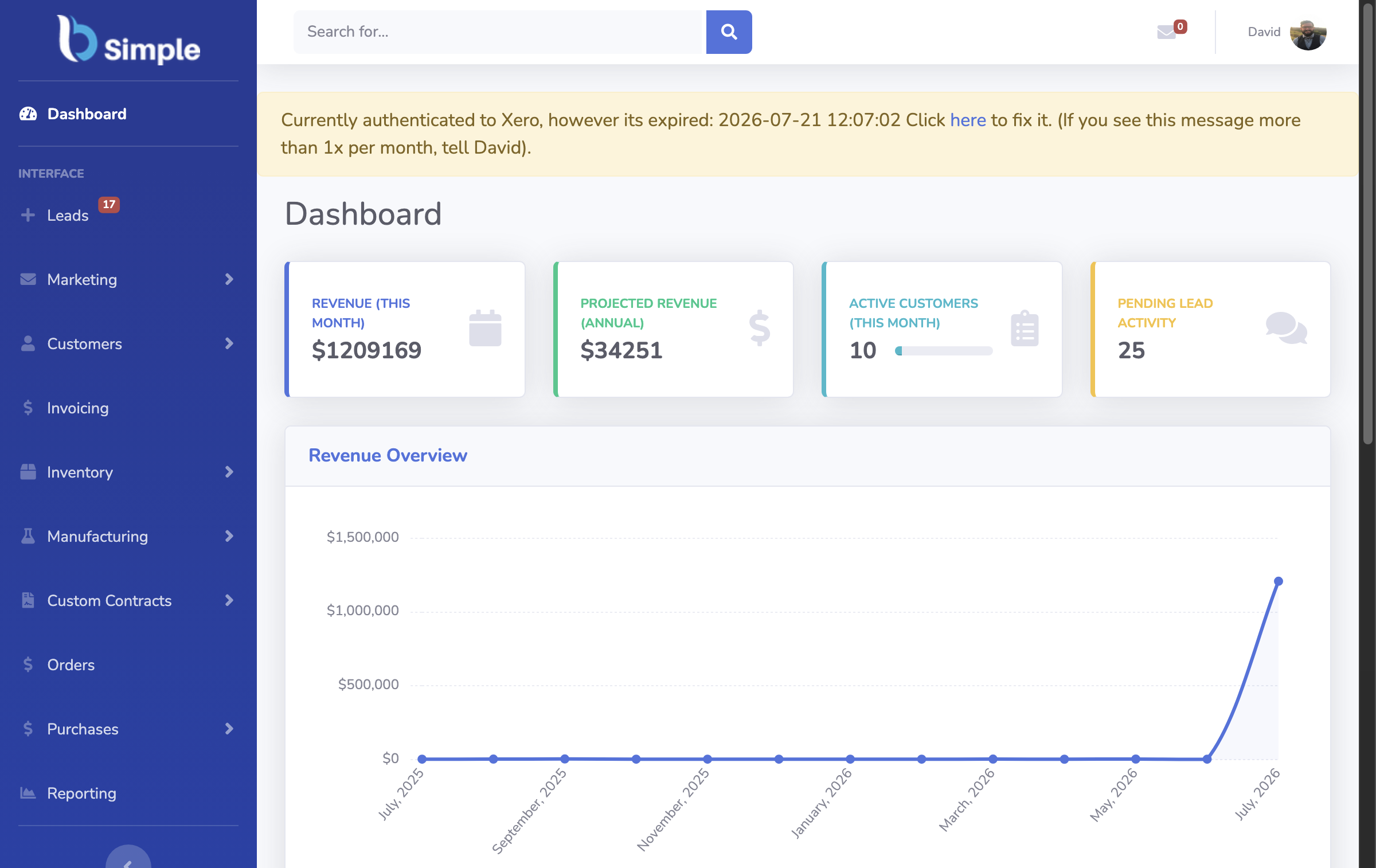
The honest pattern most businesses actually run sits one step simpler: reorder levels set from observed demand, purchasing raised when stock falls below them, and shortage checks that catch shortfalls before they become stops. It is less glamorous than a forecast and much easier to audit — every number has a visible reason.
What BSimple does — and the line we draw
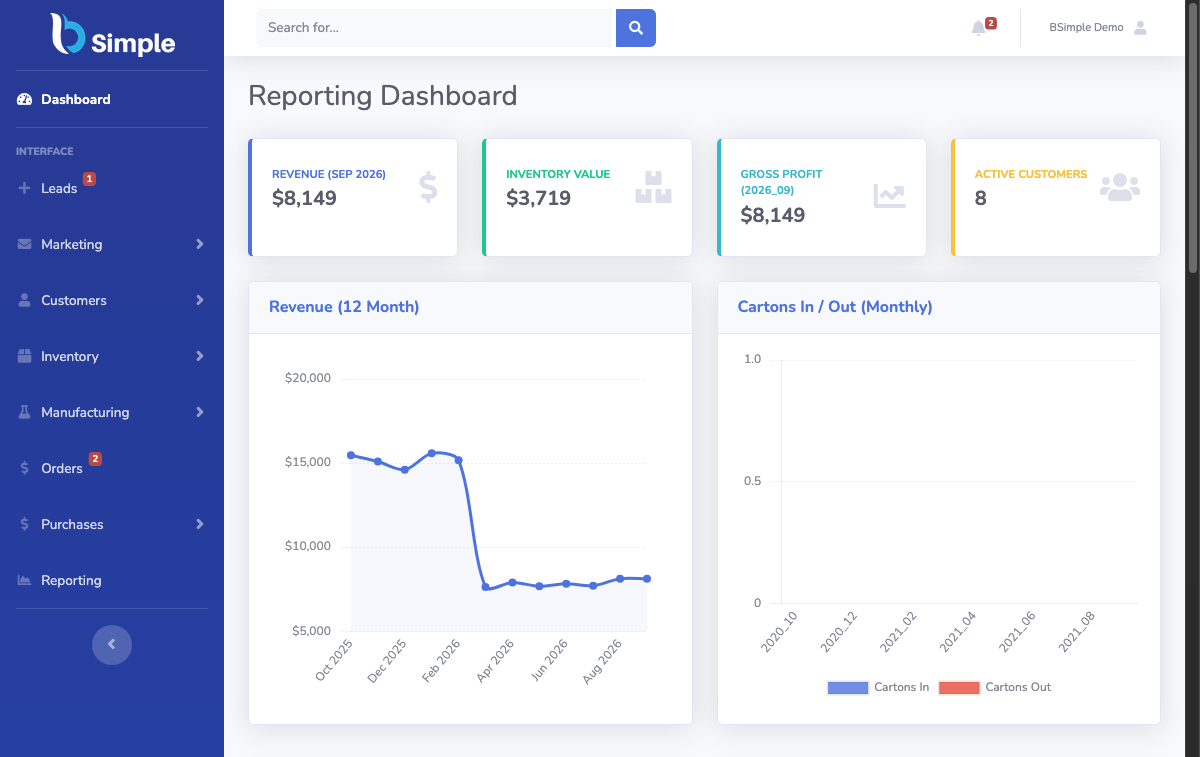
We build BSimple, so weigh that. BSimple is a reorder-driven system: PAR and reorder levels per item drive purchase orders from demand; production runs run shortage checks against live quantities before they start, turning missing inputs into purchase orders instead of mid-run stops; reporting views show order, invoice and stock values so demand patterns are visible to the humans doing the planning. What we do not claim is a statistical demand-forecasting engine — no AI prediction, no auto-buying. The AI-and-inventory page covers that boundary in depth.
What the record contributes to forecasting of any kind is the input quality: live quantities, order history and traceable movements mean a spreadsheet forecast or a specialist tool starts from true numbers, not corrected-by-memory ones. Which software is used for inventory management and the stock-management overview place reordering among the core functions; the inventory management guide is the full picture.
Choosing: forecasting engine or reorder-driven record
Choose by demand shape and accountability. If demand is stable and lead times are known, reorder levels on an honest record cover most of the value, and every order stays explainable. If demand is genuinely volatile and margins justify it, evaluate forecasting as a specialist capability — with published accuracy, visible inputs and human approval on every order, regardless of vendor. The two compose: the record stays the source of truth, and the forecast becomes advice a human acts on inside it.
Test it with your own demand history: the trial runs the full product — reorder levels, shortage checks, purchasing and invoicing from $180/month (AUD) — and an afternoon with your own numbers shows whether the mechanism, rather than a prediction, was what you needed.
Frequently Asked Questions
Does BSimple forecast demand?
No — we do not claim a statistical or AI forecasting engine. BSimple is reorder-driven: PAR/reorder levels, purchasing raised from demand, and shortage checks before production runs. Every ordering decision has a visible reason and a human behind it.
Can I use forecasting with BSimple?
Yes — as advice, not autopilot. The record provides live quantities, order history and reporting views; your spreadsheet method or specialist forecasting tool can read the same truth (including via the public API) and you act on it inside the system.
Is reorder-driven planning enough without forecasting?
For stable demand and known lead times, usually yes — it is auditable and simple to fix when wrong. For volatile demand, treat forecasting as a specialist add-on with proven accuracy, and keep humans approving the orders.
What does BSimple cost?
Plans start at $180/month (AUD) with reorder levels, shortage checks, purchasing, reporting and invoicing in the core plans — no forecasting module to pay for, because we do not sell one. The trial is free.
BSimple