
Guide / BSimple
Inventory Management System Rfid for Wholesale for Growing Manufacturers
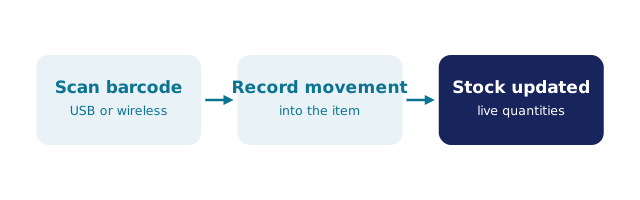
Rather than relying on manual counts or barcode scanning, RFID systems use radio frequency identification tags to automatically capture inventory data as products move through your warehouse, factory floor, or distrib…
- Real-time inventory visibility across all warehouse locations without manual scanning
- Automatic data capture reducing human error and eliminating manual data entry requirements
- Seamless integration with Xero accounting for accurate financial reporting and EOFY compliance
- Automated purchase order generation based on stock levels and reorder points
- Negative inventory tracking to identify issues before they impact production or customer orders
- Rapid stocktake capabilities reducing closure time from days to hours
- Customer ordering portal accuracy with real-time stock availability information
Welcome to our guide on inventory management system RFID — see also our Inventory Management Software for the full picture. RFID technology has transformed how Australian wholesalers, manufacturers, and distributors track their stock in real time. Rather than relying on manual counts or barcode scanning, RFID systems use radio frequency identification tags to automatically capture inventory data as products move through your warehouse, factory floor, or distribution centre. For growing manufacturers and wholesale businesses, this means fewer stocktake headaches, less human error, and dramatically improved visibility across your entire operation. Whether you're a Sydney coffee roaster managing bean inventory, a Melbourne brewery tracking fermentation tanks, or a manufacturing business juggling complex component stock, RFID integration with your business management system can be genuinely transformative. The beauty of RFID is that it works seamlessly in the background—no more manual data entry, no more wondering if your system matches reality. When paired with cloud-based inventory management software, RFID becomes even more powerful, giving you instant insights into stock levels, automated reordering, and the ability to spot problems before they become costly mistakes. For Australian SMBs managing EOFY stocktakes or dealing with GST compliance requirements, having accurate, real-time inventory data isn't just convenient—it's essential for staying on top of your business.
- 01How RFID Technology Transforms Inventory Tracking
- 02Real-Time Accuracy and Better Decision Making
- 03ROI and Strategic Benefits of RFID Implementation
- 04RFID as Essential Infrastructure for Modern Operations
How RFID Technology Transforms Inventory Tracking
RFID technology works by embedding small electronic tags into or onto products, cases, or pallets. These tags contain data that's read by RFID readers positioned throughout your warehouse or manufacturing facility. Unlike barcodes, RFID tags don't require line-of-sight scanning—a reader can pick up multiple tags simultaneously from several metres away. This means you can scan entire pallets or shelving units without manually handling each item. For wholesale and manufacturing businesses, this speed and accuracy translates directly into time savings and fewer inventory discrepancies. The real power emerges when RFID data feeds directly into your business management system. Imagine knowing instantly when stock levels drop below your reorder point, having automated purchase orders generated without manual intervention, or being able to conduct a complete stocktake in a fraction of the time it currently takes. Many Australian manufacturers are discovering that RFID eliminates the traditional stocktake nightmare—no more closing operations for days to count everything manually. Instead, you get continuous, accurate inventory visibility. This is particularly valuable for businesses managing just-in-time inventory, where precision is critical to avoiding production delays or excess stock. RFID also helps with negative inventory tracking, allowing you to identify issues before they cascade into larger problems. When integrated with Xero integration capabilities, your inventory data automatically syncs with your financial records, ensuring your balance sheet reflects reality and making EOFY reconciliation significantly less painful.
Real-Time Accuracy and Better Decision Making
One of the biggest advantages RFID brings to Australian wholesale and manufacturing businesses is the elimination of manual data entry errors. When your team is manually entering SKU numbers, quantities, and locations into a spreadsheet or basic inventory system, mistakes are inevitable—and they compound quickly. A single mistyped quantity can throw off your entire stock balance, leading to incorrect reorder decisions, customer service failures, and wasted time investigating discrepancies. RFID removes this human error almost entirely. Tags are read automatically, data flows directly into your system, and your inventory records stay accurate without anyone having to type anything. This is especially valuable during high-pressure periods like EOFY stocktakes, when accuracy is critical for GST compliance and financial reporting. Beyond accuracy, RFID enables better decision-making. When you have real-time visibility into stock levels across multiple locations, you can make smarter purchasing decisions. You'll know exactly what's moving fast and what's sitting on shelves gathering dust. This helps optimise your cash flow—a critical concern for growing manufacturers and wholesalers. Rather than tying up money in excess inventory, you can maintain leaner stock levels while still meeting customer demand. For businesses offering customer ordering portals, accurate RFID-driven inventory data means you can confidently show customers real-time stock availability, reducing back-orders and improving the customer experience. This transparency builds trust and can become a genuine competitive advantage in the wholesale space.
ROI and Strategic Benefits of RFID Implementation
Implementing RFID in a manufacturing or wholesale environment does require upfront investment in hardware and infrastructure—RFID readers, antennas, tags, and the software integration to tie it all together. However, the return on investment typically comes quickly for businesses with significant inventory operations. The time savings alone—reducing stocktake duration from days to hours—justifies the expense within months for most operations. Beyond the direct cost savings, RFID delivers strategic benefits that compound over time. Better inventory accuracy means fewer emergency orders and rush shipments, which are expensive. Reduced shrinkage and loss—because you know exactly where everything is—directly improves your bottom line. Faster inventory turnover means better cash flow. Improved customer service from accurate stock information leads to repeat business and referrals. For Australian SMBs, these benefits can be transformative. A Melbourne brewery that previously lost days to stocktakes can now conduct them in hours, freeing up staff for more valuable work. A Sydney coffee roaster can maintain optimal bean inventory without tying up excessive capital. A manufacturing business can implement true just-in-time inventory, reducing warehouse costs and improving efficiency. The key is choosing a business management system that supports RFID integration properly. Your software needs to handle the data volume that RFID generates, process it efficiently, and present it in ways that actually help you make decisions. Order management software that's built to work with RFID can automatically generate purchase orders based on stock levels, notify you of discrepancies, and integrate seamlessly with your existing Xero accounting setup.
RFID as Essential Infrastructure for Modern Operations
The future of inventory management for Australian wholesale and manufacturing businesses increasingly involves RFID technology paired with intelligent cloud-based software. As RFID tag costs continue to decline and reader technology improves, more SMBs are finding it economically viable to implement these systems. The trend is clear: businesses that embrace RFID and real-time inventory visibility gain competitive advantages in speed, accuracy, and customer service. For growing manufacturers, RFID enables scaling without proportionally increasing administrative overhead. You can handle 50% more volume without needing 50% more staff to manage inventory—because the system does the heavy lifting. For wholesalers, RFID makes it possible to offer better service to customers through accurate stock information and faster order fulfilment. The integration with customer ordering portals means your clients can see real-time availability and place orders with confidence. For distribution businesses, RFID tracking provides visibility throughout the supply chain, helping you identify bottlenecks and optimise operations. When you combine RFID technology with automated purchase order generation, negative inventory tracking, and seamless Xero integration, you create a system that genuinely works for your business. No more manual workarounds, no more spreadsheet nightmares, no more inventory surprises at EOFY. Instead, you get clean data, smart automation, and the confidence that comes from knowing exactly what you have, where it is, and what you need to order next. For Australian businesses serious about scaling efficiently and maintaining accurate financial records, RFID-enabled inventory management isn't a luxury—it's becoming essential infrastructure for modern operations. For a closer look at how these capabilities fit together, our warehouse management software guide ties it all together, and the guide to rrl walks through the practical details.

Frequently Asked Questions
What is RFID inventory management and how does it work?
RFID uses radio frequency tags attached to products to automatically track inventory in real time. Readers positioned throughout your warehouse scan these tags, sending data directly to your management system without manual intervention or line-of-sight requirements.
How much does implementing an RFID inventory system cost?
RFID implementation costs vary based on facility size and complexity, typically ranging from $10,000 to $100,000+ for hardware, tags, and integration. Most Australian SMBs see ROI within 6-12 months through time savings and improved accuracy.
Can RFID integrate with Xero and other accounting software?
Yes, modern RFID systems integrate seamlessly with Xero through cloud-based inventory management platforms. This ensures your stock data automatically syncs with your financial records for accurate reporting and EOFY compliance.
Is RFID better than barcode scanning for wholesale businesses?
RFID is superior for high-volume operations because it reads multiple items simultaneously without line-of-sight, requires no manual scanning, and provides continuous real-time tracking. Barcodes work for smaller operations but don't scale as efficiently.
How does RFID help with stocktake management?
RFID eliminates manual stocktakes entirely. Instead of closing operations and counting manually, you conduct continuous inventory counts using RFID readers, reducing stocktake time from days to hours and improving accuracy dramatically.
Can RFID track inventory across multiple warehouse locations?
Absolutely. RFID systems provide visibility across all locations simultaneously, enabling better stock allocation decisions, faster order fulfilment, and the ability to implement just-in-time inventory strategies across your entire operation.
Does RFID help prevent inventory shrinkage and loss?
Yes, RFID provides precise tracking of every item, making it nearly impossible for stock to go missing without detection. This significantly reduces shrinkage and helps identify problem areas in your warehouse or distribution processes.
BSimple