
Guide / BSimple
Inventory Management System Php for Australian Business
If you're running a wholesale operation in Sydney, managing stock across multiple warehouses in Melbourne, or coordinating manufacturing schedules in Brisbane, you know that inventory management is the backbone of you…
- Real-time inventory tracking across multiple warehouse locations with instant stock visibility
- Seamless Xero integration for accurate financial reporting and GST compliance
- Automated purchase order generation based on reorder points and supplier lead times
- Customer ordering portals enabling 24/7 self-service ordering and stock checking
- Negative inventory tracking for manufacturing and backorder management during production
- Batch and lot number tracking with expiration date management for compliance
- Comprehensive stocktake management tools simplifying EOFY processes and reconciliation
Building a robust inventory management system PHP for your Australian business doesn't have to be complicated — see also our Inventory Management Software for a comprehensive solution that actually works for wholesalers, manufacturers, and distributors. If you're running a wholesale operation in Sydney, managing stock across multiple warehouses in Melbourne, or coordinating manufacturing schedules in Brisbane, you know that inventory management is the backbone of your operation. A PHP-based inventory management system offers flexibility, scalability, and the ability to integrate seamlessly with your existing business tools. Many Australian SMBs struggle with manual spreadsheets, disconnected systems, and the constant headache of stock discrepancies. The right inventory management system PHP can eliminate these pain points entirely. Whether you're tracking raw materials for a manufacturing facility, managing finished goods for distribution, or juggling stock levels across multiple locations, a well-designed PHP system gives you real-time visibility into your inventory. This means fewer stockouts, reduced overstocking, and ultimately, better cash flow. For Australian businesses dealing with EOFY stocktakes and GST compliance requirements, having an automated system that tracks inventory movements accurately is not just convenient — it's essential. A modern PHP inventory system integrates with your accounting software, automates purchase orders, and provides the visibility you need to make smarter business decisions.
- 01Why PHP Inventory Systems Work for Australian Wholesalers
- 02Why PHP-Based Inventory Systems Make Sense for Australian Wholesalers
- 03Seamless Xero Integration and Financial Compliance
- 04Customer Ordering Portals and Streamlined Distribution
Why PHP Inventory Systems Work for Australian Wholesalers
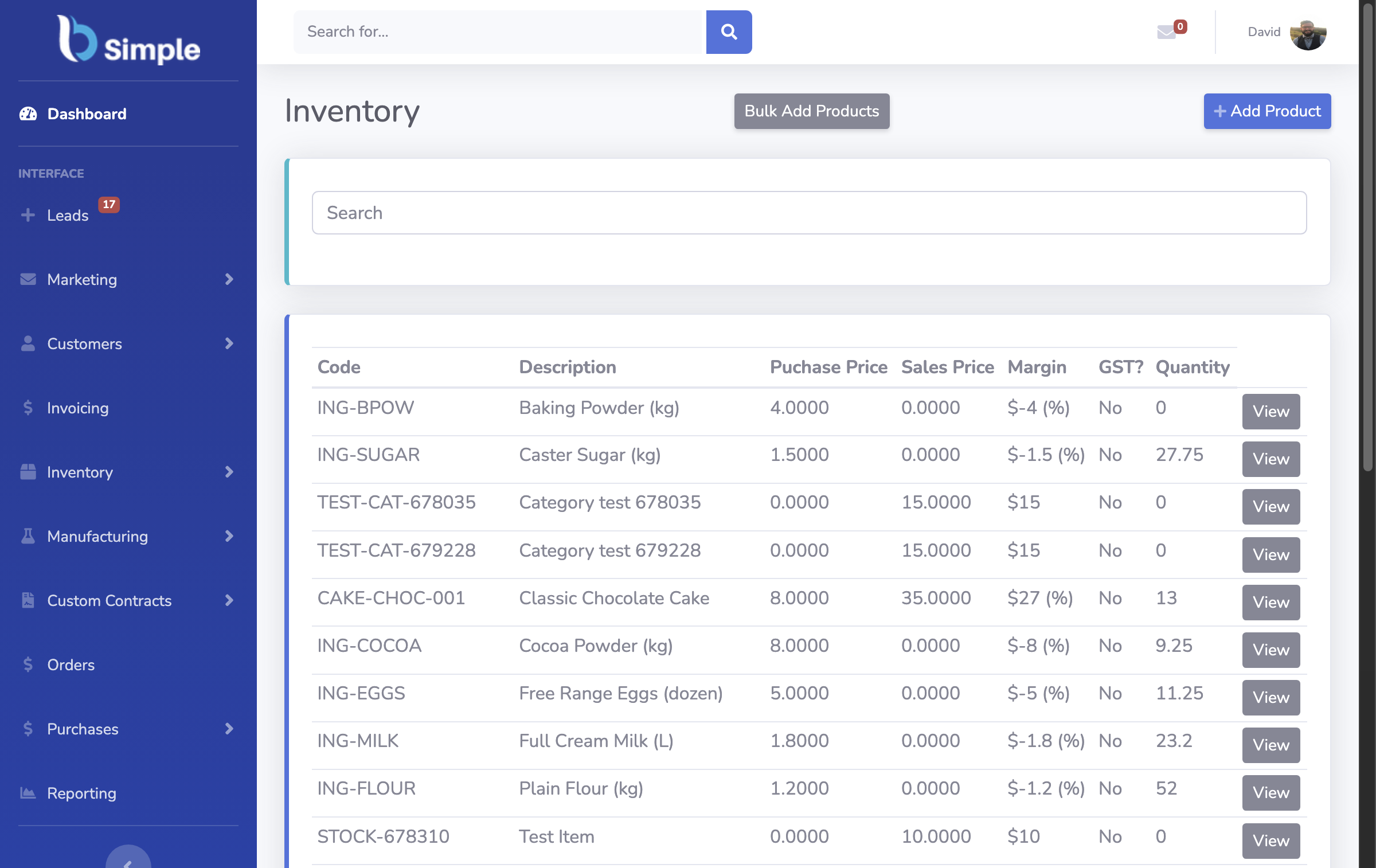
When it comes to choosing an inventory management system PHP solution, Australian businesses need to think beyond basic stock tracking. You need a system that understands the complexities of wholesale and manufacturing operations — things like managing multiple SKUs, tracking batch numbers, handling negative inventory situations, and coordinating with suppliers. A well-architected PHP inventory system provides real-time stock level updates across all locations, automated reorder point calculations, and intelligent demand forecasting. Consider a Melbourne brewery managing hop inventory, grain suppliers, and finished beer stock across three distribution centres. They need to see stock levels instantly, know when to reorder, and ensure they never run out of critical ingredients during peak production. That's what a professional inventory management system PHP delivers. The system should handle complex scenarios like just-in-time inventory management, where stock arrives precisely when needed to minimise storage costs and reduce working capital tied up in inventory. For manufacturing businesses, this means coordinating raw material deliveries with production schedules. For distributors, it means optimising warehouse space and ensuring fast order fulfilment. Integration with your existing business systems is crucial — your inventory data needs to flow seamlessly into your accounting software for accurate financial reporting. A PHP-based system also allows for custom workflows tailored to your specific business processes, whether that's approval workflows for large orders, automated notifications when stock falls below thresholds, or integration with your cloud business management software platform.
Why PHP-Based Inventory Systems Make Sense for Australian Wholesalers
Why PHP-Based Inventory Systems Make Sense for Australian Wholesalers
PHP has been the backbone of web applications for decades, and for good reason. It's reliable, cost-effective, and flexible enough to handle the specific needs of Australian wholesale and manufacturing businesses. A PHP inventory management system can be deployed on standard hosting infrastructure, making it accessible for businesses of all sizes — from small family-run operations to larger enterprises with complex requirements. The beauty of PHP is that it can be customised extensively without the massive licensing costs associated with enterprise software. For a Sydney coffee roaster managing multiple product lines, seasonal variations in demand, and relationships with dozens of suppliers, a customisable PHP system means you can build exactly what you need. You're not forced into rigid workflows or paying for features you'll never use. Instead, you get a system that grows with your business. One of the key advantages is the ability to implement sophisticated inventory tracking without breaking the bank. You can track inventory by location, by batch or lot number, and monitor expiration dates — critical for food and beverage businesses. The system can automatically flag slow-moving stock, identify dead inventory, and help you make better purchasing decisions. When it comes to managing supplier relationships, a PHP-based system can streamline your entire ordering process. Automated purchase order generation means you're not manually creating POs every time stock needs replenishing. The system calculates reorder quantities based on historical usage patterns, current stock levels, and lead times from suppliers. This is where inventory management software truly transforms your operation — reducing manual work, minimising errors, and freeing up your team to focus on strategic activities.
Seamless Xero Integration and Financial Compliance
Seamless Xero Integration and Financial Compliance
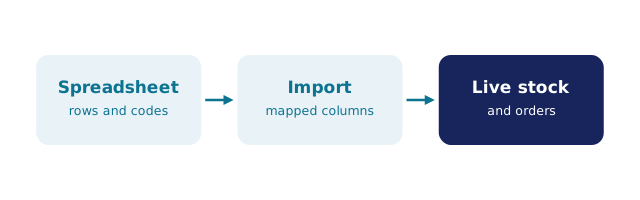
For Australian businesses, Xero integration is non-negotiable. Your inventory data directly impacts your financial statements, GST calculations, and tax obligations. A PHP inventory management system that integrates seamlessly with Xero ensures that every stock movement is reflected accurately in your accounting records. When you receive goods from a supplier, the system updates your inventory and creates the corresponding journal entry in Xero. When you sell stock, the cost of goods sold is calculated correctly, and your profit margins are accurate. This integration eliminates the painful reconciliation process that many Australian businesses face at year-end. Imagine the relief of knowing that your inventory valuation is correct, your GST calculations are accurate, and your financial statements reflect reality — not a best guess based on outdated spreadsheets. For businesses managing EOFY stocktakes, a PHP-based system with proper Xero integration makes the process significantly less painful. You can run a physical stocktake, upload the results into the system, and automatically identify discrepancies. The system highlights items that don't match your records, helping you investigate shrinkage or data entry errors before finalising your year-end accounts. This is particularly important for GST compliance — the ATO expects accurate inventory records, and having a system that maintains this automatically demonstrates good record-keeping practices. Beyond compliance, the financial insights you gain from proper inventory tracking are invaluable. You can see which products have the highest margins, which are slow-moving, and where your working capital is tied up. A cloud-based inventory management solution that integrates with Xero gives you these insights in real time, not weeks after the fact.
Customer Ordering Portals and Streamlined Distribution
For a closer look at how these capabilities fit together, our warehouse management software guide ties it all together, and the guide to related topics walks through the practical details. Customer Ordering Portals and Streamlined Distribution
One of the most powerful features of a modern PHP inventory management system is the ability to provide customers with direct access to order placement and stock visibility. For distributors and wholesalers, customer ordering portals transform the way you interact with clients. Instead of receiving phone calls, emails, and faxes asking about stock availability, your customers can log into a portal, see current stock levels, and place orders themselves. This dramatically reduces administrative overhead and improves customer satisfaction. A Sydney-based distributor supplying retail shops across New South Wales can give each customer a personalised portal showing only the products relevant to them, with pricing specific to their account. Customers see real-time stock availability, can place orders 24/7, and receive instant confirmation. The order automatically flows into your inventory system, triggering picking, packing, and shipping workflows. This level of automation and transparency is what separates successful distributors from those struggling with manual processes. The portal also serves as a sales tool — customers can see product information, pricing, and availability at a glance, making it easier for them to make purchasing decisions. For wholesale businesses, this means faster order turnaround times and fewer errors. Customers can't accidentally order out-of-stock items because the system prevents it. They can't enter incorrect quantities because the system validates inputs. And they can't claim they didn't receive an order confirmation because it's documented in the system. Beyond operational efficiency, customer portals improve relationships. Your customers appreciate the convenience and transparency. They know exactly when their order will arrive because your system provides accurate delivery estimates based on current stock levels and your fulfillment capacity. For manufacturing businesses, this same principle applies — you can provide your customers with visibility into their order status, expected delivery dates, and any changes to their requirements. This is what modern order management software delivers: transparency, efficiency, and better customer relationships.

Frequently Asked Questions
What are the main advantages of a PHP inventory management system for Australian businesses?
PHP-based systems offer flexibility, cost-effectiveness, and seamless customisation for your specific needs. They integrate easily with Xero, support real-time stock tracking, and can be deployed without expensive enterprise licensing. Perfect for Australian wholesalers and manufacturers needing tailored solutions.
How does inventory management system PHP integrate with Xero?
Modern PHP systems sync inventory movements directly with Xero, automatically creating journal entries for purchases and sales. This ensures accurate financial reporting, correct GST calculations, and simplifies EOFY stocktakes. Your inventory valuation and profit margins are always accurate.
Can a PHP inventory system handle multiple warehouse locations?
Yes, professional PHP inventory systems track stock across unlimited locations simultaneously. You see real-time stock levels across all warehouses, manage transfers between locations, and optimise inventory distribution. This is essential for distributors and manufacturers with multiple facilities.
What features should I look for in an inventory management system PHP?
Look for real-time stock tracking, automated purchase order generation, Xero integration, customer ordering portals, negative inventory tracking, batch/lot number management, and comprehensive reporting. These features address the core pain points of Australian wholesale and manufacturing businesses.
How does negative inventory tracking help manufacturing businesses?
Negative inventory tracking allows you to continue fulfilling customer orders even when stock temporarily dips below zero, essential during production cycles. The system alerts you to the situation and helps you manage backorders efficiently without halting sales.
Is a PHP inventory system suitable for small Australian businesses?
Absolutely. PHP systems scale from small operations to large enterprises. You pay for what you need, customise features to match your workflow, and avoid expensive enterprise software licensing. Perfect for growing Australian SMBs.
How can customer ordering portals improve my distribution business?
Portals enable 24/7 customer ordering, reduce administrative overhead, improve accuracy, and provide real-time stock visibility. Customers self-serve, orders flow automatically into your system, and you gain valuable insights into customer behaviour and preferences.
BSimple