
Definition / inventory
Inventory management system: the meaning, in Tamil and English
The Tamil phrase most businesses use is சரக்கு மேலாண்மை — stock management. The system behind the phrase is the same everywhere: one record of what you hold, what moves, and what to buy next.
The key facts
- The Tamil term: சரக்கு மேலாண்மை (sarakku melaanmai) — stock management; சரக்கு means stock or inventory, and an inventory management system is சரக்கு மேலாண்மை அமைப்பு.
- The meaning: one system tracking what you hold, what arrives, what leaves, and what must be bought — against live quantities.
- The core functions: stock tracking, purchasing from reorder levels, counting, batch/expiry records, and reporting.
- A plain caveat: translations vary by region and industry; BSimple's own interface is English, and we do not claim multilingual documentation.
- 01The key facts
- 02What சரக்கு மேலாண்மை actually names
- 03The meaning, function by function
- 04About Tamil-language support — an honest boundary
What சரக்கு மேலாண்மை actually names
In Tamil business usage, சரக்கு (sarakku) is stock — the goods a business holds. மேலாண்மை (melaanmai) is management. Put together and attached to a system (அமைப்பு), the phrase names the same thing it names in English: the systematic tracking and control of goods through a business, from supplier receipt to customer delivery.
Worth knowing: terminology varies. Some businesses say இருப்பு (iruppu — holdings) rather than சரக்கு, and colloquial usage blends stock, stores and warehouse vocabulary. The functions, however, do not vary — which is what makes a definition useful.
The meaning, function by function
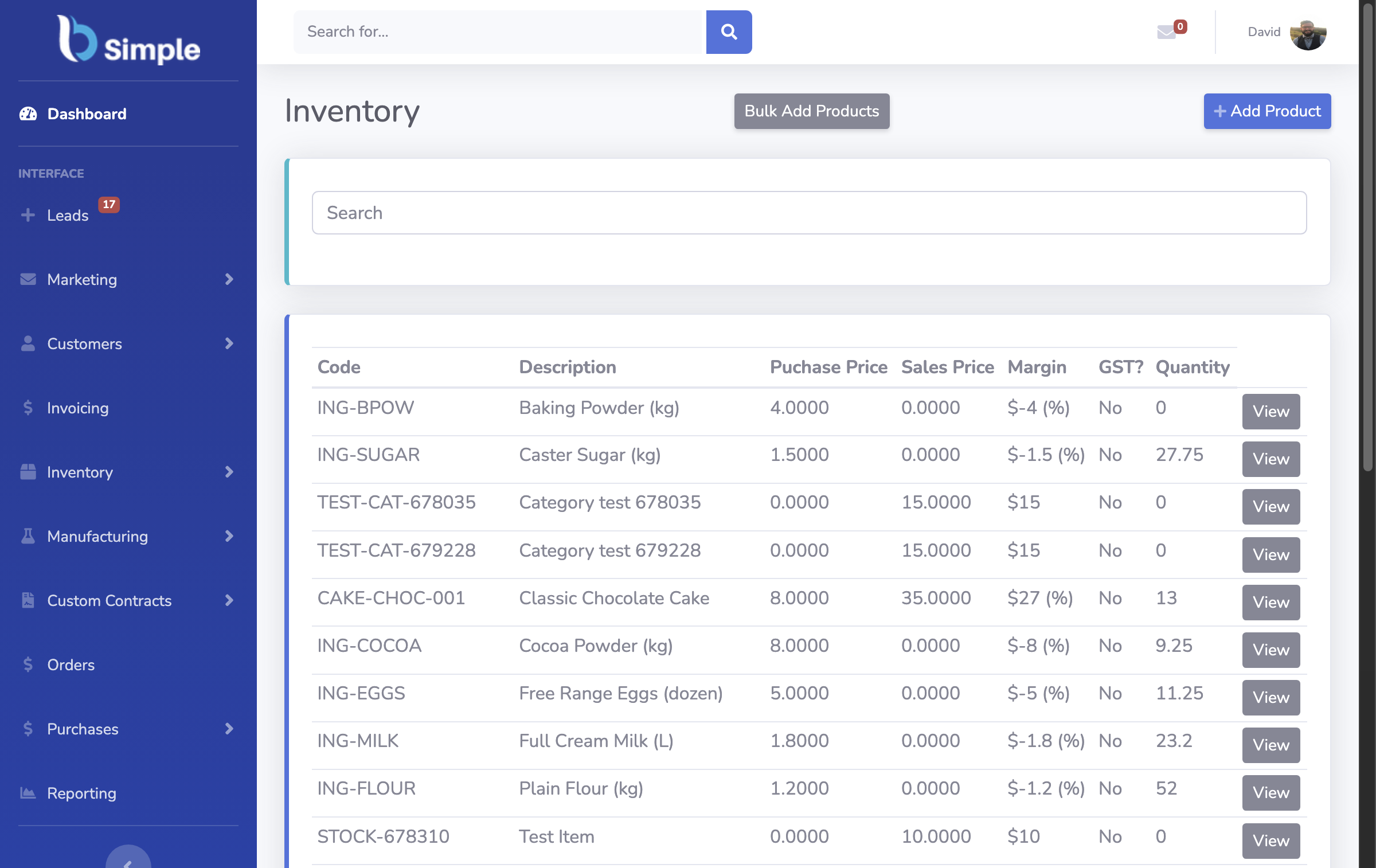
Whatever the language, an inventory management system does five things:
- Stock tracking (சரக்கு கண்காணிப்பு): a live quantity per item, updated by every receipt, sale, transfer and adjustment — not a number corrected at year end.
- Purchasing (வாங்குதல்): reorder levels that show what to buy, purchase orders raised from demand, and goods receipts that update the record.
- Counting (எண்ணுதல்): stocktakes and cycle counts that correct the record deliberately, with variances kept on an audit trail.
- Batch and expiry (காலாவதி கண்காணிப்பு): lot numbers and use-by dates where goods age — food, chemicals, medicine-adjacent stock.
- Reporting (அறிக்கை): what is held, what it is worth, what moves and what sits.
In BSimple those five live on one record alongside orders and invoicing, with the accounting handoff to Xero or MYOB described in the inventory management guide. Production businesses add recipes and traced batches — the manufacturing guide covers that layer. For the standalone word, what inventory means gets its own plain definition.
About Tamil-language support — an honest boundary
Pages like this one often promise multilingual software features. We will not: BSimple's interface, documentation and support are in English, and we do not claim Tamil-language documentation or a localised portal. Teams whose working language includes Tamil run the system in English alongside their own processes — common in Australian warehouses, and worth testing in practice rather than trusting a feature matrix.
What we can say plainly: the concepts above are language-independent, and a Tamil-speaking team member who knows சரக்கு மேலாண்மை already knows what the system is being asked to do. You can verify the rest with your own team during the free trial — the honest test of any interface claim.
Frequently Asked Questions
What is an inventory management system in Tamil?
சரக்கு மேலாண்மை அமைப்பு — a system that tracks stock (சரக்கு) through the business: live quantities, purchases, counts, batches and reports. The Tamil phrase and the English term name the same functions; usage varies between சரக்கு and இருப்பு by region and industry.
Does BSimple support the Tamil language?
No. The interface, documentation and support are English-only, and we do not claim otherwise. If your team operates bilingually, trial the system with the people who will actually use it — that is the only reliable test.
What are the main functions of an inventory management system?
Stock tracking against live quantities, purchasing driven by reorder levels, stocktakes with auditable variances, batch and expiry records where relevant, and reporting on what is held and what moves. Anything else — orders, portals, invoicing — builds on those.
Do small businesses need a system, or is a spreadsheet enough?
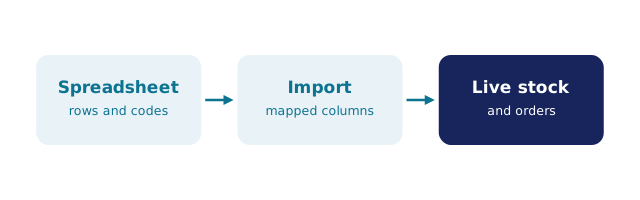
A spreadsheet is the சரக்கு record at small scale and stays honest while one person maintains it. The system earns its cost when the record must be shared, trusted between counts, and connected to purchasing and invoicing — the functions above, done automatically.

BSimple