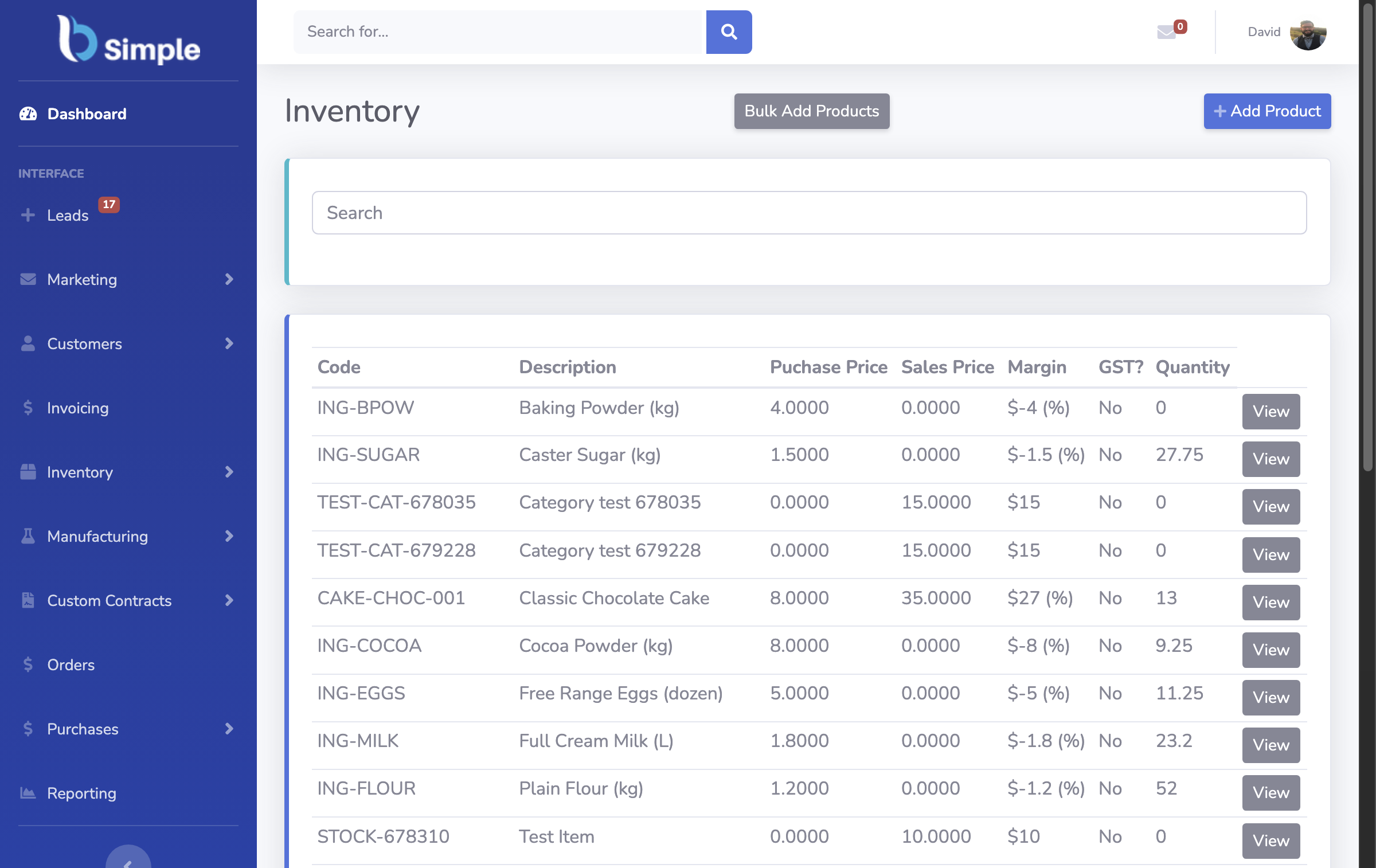
Inventory Management System In E Commerce with Xero
Inventory Management System In E Commerce helps Australian wholesalers and manufacturers manage inventory, orders, and purchasing. Xero integration, customer...
- Real-time inventory visibility across multiple warehouse locations and sales channels simultaneously
- Automatic purchase order generation when stock hits predefined reorder points and thresholds
- Seamless Xero integration for accurate invoicing, COGS calculation, and GST compliance
- Negative inventory tracking to fulfil orders before stock arrival without accounting issues
- Customer ordering portals allowing wholesale clients to place orders and check availability independently
- Rolling stocktake management reducing EOFY workload and improving year-round accuracy
- Just-in-time inventory optimisation reducing excess stock and improving cash flow management
Welcome to our comprehensive guide on inventory management system in e-commerce — see also our Inventory Management Software for the full picture. If you're running a wholesale, manufacturing, or distribution business in Australia, you've probably felt the pain of juggling stock levels across multiple channels. One minute you're overselling because your online inventory didn't sync with your warehouse, the next you're sitting on dead stock that's gathering dust. It's frustrating, costly, and frankly, a massive drain on your business. An inventory management system for e-commerce isn't just about knowing what you have in stock — it's about having real-time visibility, automating the tedious bits, and making smarter decisions about what to order and when. Whether you're a Sydney coffee roaster managing beans across multiple locations, a Melbourne brewery tracking kegs and bottles, or an Australian manufacturer juggling raw materials and finished goods, the right system transforms how you operate. The best part? When your inventory system talks seamlessly to your accounting software like Xero, you eliminate double-entry, reduce errors, and actually know your true profitability. That's what we're here to explore.
Transform Your E-Commerce Operations with Smart Inventory Management
The e-commerce landscape has fundamentally changed how Australian businesses manage inventory. Gone are the days of manual spreadsheets and phone calls to check stock levels. Today's wholesale and distribution businesses need systems that work harder and smarter, especially when you're selling across multiple channels simultaneously. An effective inventory management system for e-commerce does several critical things: it tracks stock in real-time across all your locations, automatically updates when orders come in, flags when you're running low, and helps you avoid the nightmare of overselling. For manufacturing businesses, this means tracking raw materials, work-in-progress inventory, and finished goods in one place. For wholesalers, it means knowing exactly what's available to sell before you commit to a customer order. The integration with Xero is where things get really interesting. Instead of manually entering sales into your accounting software, your inventory system feeds that data directly through. Your COGS (cost of goods sold) is automatically calculated, your stock valuations are accurate, and your EOFY stocktakes become significantly less painful. Australian SMBs are discovering that this kind of automation isn't a luxury — it's essential for staying competitive. When you're not spending hours reconciling numbers between systems, you can focus on actually growing your business and serving your customers better.
Why Traditional Methods Fall Short in Modern E-Commerce
Let's be honest: spreadsheets don't cut it anymore. If you're still managing inventory with Excel, you're competing with one hand tied behind your back. The problems compound quickly. You can't see real-time stock levels across locations, you can't automate reordering, you can't easily track which products are performing well, and reconciling everything at the end of the month becomes a nightmare. When you're selling online, customers expect immediate confirmation that their order can be fulfilled. With manual systems, you're either overselling and creating angry customers, or you're underselling because you're being overly cautious with your stock counts. A proper inventory management solution eliminates these problems by giving you live visibility into every SKU across every location. You can set reorder points so you never run out of fast-moving items. You can see which products are gathering dust and adjust your purchasing accordingly. For Australian businesses dealing with GST compliance and EOFY stocktakes, having accurate, auditable inventory records isn't optional — it's a legal requirement. A system that automatically tracks every movement in and out of your warehouse, with full audit trails, makes compliance straightforward rather than stressful.
How Xero Integration Transforms Your Business Operations
Here's where things get genuinely powerful. When your inventory management system integrates seamlessly with Xero, you're not just connecting two software tools — you're creating a unified business nervous system. Every sale that comes through your e-commerce platform automatically creates an invoice in Xero, reduces your inventory count, and records the COGS. No manual data entry. No reconciliation headaches. No discrepancies between what your inventory system says you sold and what your accounting records show. For manufacturers and wholesalers, this is transformative. You can track the true profitability of each product because your actual costs are flowing through automatically. You can run accurate financial reports because your balance sheet reflects your real inventory values. When it comes time for your EOFY stocktake, your system has already done most of the heavy lifting — you're just verifying counts rather than starting from scratch. Many Australian businesses also appreciate the GST compliance benefits. Your Xero integration means GST calculations are handled consistently across all your sales channels, whether that's direct wholesale orders, e-commerce, or customer ordering portals. The time you save on administrative tasks is genuinely significant. One Melbourne brewery customer told us they saved roughly 12 hours per week on inventory and accounting reconciliation after implementing a proper system. That's time they reinvested in customer relationships and product development.
Key Features That Matter for Australian E-Commerce Businesses
For a closer look at how these capabilities fit together, our warehouse management software guide ties it all together, and the guide to in walks through the practical details. Key Features That Matter for Australian E-Commerce Businesses
Not all inventory management systems are created equal, especially when you're operating in the Australian wholesale and manufacturing space. You need specific capabilities that address real challenges. Negative inventory tracking, for instance, might sound like an odd feature, but it's invaluable. Sometimes you need to fulfil an order before stock physically arrives — maybe you're waiting for a shipment from a supplier but a key customer needs product urgently. A system that lets you track negative inventory temporarily, then automatically corrects when stock arrives, keeps your operations flowing without creating accounting nightmares. Just-in-time inventory management is another game-changer. Instead of tying up cash in excess stock, you can set reorder points and quantities that align with your actual sales velocity. Your system automatically generates purchase orders when you hit those thresholds, so you're ordering what you need, when you need it. Customer ordering portals are transformative for wholesale businesses. Instead of fielding phone calls and emails, your customers can log in, see what's in stock, place orders, and track them — all without involving your team. This reduces order entry errors and frees your staff to focus on higher-value work. Stocktake management features make your regular counts far less painful. You can do rolling stocktakes throughout the year rather than one massive count at EOFY, which spreads the workload and keeps your records more accurate. For Australian businesses, having a system that understands GST compliance and can generate compliant reports is essential, not optional.
Frequently Asked Questions
What is an inventory management system for e-commerce?
An inventory management system for e-commerce is software that tracks stock levels across all sales channels in real-time, automates reordering, and integrates with accounting software like Xero. It ensures accurate stock visibility and prevents overselling.
How does Xero integration improve inventory management?
Xero integration eliminates manual data entry by automatically syncing sales, invoices, and stock movements. This ensures accurate financial records, proper COGS calculation, and GST compliance without reconciliation headaches.
Can an inventory system handle multiple warehouse locations?
Yes, modern inventory systems track stock across multiple locations simultaneously. You can see real-time levels at each warehouse, transfer stock between locations, and manage customer orders based on location availability.
What is negative inventory tracking and why is it useful?
Negative inventory tracking allows you to fulfil orders before stock physically arrives. This is useful when waiting for supplier shipments but needing to meet customer commitments immediately, keeping operations flexible without accounting issues.
How does just-in-time inventory help Australian wholesalers?
Just-in-time inventory automatically generates purchase orders when stock hits set thresholds, reducing excess inventory and freeing up cash. It's particularly valuable for Australian SMBs managing cash flow carefully.
What are customer ordering portals and how do they benefit my business?
Customer ordering portals let wholesale customers place orders directly, check stock availability, and track shipments without staff involvement. This reduces errors, improves customer satisfaction, and frees your team for strategic work.
How does an inventory system help with EOFY stocktakes?
A proper system maintains accurate records throughout the year and supports rolling stocktakes, making EOFY counts less painful. It provides audit trails for compliance and reduces the time spent on year-end reconciliation.