
Guide / after the checkout
Ecommerce order management software, free
Your store already has order management for free — the orders list in Shopify or WooCommerce. It is genuinely good at capture. The question is everything after the sale: picking, stock truth, and the books.
The key facts
- Free and real: the orders view in your store platform captures, tracks and refunds orders — shipped with the store you already pay for.
- Where it stops: stock truth across channels, warehouse picking and packing, partial fulfilment, and the accounting handoff.
- The other free route: open source you host — full control, full responsibility.
- BSimple's position: not free — but the Shopify import (by webhook) feeds the same record as every other channel, and the trial settles whether you need it.
- The full picture: the full order flow is the hub page for the order side.
- 01The key facts
- 02What the free layer actually covers
- 03The four places free order management stops
- 04How BSimple handles it — and when you need it
What the free layer actually covers
Store platforms changed what "order management" means. Shopify's orders list — and WooCommerce's, and BigCommerce's — captures orders, takes payment, sends confirmations, tracks fulfilment status, handles refunds, and even prints labels. For a business shipping from a garage with one person and one channel, that is order management, it is free, and pretending otherwise would be marketing. The paid tools in this space earn their keep by adding what the store cannot see: inventory across other channels, pick waves for a real warehouse, and financial records that reconcile themselves.
The gap opens gradually, which is why it is missed. One channel, one person: the store's orders list plus a spreadsheet is a system. The first second channel — a second store, a marketplace, wholesale buyers ordering off a price list — introduces the problem the free layer cannot solve: two sources of truth competing for the same units.
The four places free order management stops
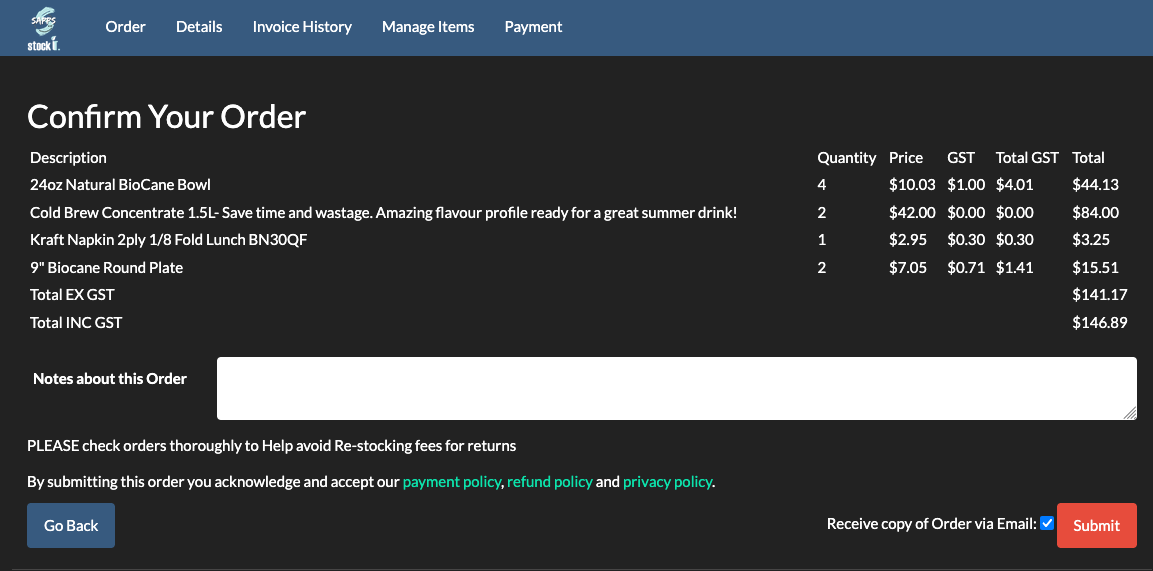
- Stock truth. The store knows what it sold; it does not know what the warehouse, the back room and the other channel hold. Overselling begins where the sync ends.
- The pick. An orders list is not a pick list — sequence, location, partial fulfilment and packing slips for a warehouse team are a different job.
- The books. Every order needs a home in accounting. Free stops where a person starts re-keying — which is where errors and month-end surprises start.
- Wholesale and B2B. Per-customer pricing, net terms, and buyers who want to self-serve are outside the store paradigm entirely.
What order management software is breaks the full job into steps; the free-ecommerce question from the inventory side covers the same ground with the free-tool ladder in focus.
How BSimple handles it — and when you need it
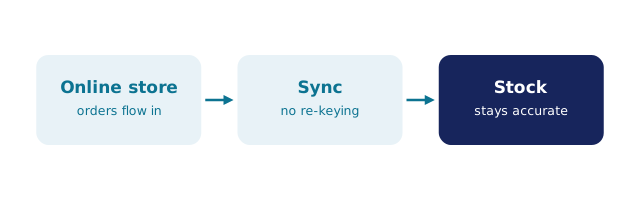
We build BSimple, so weigh that: it is not free (plans start at $180/month AUD) and it is not a store. Online store orders import into the same record as every other channel — Shopify connects by webhook, and imported orders get delivery slips, picking and packing, approval, and stock deduction on one record. Invoicing stays between the store and your accounting system (Xero or MYOB), so nothing double-bills; payment status mirrors back. Alongside it, the customer ordering portal gives wholesale buyers their own products and pricing through a secret link.
The honest trigger to move past free: a second channel, a second person touching orders, or a warehouse where picking order matters. If none of those apply, stay free — free product-inventory options cover that stage. If one does, the trial connects your store and runs a real order through the whole path in an afternoon.
Frequently Asked Questions
Is Shopify's built-in order management enough?
For one channel and one person shipping from stock they can see — often yes. It stops being enough when stock truth must span channels, when picking needs sequence and slips, or when orders must reach accounting without re-keying.
Does BSimple have a free plan?
No — plans start at $180/month AUD (Starter $180, Professional $250, Organisation $399), every feature in the core plans. The free trial is the full product, including the Shopify import, so you judge it on real orders.
How does the Shopify import actually work?
Shopify notifies BSimple by webhook; the order lands in the standard flow — delivery slip, pick and pack, approval, stock deduction — on the same record as phone and portal orders. Invoicing stays between Shopify and your accounting system.
What about WooCommerce or BigCommerce?
The claims above are specific to the Shopify import, which is the established store connection. For other platforms, ask us directly rather than inferring — honesty about integrations is the point of this page.
When should we move off free order management?
At the second channel, the second person, or the first oversell — whichever comes first. Those are the symptoms the free layer cannot treat, and the trial is the honest test of the alternative.

BSimple