
Guide / BSimple
Inventory Management System For A Small Business for Small Business
Whether you're a Sydney coffee roaster tracking bean shipments, a Melbourne brewery managing hop stock, or a wholesale distributor across multiple locations, getting inventory right is critical to your bottom line.
- Real-time stock tracking across multiple locations and sales channels with instant visibility
- Automated reordering based on minimum stock levels to prevent stockouts and overselling
- Seamless Xero integration for automatic financial synchronisation and GST compliance
- Customer ordering portals enabling 24/7 self-service ordering for wholesale clients
- Automated purchase order generation and negative inventory tracking for manufacturing
- Cloud-based access from anywhere, enabling mobile inventory management on the go
- Stocktake management features simplifying EOFY compliance and physical counts
Running a small business in Australia means juggling dozens of moving parts, and inventory management often becomes the headache nobody wants to tackle. Whether you're a Sydney coffee roaster tracking bean shipments, a Melbourne brewery managing hop stock, or a wholesale distributor across multiple locations, getting inventory right is critical to your bottom line. That's where an Inventory Management Software solution becomes your secret weapon. Rather than spreadsheets that go out of sync or expensive enterprise systems built for Fortune 500 companies, a purpose-built inventory management system for a small business gives you the control you need without the complexity or cost. The right system tracks stock levels in real-time, prevents overselling, automates reordering, and integrates seamlessly with your existing accounting software. For Australian SMBs especially, having a system that understands local compliance requirements like GST and EOFY stocktakes is invaluable. This guide walks you through everything you need to know about implementing an inventory management system that actually works for your operation—one that scales with your business and doesn't require an IT team to maintain.
- 01Why Small Businesses Need Inventory Management
- 02Real-World Benefits For Australian Businesses
- 03Essential Features To Look For
- 04Getting Started With Implementation
Why Small Businesses Need Inventory Management
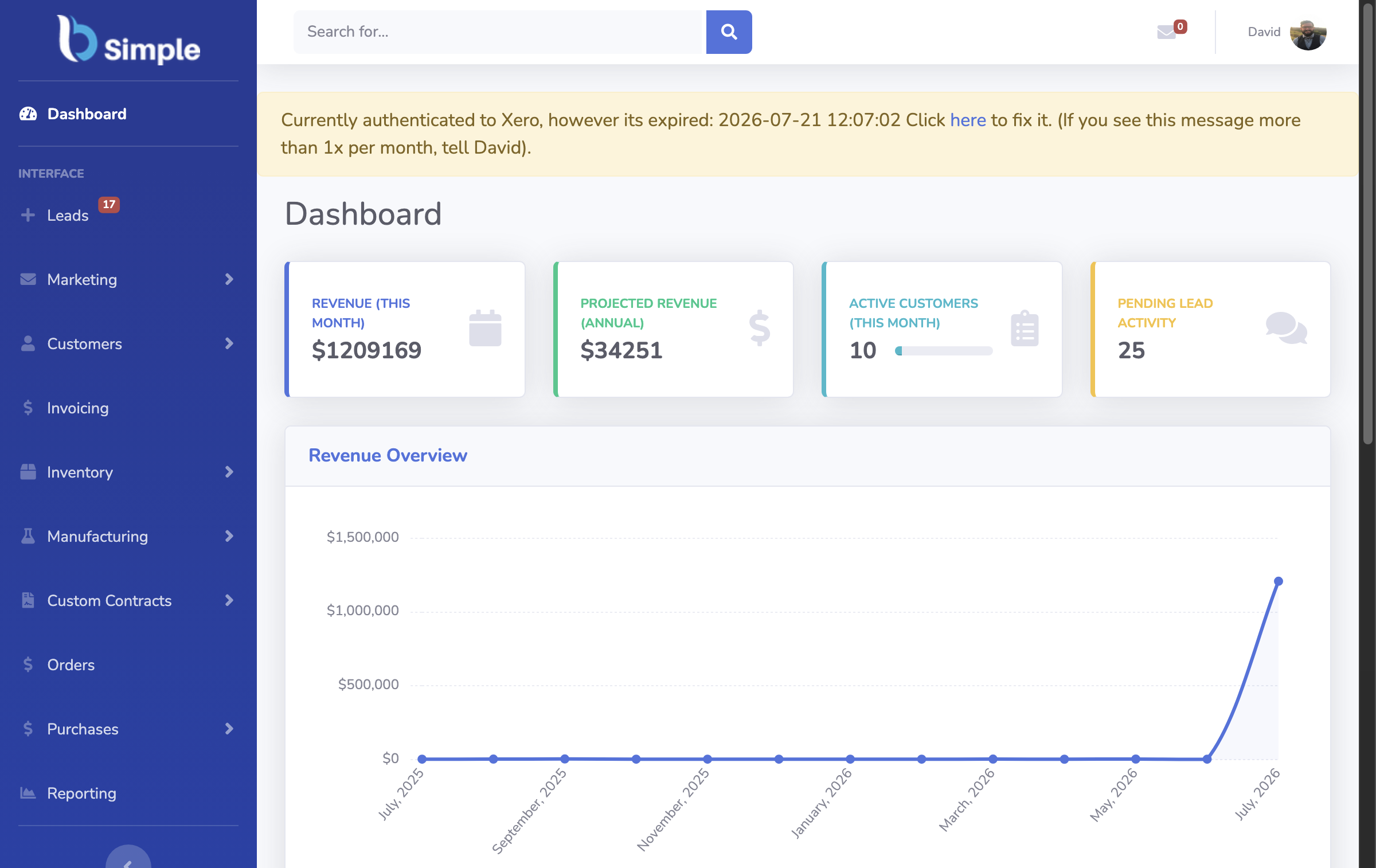
When you're running a small business, inventory problems cascade quickly. You oversell stock you don't have, leading to angry customers and rushed emergency orders. You underorder and miss sales opportunities. You spend hours manually counting stock during EOFY, only to discover discrepancies that keep your accountant up at night. An inventory management system for a small business solves these problems by giving you visibility across your entire operation. Real-time stock tracking means you always know what you have on hand, what's on order, and what needs reordering. Automated low-stock alerts prevent you from running out of bestsellers. Customer ordering portals let your wholesale clients place orders 24/7 without tying up your team. For manufacturing businesses, just-in-time inventory features mean you're not tying up cash in excess raw materials sitting in a warehouse. The efficiency gains alone—reducing manual data entry, eliminating duplicate orders, automating purchase orders—typically save small businesses 5-10 hours per week in administrative work. That's time you can redirect to growth activities instead of inventory firefighting. Plus, when you integrate your inventory system with your accounting software like Xero, your financial records stay accurate automatically. No more reconciliation headaches at tax time. For Australian businesses especially, this integration handles GST calculations correctly and makes your accountant's job infinitely easier during EOFY stocktakes. The best part? Modern cloud-based systems are affordable, require minimal setup, and you can start seeing benefits within days, not months.
Real-World Benefits For Australian Businesses
The real-world impact of implementing an inventory management system for a small business becomes obvious when you look at specific scenarios. Imagine you're a wholesale distributor with customers across multiple Australian states. Without proper inventory management, you might promise stock to a Sydney customer that's actually sitting in your Melbourne warehouse, or worse, oversell and have to backorder. With an integrated system, all locations feed into one central view. You can allocate stock intelligently, fulfil orders faster, and keep customers happy. Or consider a manufacturing business producing specialty products. You need to track raw materials, work-in-progress inventory, and finished goods separately. An inventory management system handles this complexity automatically, ensuring you always have the materials you need to keep production running smoothly. Negative inventory tracking is particularly valuable here—it lets you see when you're running short and triggers automated purchase order generation so you never miss a production deadline. For small businesses that operate on thin margins, these efficiencies translate directly to profit. You're not tying up capital in excess stock, you're not losing sales from stockouts, and you're not wasting time on manual processes. One Australian SMB we've seen implemented our order management software alongside inventory features and cut their order processing time by 60%. They went from spending two days per week on manual order entry and stock allocation to having the system handle it automatically. That's a massive competitive advantage when you're competing against larger players with bigger budgets.
Essential Features To Look For
Choosing the right inventory management system for a small business requires understanding what features actually matter versus what's just nice-to-have. The foundation is real-time stock tracking across all your locations and sales channels. You need to see instantly how much stock you have, where it is, and when it will run out. Automated reordering based on minimum stock levels prevents stockouts without requiring you to manually monitor every SKU. Customer ordering portals are transformative for wholesale businesses—they let your clients place orders independently, reducing your administrative burden while improving their experience. Integration with your accounting software is non-negotiable for Australian businesses. Xero integration specifically means your inventory movements automatically sync with your financial records, keeping everything in sync and making tax time significantly less painful. Stocktake management features are essential, especially for EOFY compliance. The system should let you conduct physical stocktakes, reconcile against recorded levels, and investigate discrepancies—all without manual spreadsheet wrestling. Negative inventory tracking is surprisingly valuable. It shows you when you're running short or overselling, which is critical for manufacturing businesses that need to trigger purchase orders automatically. Look for systems that offer just-in-time inventory features if you're in manufacturing or wholesale, as this minimises working capital tied up in excess stock. Finally, ensure the system is cloud-based and accessible from anywhere. You need to check inventory levels from your phone while you're out meeting customers, not just from your office computer. The best inventory management systems for small business combine these features in an interface that doesn't require extensive training. Your team should be able to pick it up intuitively. Setup should take days, not weeks. And support should be responsive—Australian-based support is a genuine advantage when you need help quickly. When you're evaluating options, ask for a trial period and test it with your actual data. The system that works best is the one your team will actually use consistently.
Getting Started With Implementation
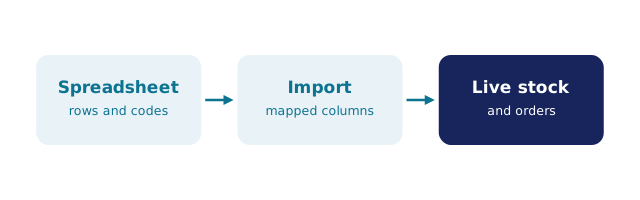
Implementation of an inventory management system for a small business doesn't need to be a massive project. The best approach is to start simple and expand gradually. First, get your product catalogue and current stock levels into the system accurately. This is your foundation. Many businesses underestimate this step, but garbage in equals garbage out—if your initial data is wrong, the system can't help you. Take time to categorise products logically, set up your locations properly, and verify opening stock counts. Once you're confident in your data accuracy, start using the system for daily operations. Begin with the most critical functions: tracking sales, managing stock levels, and generating purchase orders. Train your team thoroughly—even a simple system requires everyone to understand how to use it correctly. After a few weeks, you'll have real data flowing through the system. That's when you can start leveraging more advanced features like automated reordering, customer ordering portals, and detailed reporting. For Australian businesses with EOFY obligations, plan your stocktake process well in advance. Use the system's stocktake management features to conduct your physical count, then reconcile against recorded levels. This process is dramatically faster and more accurate than manual spreadsheets. One critical success factor is discipline around data entry. Encourage your team to log stock movements immediately rather than batching them up. Real-time data is only valuable if it's current. Also, regularly review your inventory reports. Look for slow-moving stock that ties up cash, identify your fastest-moving products, and spot any trends. This intelligence helps you make better purchasing decisions and manage working capital more effectively. Finally, don't be afraid to customise the system to match your business processes rather than forcing your processes to fit the software. The best inventory management systems for small business are flexible enough to adapt to how you actually work. As your business grows, the system should grow with you—handling more locations, more products, more customers, without requiring a complete replacement. That scalability is what makes cloud-based systems so valuable for Australian SMBs. For a closer look at how these capabilities fit together, our warehouse management software guide ties it all together, and the guide to related topics walks through the practical details.

Frequently Asked Questions
What's the difference between an inventory management system and accounting software?
Inventory management systems track stock levels, movements, and reordering. Accounting software tracks financial transactions. The best solutions integrate both—your inventory system feeds data into your accounting software like Xero, keeping everything synchronised without manual data entry.
Can I use an inventory system if I have multiple warehouse locations?
Absolutely. Cloud-based inventory systems handle multi-location tracking effortlessly. You see all locations in one view, allocate stock intelligently, and fulfil orders from the most efficient warehouse. This is particularly valuable for Australian distributors operating across multiple states.
How does inventory management help with GST compliance?
When your inventory system integrates with Xero, stock movements automatically flow into your financial records with correct GST calculations. This eliminates manual reconciliation errors and makes EOFY stocktakes and tax reporting significantly simpler and more accurate.
What's negative inventory tracking and why does it matter?
Negative inventory tracking shows when you've oversold or are running short on stock. For manufacturing businesses especially, this triggers automated purchase order generation, ensuring you never run out of critical raw materials and can keep production running smoothly.
How long does it take to implement an inventory management system?
Cloud-based systems can be operational within days. Initial setup involves loading your product catalogue and current stock levels—typically 1-2 weeks depending on complexity. Your team can start using it immediately while you gradually implement more advanced features.
Will an inventory system work for my manufacturing business?
Yes. Manufacturing-focused systems track raw materials, work-in-progress inventory, and finished goods separately. Just-in-time inventory features help minimise working capital tied up in excess stock, while automated PO generation keeps production running smoothly.
Do I need technical skills to use an inventory management system?
No. Modern cloud-based systems are designed for small business users without IT backgrounds. If your team can use email and spreadsheets, they can use a well-designed inventory system. Most providers offer training and responsive support to help you succeed.
BSimple