
Guide / BSimple
Inventory Management System Barcode for Growing Operations
With barcode scanning feeding real-time data into your system, you can automatically generate purchase orders when stock hits predetermined thresholds, ensuring you're never caught short without tying up excessive cap…
- Real-time stock tracking across multiple warehouse locations with instant visibility into inventory position
- Automated purchase order generation triggered by barcode scans when stock hits safety thresholds
- Seamless Xero integration that automatically updates asset accounts and cost of goods sold
- Full product traceability including batch numbers, serial numbers, and expiry date tracking
- FIFO picking and just-in-time inventory management to reduce waste and improve cash flow
- Comprehensive stocktake management with rolling counts and discrepancy identification
- Customer ordering portal integration showing real-time availability and accurate delivery timeframes
Inventory management system barcode technology is transforming how Australian wholesale, manufacturing, and distribution businesses track stock — see also our Inventory Management Software for the full picture. Barcodes are no longer just labels on products; they're the backbone of modern inventory operations, enabling real-time tracking, reducing human error, and streamlining your entire supply chain. Whether you're running a Sydney coffee roaster managing dozens of SKUs or a Melbourne brewery coordinating production batches, barcode systems give you instant visibility into what's in your warehouse, where it's located, and when it needs reordering.
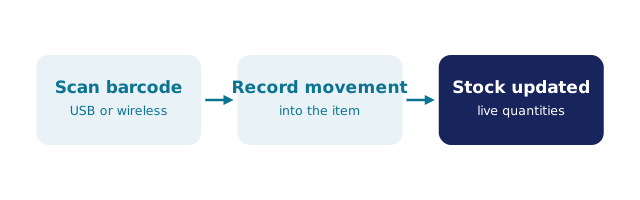
The beauty of integrating barcodes into your inventory management system is that it eliminates the guesswork. Instead of relying on manual counts or outdated spreadsheets, your team can scan items as they move through your operation — from receiving goods through to dispatch. This real-time data feeds directly into your system, automatically updating stock levels and triggering alerts when inventory drops below safety thresholds. For growing Australian SMBs, this means fewer stockouts, less overstocking, and significantly reduced carrying costs. Barcodes also create an audit trail that's invaluable during EOFY stocktakes and GST compliance checks, giving your accountants and auditors exactly what they need without the headaches.
- 01How Barcode Systems Streamline Your Wholesale and Manufacturing Operations
- 02Real-World Benefits for Australian Distribution and Manufacturing
- 03Integration with Your Existing Systems and Workflows
- 04Getting Started with Barcode Implementation
How Barcode Systems Streamline Your Wholesale and Manufacturing Operations
When you implement barcode scanning in your inventory management system, you're essentially giving your team superpowers. Instead of spending hours manually checking stock levels or hunting through warehouses to locate items, staff can scan a barcode and instantly see product details, current stock position, location bin, and reorder status. This speed translates directly to better customer service — you can confirm order availability in seconds rather than minutes, and your picking and packing processes become far more efficient. For distribution businesses handling hundreds of orders daily, this efficiency gain is genuinely transformative.
The integration between barcodes and your broader inventory system also enables sophisticated stock management strategies that would be impossible to maintain manually. Just-in-time inventory, for example, requires precise knowledge of stock levels and supplier lead times. With barcode scanning feeding real-time data into your system, you can automatically generate purchase orders when stock hits predetermined thresholds, ensuring you're never caught short without tying up excessive capital in inventory. This is particularly valuable for Australian manufacturers working with tight margins and variable demand.
Barcode systems also dramatically reduce the cost of stocktakes. Rather than closing your warehouse for a full manual count, you can conduct rolling stocktakes throughout the year, scanning items and comparing physical counts to system records. Any discrepancies are immediately flagged, allowing you to investigate shrinkage or data entry errors before they compound. This approach keeps your inventory records accurate year-round, which is essential for reliable financial reporting and informed business decisions. When you're managing negative inventory tracking — perhaps for pre-orders or committed stock — accurate barcoding ensures your system reflects reality.
Real-World Benefits for Australian Distribution and Manufacturing
For wholesale and manufacturing businesses, barcode integration goes beyond simple stock tracking. It's about creating a connected ecosystem where every movement of goods is recorded and analysed. When a customer places an order through your customer ordering portal, the system knows exactly what's in stock, where it's located, and how quickly it can be picked and shipped. Your warehouse staff scan items as they're picked, packed, and loaded, creating an unbreakable chain of custody that protects both you and your customers.
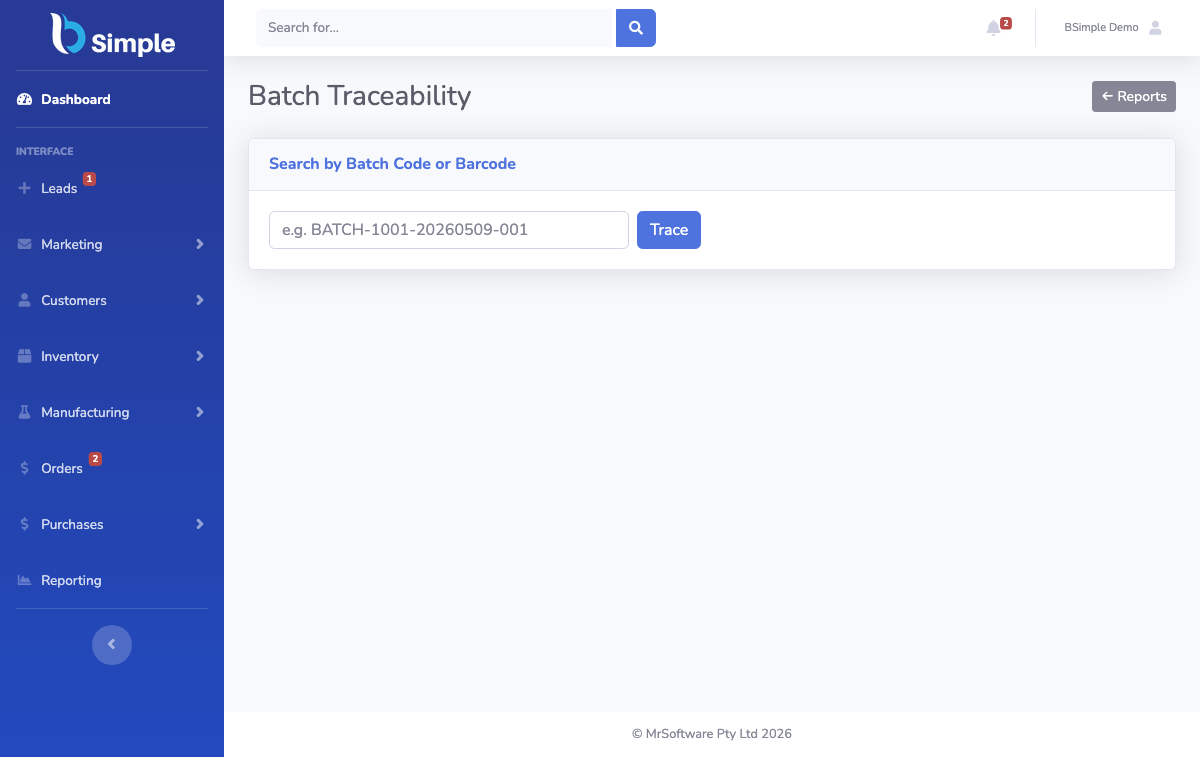
The manufacturing side benefits equally. If you're producing goods with multiple components or batch numbers, barcodes enable traceability that's essential for quality control and compliance. Scan a finished product and your system shows you exactly which raw materials were used, when they were received, and from which supplier. This level of visibility is invaluable if you ever need to recall products or investigate quality issues. It also simplifies your production planning — your team can see real-time component availability and automatically flag when production is at risk due to missing inputs.
Barcode systems also integrate seamlessly with your Xero accounting software through BSimple's native integration. When you scan goods into your warehouse, the system automatically updates your asset accounts. When you pick items for dispatch, inventory is reduced and cost of goods sold is recorded. This means your financial records stay accurate without manual journal entries, reducing the risk of errors and making month-end and EOFY reconciliation far simpler. For Australian businesses managing GST, this accuracy is essential — you need to know your exact inventory position for tax purposes, and barcodes ensure you have that information.
Integration with Your Existing Systems and Workflows
Consider a practical example: a Melbourne brewery managing multiple product lines across several warehouses. Without barcode scanning, they'd struggle to answer simple questions like "How many cases of IPA are in the South Melbourne facility?" or "When was this batch produced?" With barcodes, they scan items as they're produced, stored, and dispatched. Their system instantly knows stock levels across all locations, can identify which batches are approaching expiry, and can automatically prioritise FIFO (first-in, first-out) picking to minimise waste. When a customer orders 500 cases, the system suggests which warehouse location has the stock and routes the order accordingly.
For Sydney coffee roasters managing seasonal demand and multiple blends, barcode systems eliminate the confusion that comes with high-volume operations. During peak season, you might be roasting dozens of batches daily, each with different blend ratios, roast dates, and intended shelf lives. Barcodes track all of this automatically. Your automated PO generation can monitor green bean inventory and trigger orders with your supplier before you run low, ensuring production never stops. Your customer ordering portal shows real-time availability, so customers can see exactly which products are in stock and ready to ship.
The financial benefits extend beyond operational efficiency. Accurate inventory tracking reduces shrinkage — the difference between what your system says you should have and what's actually there. For wholesale businesses operating on thin margins, shrinkage of even 2-3% can significantly impact profitability. Barcodes identify where shrinkage is occurring, whether it's due to damage, theft, or data entry errors, allowing you to address root causes. They also reduce the cost of carrying excess inventory, since you're not maintaining safety stock to compensate for uncertainty about actual levels.
Getting Started with Barcode Implementation
For a closer look at how these capabilities fit together, our warehouse management software guide ties it all together, and the guide to benefits walks through the practical details. Implementing barcode scanning doesn't require ripping out your existing systems and starting from scratch. Modern inventory management software like BSimple is designed to work with barcode hardware you probably already have or can easily source. Whether you're using smartphone-based scanning, dedicated handheld devices, or fixed scanners at your dispatch point, the integration is straightforward. Your team can start scanning immediately, with minimal training required — most staff grasp the concept within minutes.
The real power emerges when barcode data flows into your broader inventory management system. BSimple's integration with Xero means your inventory and financial records stay perfectly aligned. When you scan goods into your warehouse, purchase order costs are recorded. When you scan items for dispatch, they're removed from inventory and cost of goods sold is calculated automatically. This eliminates the manual reconciliation work that typically consumes hours during month-end and EOFY periods. For Australian businesses managing GST, this accuracy is non-negotiable — tax authorities expect your financial records to match your actual inventory position.
Barcode systems also enable sophisticated reporting that informs better business decisions. You can see which products are moving fastest, identify slow-moving stock that's tying up capital, and track inventory turnover by product line or customer. These insights help you optimise your product mix, negotiate better terms with suppliers, and improve cash flow. For growing businesses, this data-driven approach to inventory management is the difference between sustainable growth and operational chaos. You're no longer guessing about what to stock; you're making decisions based on real, current information about what your customers actually want.
The investment in barcode infrastructure typically pays for itself within months through improved efficiency, reduced errors, and better working capital management. For Australian SMBs in wholesale, manufacturing, or distribution, barcode scanning is no longer a luxury feature — it's a fundamental requirement for competing effectively and scaling your operation.

Frequently Asked Questions
What hardware do I need to implement barcode scanning in my inventory system?
You can use smartphones with barcode scanning apps, dedicated handheld devices, or fixed scanners at key points like receiving and dispatch. Most modern systems work with standard 1D barcodes or 2D QR codes, and hardware is affordable and readily available in Australia.
How does barcode scanning improve accuracy in inventory management?
Barcodes eliminate manual data entry errors and provide real-time tracking of stock movements. Every scan creates a permanent record, making it easy to identify discrepancies during stocktakes and trace exactly when and where items entered or left your warehouse.
Can barcode systems track products with multiple batch numbers or serial numbers?
Yes, modern barcode systems can encode batch numbers, serial numbers, expiry dates, and other product-specific information. This is essential for manufacturing and food distribution businesses requiring full traceability and compliance tracking.
How do barcodes integrate with Xero accounting software?
BSimple's native Xero integration automatically updates your asset and cost accounts when you scan items in or out. This keeps your financial records accurate without manual journal entries, simplifying month-end reconciliation and EOFY reporting.
What's the difference between 1D and 2D barcodes for inventory management?
1D barcodes (standard product codes) store limited information and require a database lookup. 2D QR codes can encode much more data directly, including batch numbers and expiry dates. For manufacturing and complex inventory, 2D codes offer greater flexibility and faster processing.
How can barcode systems reduce inventory shrinkage?
By tracking every item movement, barcodes create an audit trail that reveals where shrinkage occurs. You can identify damaged goods, theft, or data errors and address root causes, directly improving your bottom line.
Can I use barcode scanning for just-in-time inventory management?
Absolutely. Real-time barcode data feeds into your system, enabling automated purchase order generation when stock reaches predetermined thresholds. This keeps inventory lean while preventing stockouts, improving cash flow for Australian SMBs.
BSimple