
Guide / stock and billing
Inventory management and billing software
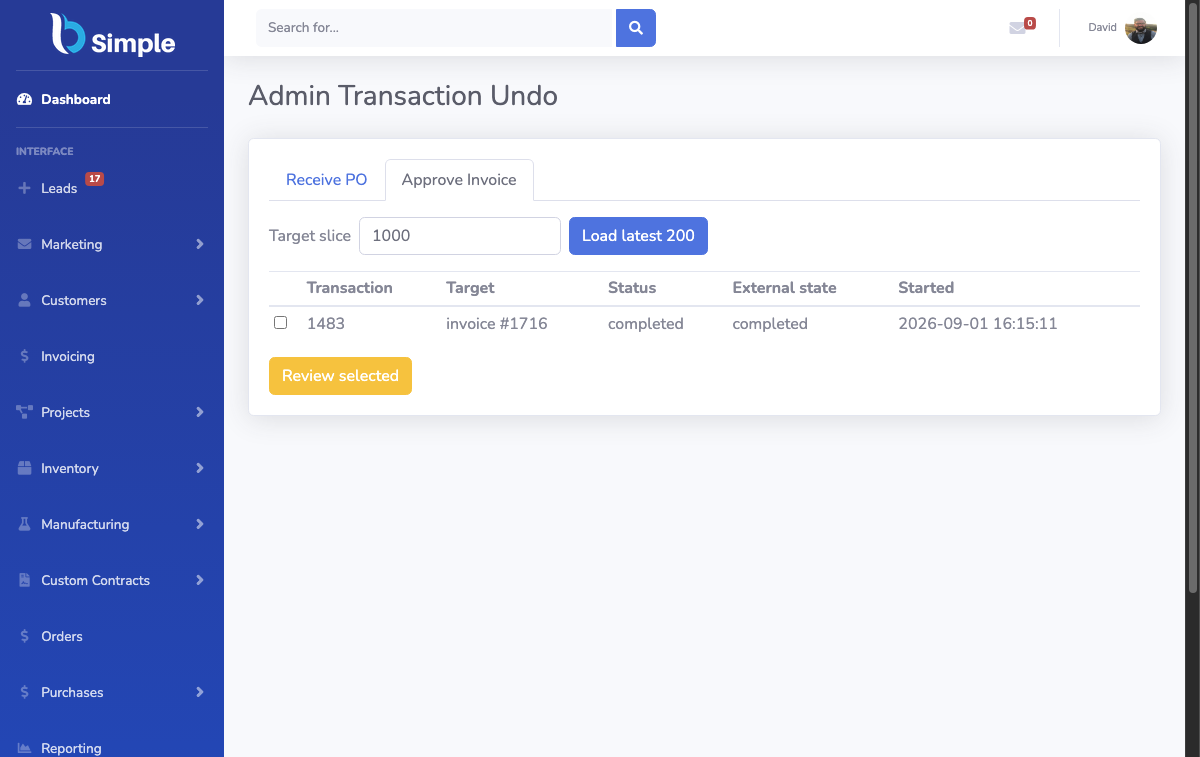
Billing done properly is not a separate program — it is the end of the inventory workflow. The checked order becomes the invoice, the invoice pushes to accounting, and the same record carries both.
The key facts
- The pairing that matters: stock truth (inventory) joined to money (billing) without re-typing between them.
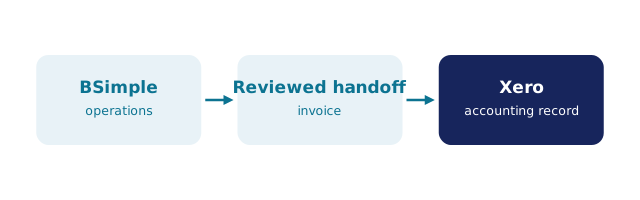
- How it works: order → pick and pack → approved invoice → pushed to Xero or MYOB, payment status mirroring back.
- The boundary: billing software creates and tracks invoices; the accounting system stays the system of record for the books.
- In BSimple both live on one record with the customer portal, purchasing and counts — plans from $180/month (AUD).
- 01The key facts
- 02Why inventory and billing belong together
- 03Where the accounting system fits
- 04What to look for in a combined system
Why inventory and billing belong together
The invoice is a claim about stock: these items, these quantities, at these prices. When billing happens in a separate program, someone re-types that claim from a pick list or a spreadsheet — and every re-typing is a chance for the invoice and the physical stock to disagree. The classic results: invoices for goods that were never picked, stock deducted for goods never invoiced, and month-end spent finding out which.
Software that pairs inventory and billing closes that gap by making the invoice a by-product of the workflow. The order is checked against live quantities, picked and packed, approved, and only then becomes an invoice — carrying the same quantities and prices everyone else already saw. Approval is the deliberate step where quantities commit and stock deducts.
Where the accounting system fits
Honest boundary first: inventory-and-billing software does not replace the accounting system. GST, ledgers, reconciliation and tax remain where they belong — in Xero, MYOB or (rolling out for US businesses) other accounting systems. The integration is the point: approved invoices push across automatically, and payment status — paid, voided — mirrors back into the operational record, so the warehouse and the bookkeeper finally see the same world.
That division is also why "billing" here means issuing and tracking invoices, not filing returns. How the Xero handoff works describes the boundary precisely, and billing and invoice management covers the invoice workflow itself in depth.
What to look for in a combined system
- One record. The invoice must be born from the same dataset as the stock — not synchronised to it after the fact.
- An approval step. Billing should be a decision, not an automatic consequence of someone typing an order.
- Payment status mirrored. Paid and voided states flow back from accounting without anyone re-checking the books.
- The customer side included. Wholesale customers ordering through their own portal see products and pricing that match what they will be invoiced — no reconciliation at delivery.
- Counts and purchasing on the same record. Billing accuracy is downstream of stock accuracy; the pair only works when both are true.
We build BSimple, so weigh that: inventory, orders, purchasing, counts and invoicing on one record, with the accounting handoff behind them, from $180/month (AUD). The inventory management guide shows the stock side; the free trial lets you take one real order the whole way to an invoice in your accounting system.
Frequently Asked Questions
What is inventory management and billing software?
Software that keeps the stock record and the invoice on the same dataset: orders are checked against live quantities, fulfilled, approved and issued as invoices without re-typing, with the accounting handoff carrying the money side. The alternative — separate inventory and billing programs — is where re-keying and reconciliation live.
Does it replace my accounting software?
No, and it should not. Invoicing, GST and the books stay in Xero or MYOB; the combined system issues approved invoices into them and mirrors payment status back. BSimple does not file taxes — the accounting system remains the system of record.
Can customers see their own invoices?
Wholesale customers order through the portal with their own products and pricing, and order status is visible against the record. Invoice and payment history sits with the accounting system, so the portal shows the operational state — ordered, packed, invoiced, paid.
What does BSimple cost for inventory and billing together?
Both are in the core product — there is no separate billing module. Plans start at $180/month (AUD), and the trial runs a real order from portal to approved invoice to accounting handoff before you decide.
BSimple