
Guide / kitchen operations
What does a kitchen need from inventory management software?
Kitchens are workshops with a fridge: everything transforms, expires and varies. Here is what that demands — par lists, yields, supplier orders — by stage of business.
The facts about kitchen inventory
- A kitchen is a production line: ingredients in, dishes out — so inventory means tracking a transformation, not just a count.
- Yield and waste change the maths: a kilo of onions is not a kilo of onions once peeled, and every service eats margin quietly.
- Expiry governs ordering: use-by dates, not just quantities, decide what must move first.
- The stage matters: back-of-house counts, cafe retail, and wholesale production are three different problems.
- BSimple suits the kitchen that sells: recipes, batches, purchase orders and invoices on one record, from $180/month (AUD).
- Where it fits: this page is one branch of the inventory management guide.
Stage 1: the back-of-house count
Every kitchen starts with the same question before a delivery: what do we have, and what do we need? The answer is a stock list with par levels — the minimum quantity that triggers a reorder — checked on a rhythm, usually weekly. A disciplined spreadsheet does this job honestly, and many kitchens should stay exactly there: the free kitchen tools guide covers the setup and its limits.
Two habits make even a free setup work: one named owner of the record, and a count that reconciles against what was actually ordered and sold. Without those, no software will save the numbers — the kitchen is guessing with extra steps.
- 01The facts about kitchen inventory
- 02Stage 1: the back-of-house count
- 03Stage 2: the recipe layer — where kitchens become manufacturers
- 04Stage 3: the kitchen that sells wholesale
- 05Choosing by stage, honestly
Stage 2: the recipe layer — where kitchens become manufacturers
The moment someone asks "what does this dish cost?" or "what will Saturday consume?", the kitchen needs recipes: ingredient lists with quantities, adjusted for yield and waste. Recipes turn a sales forecast into an ingredient order, and turn stock counts into cost of goods — the difference between running a kitchen on instinct and running it on numbers.
This is the layer free tools drop and the layer that decides whether software earns its keep. In BSimple, recipes are versioned, production runs calculate ingredient demand with shortage checks before the prep starts, and finished goods are created in batches with use-by dates. The bakery walkthrough shows the whole loop in a real kitchen business, and the batch tracking guide covers the provenance side.
Stage 3: the kitchen that sells wholesale
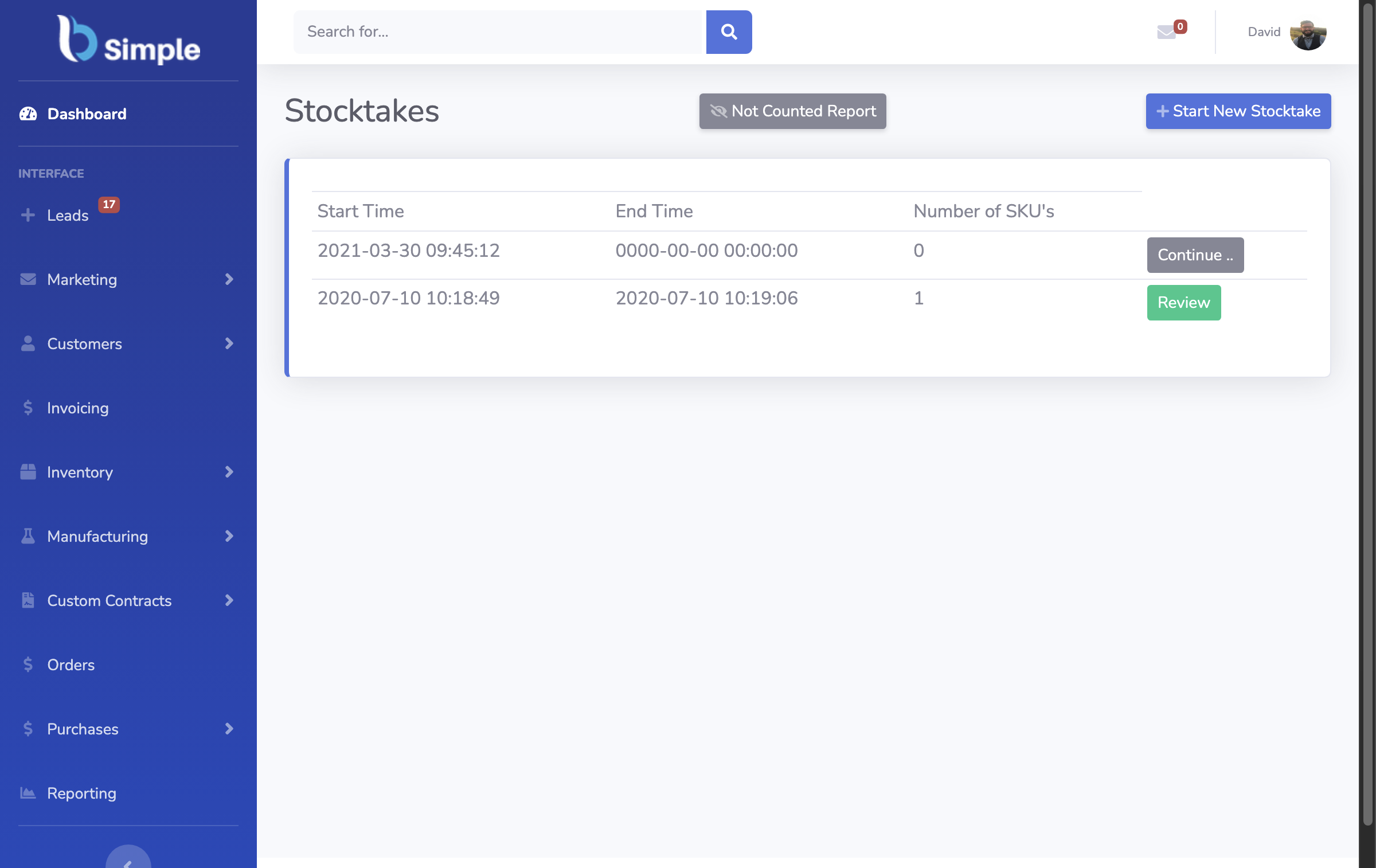
Cafes supplying other cafes, producers packing for grocers, caterers running standing orders — at this stage the kitchen's inventory meets customers directly. Wholesale buyers expect their own ordering link, their own pricing, and stock availability they can trust; the kitchen needs those orders to flow into production planning and out as invoices without retyping. Purchase orders to suppliers, goods receipts that update stock, and the Xero or MYOB handoff complete the loop.
That is the stage where spreadsheet counting definitively ends: the record now carries money as well as ingredients, and errors cost customers rather than just evenings. This is BSimple's audience — food businesses where the kitchen is the factory.
Choosing by stage, honestly
Match the tool to the stage, not the aspiration. Counting-only kitchens: stay free, the basic options are enough. Retail-with-stock: a light system or the POS's own stock module handles it. Wholesale production kitchens: a system with recipes, batches, purchase orders and the accounting handoff — and a test before commitment: cost one real dish, run one real production day, and see whether the numbers survive. BSimple's trial exists for exactly that; it is not free software, and a kitchen not yet selling should not buy it.
Frequently Asked Questions
What is kitchen inventory management software?
Software that tracks what a kitchen holds and uses: ingredient stock, par levels, recipe-driven demand, expiry dates, and supplier orders. At the wholesale stage it extends to production batches, customer ordering and invoicing — the kitchen's record becomes the business's record.
Can it handle recipe costs and yields?
Production-grade systems do: recipes define ingredient quantities per dish, yields adjust for prep loss, and production runs calculate what a service or batch will consume. BSimple versions recipes so cost changes over time remain explainable rather than mysterious.
How does expiry tracking work in a kitchen?
Deliveries are recorded with use-by dates, batches of finished goods carry their own, and traceability search shows what needs moving first. For certified food producers, BSimple adds mass-balance reporting for ACO, NASAA and OFC compliance.
Do cafes need this, or just manufacturers?
Depends on the stage: a cafe cooking and selling over the counter can run on pars and counts. The software earns its keep when the kitchen sells goods wholesale, produces in batches, or answers traceability questions — which is when the record starts carrying money.
What does kitchen inventory software cost?
Free tools cover counting; systems cover production. BSimple starts at $180/month (AUD) with recipes, batches, purchase orders, the ordering portal and the Xero or MYOB handoff included. Judge the subscription against the waste, stockouts and Sunday-night invoice typing it removes.
BSimple