
Guide / small business
Inventory management for a small business
Small-business inventory is four records: what you hold, what to reorder, what you counted, and what you sold. Here is how to set them up — and the honest line where software earns its cost.
The key facts
- Track four things: stock on hand, reorder levels, count variances, and the orders that consume stock.
- Start from what you have: the spreadsheet you already keep is the import file — it does not need to be perfect, just honest.
- The order matters: live quantities first, reordering second, portals and invoicing third.
- The cost line: free works alone; software (BSimple from $180/month AUD, free trial) earns its cost when a second person or a wrong quantity arrives.
- The full picture: how the inventory record works is the hub page for everything above.
- 01The key facts
- 02What a small business actually needs to track
- 03Setting up in an afternoon
- 04How BSimple fits a small business
What a small business actually needs to track
Not everything — four records, in order of importance:
- Stock on hand per item: the quantity you would bet money on. Everything else depends on this being true.
- Reorder levels on the items that actually sell: the minimum that triggers a purchase before the shelf is empty. Ten lines covering 80% of sales beats 500 lines covering nothing.
- Count variances: what the count found versus what the record said, adjusted deliberately — the record stays honest and shrinkage becomes visible.
- Orders against stock: what is promised, what is picked, what was invoiced. This is the record that stops overselling.
Everything else — batches, expiry, multi-location, portals — is situational. Food and drink need expiry; two locations need transfers; wholesale customers need their own ordering path.
Setting up in an afternoon
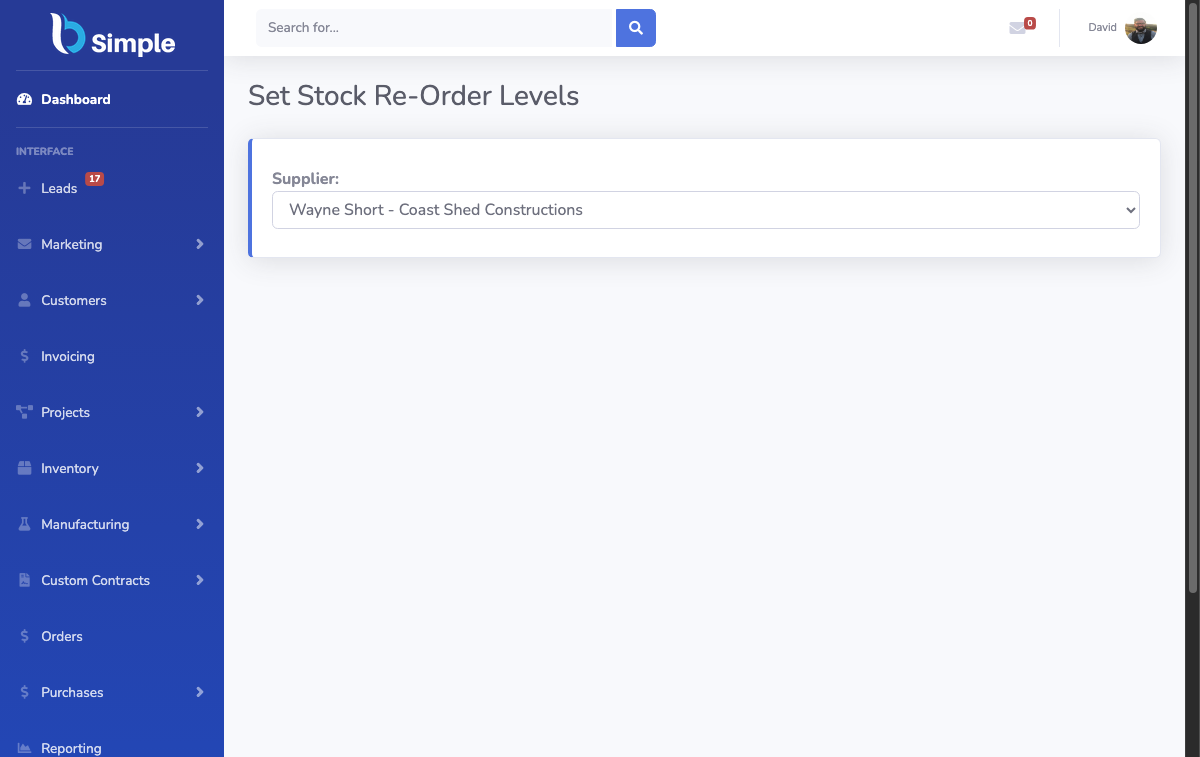
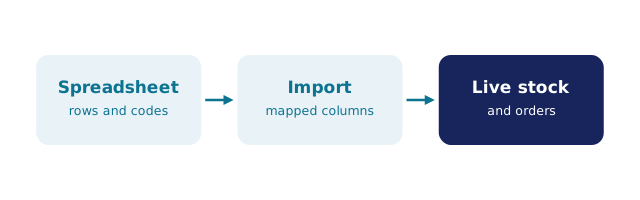
The setup that works: import the product list you already keep (spreadsheet, invoice history, whatever is honest), set quantities by counting a handful of high-value lines rather than trusting the file, set reorder levels on the fast movers, and take one order the whole way — checked against stock, picked, invoiced. If the accounting system is Xero or MYOB, push that invoice across and see it land. The examples guide walks each record; what stock management covers explains the mechanics behind them.
The spreadsheet stage is a legitimate alternative at one-person scale — the trigger to leave it is the first wrong quantity that costs real money, not a headcount. How businesses track inventory today maps the methods and their breaking points.
How BSimple fits a small business
We build BSimple, so weigh that. It carries the four records on one dataset: live stock, reorder-driven purchasing, counts from any phone browser with an audit trail, and orders from the customer portal through pick and pack to invoicing — with the Xero/MYOB handoff behind them. Batches and expiry are there for food and regulated stock; projects there for trade jobs. Plans start at $180/month (AUD), every feature in the core plans.
The honest sizing: a one-person business with low consequence can stay free and be fine. The moment a second person touches stock or an oversell costs a customer, the trial is the cheapest way to test the step — the full product, your own data, an afternoon.
Frequently Asked Questions
What inventory records does a small business need?
Four: stock on hand, reorder levels on the fast movers, count variances adjusted deliberately, and orders tracked against stock. Add expiry, multi-location or customer portals only when the business actually has those problems.
Can I start with my existing spreadsheet?
Yes — importing it is the standard first step. It does not need to be perfect: import, count the high-value lines to correct the record, and start trusting it from there. The spreadsheet becomes the seed, not the system.
How much does inventory software cost for a small business?
BSimple starts at $180/month (AUD) with everything in the core plans — no modules. Free options exist and are honest at one-person scale; the free ladder maps them against what they leave out.
Is BSimple too big for a tiny business?
It is built for small-to-medium wholesale, manufacturing, distribution and trade businesses — if you sell products and stock matters, the trial on your own products settles the sizing question in an afternoon: start here.
BSimple