
Guide / Xero compatibility
Compatible with Xero: what the claim should mean
Every inventory tool claims Xero compatibility. The difference is what actually crosses the boundary — here is the checklist, and exactly how BSimple behaves on each line.
The short answer
- Compatibility is a specification, not a badge: what crosses, in which direction, at which moment.
- The five lines to check: invoice push on approval, payment status mirroring, purchase-order reconciliation, selective contacts import, GST detail carried correctly.
- BSimple meets all five — Xero is its established accounting integration, from $180/month (AUD).
- The boundary matters too: compatible does not mean merged — the ledger stays in Xero.
- 01The short answer
- 02The five-line compatibility checklist
- 03What compatibility does not mean
- 04Where BSimple fits
The five-line compatibility checklist
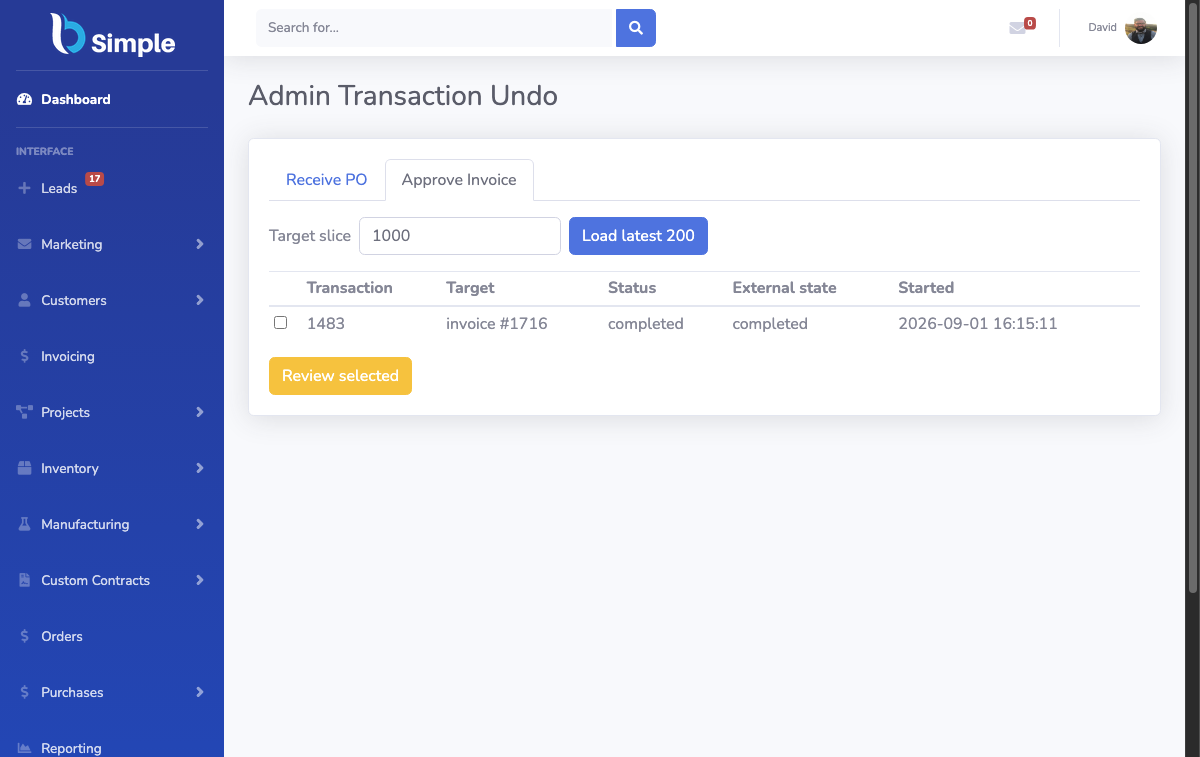
1. Invoices push on approval — not on a schedule. When an invoice is approved in the inventory system it lands in Xero with its line detail; a nightly sync job lets the two sides disagree for hours, and disagreement is the enemy. 2. Payment status mirrors back. Paid and voided in Xero become the same status in the inventory system, so credit holds and follow-ups use the money truth. 3. Purchase orders reconcile. The buying side carries into Xero with matching and GST handling, because supplier bills are where reconciliation labour hides. 4. Contacts import selectively. Syncing an entire customer list is rarely wanted; the import should be curated. 5. GST detail survives the trip. Australian invoices carry tax treatment; the compatibility claim means nothing if the BAS inputs need rebuilding on the other side.
Ask any vendor to demonstrate each line in the trial — push an invoice, pay it in Xero, watch it return. How the Xero integration works documents BSimple's answers line by line.
What compatibility does not mean
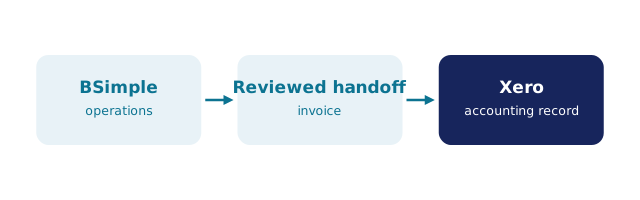
Compatible does not mean merged, and the distinction protects you. The ledger, BAS and compliance stay in Xero — the inventory system should not hold a second ledger, because two ledgers means reconciliation forever. Quantities stay operational: stock lives in the inventory system; its value reaches the books through the accounting cycle rather than a continuous quantity sync. And compatibility is not ownership — the accounting product can change (Xero to MYOB, or the US systems now rolling out) without the operations record being hostage.
Businesses that blur the boundary — stretching Xero into a warehouse tool or the inventory tool into a ledger — end up with the worst of both: does Xero have inventory management examines that temptation directly.
Where BSimple fits
We build BSimple, so weigh that. Xero is the established accounting integration with the five behaviours above as designed behaviour: invoices push on approval with the transaction record behind them, statuses mirror back, purchase orders reconcile including GST handling, contacts import selectively. MYOB works the same way, and US accounting integrations are rolling out. The operations side — live multi-location stock, orders with a customer portal, purchasing from demand, batch tracking — is the record that feeds the handoff. Plans start at $180/month (AUD), and the free trial is where the checklist gets run on your own invoices.
For the pairing decision in full, the best-inventory-for-Xero guide weighs what "best" means here; the bookkeeping handoff covers the bookkeeper's side of the same boundary.
Frequently Asked Questions
Does BSimple sync with Xero in real time?
At the moments that matter: invoices push when approved, and payment statuses mirror back when Xero records them. There is no overnight batch for either, which means the two sides never quietly disagree — the failure mode most "compatible" claims hide.
Will our Xero setup need to change?
No — that is the point of the handoff. Your accountant keeps Xero as it is; BSimple pushes approved invoices into it and reconciles purchasing against it. Contacts import selectively, so even the contact list stays curated rather than flooded.
Does the compatibility include stock levels in Xero?
No, and deliberately: quantities stay operational in BSimple, values reach the books through the accounting cycle. A continuous quantity sync would put a second stock ledger inside the accounting system — the two-record problem wearing an integration badge.
What if we leave Xero later?
The operational record is not hostage to the accounting choice: BSimple supports MYOB alongside Xero, with US accounting integrations rolling out, and the same handoff pattern. Changing ledger is an accounting decision; the stock, orders and purchasing record continues.

BSimple