
Guide / free and GST
Free inventory management software with GST
The honest answer first: BSimple is paid software (from $180/month AUD) — and it does not file GST itself; the accounting system does. What "GST-ready" should mean in any free tool, the free routes and their catches, and where the handoff has to happen.
The key facts
- The structural truth: GST is calculated and filed by the accounting system, not the inventory tool — "GST-ready" inventory software means clean, taxable-line invoices flowing to the books.
- BSimple's position: paid from $180/month AUD, GST handled through the accounting handoff to Xero or MYOB — no free tier, no native GST filing, stated plainly.
- The free routes: spreadsheets with GST columns, and free tiers/open source with the tax features often gated — both workable with the same handoff discipline.
- The test that matters: one sale, one purchase, followed into the books — count the manual steps before trusting any "GST-ready" label.
- 01The key facts
- 02What "GST-ready" should actually mean
- 03The free routes, with their catches named
- 04BSimple's position, stated plainly
What "GST-ready" should actually mean
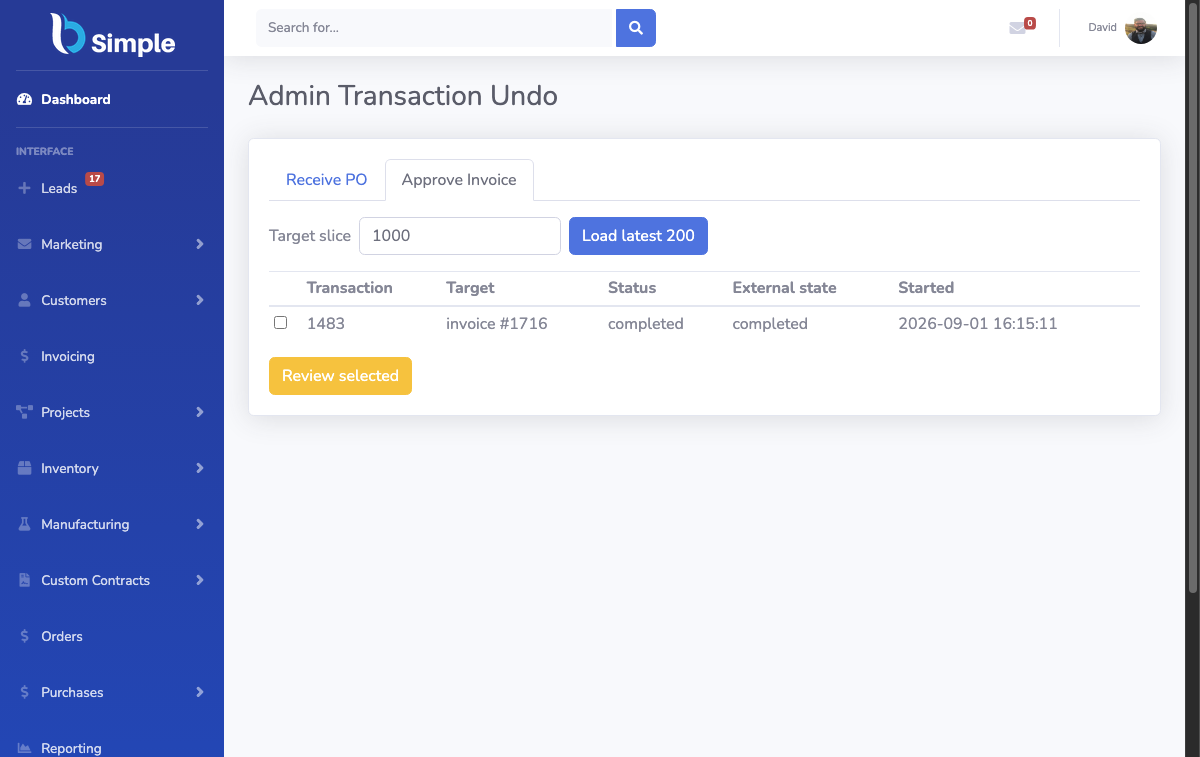
GST compliance lives in the accounting system — that is where returns are calculated and filed, in Australia and everywhere else with a GST/VAT regime. An inventory tool cannot and should not file; what "GST-ready" honestly means for it is narrower and checkable: prices entered both inc and ex-GST with the distinction kept straight, taxable versus tax-free lines separated on the invoice, the tax code attached to each line rather than guessed at month end, and the finished invoice arriving in the books with those codes intact so the return assembles itself.
Any tool — free or paid — that exports an invoice without tax codes has not saved money; it has moved the work to the bookkeeper with interest. That is the whole test: one sale and one purchase, followed from the tool into the books, counting the manual steps between.
The free routes, with their catches named
The spreadsheet. Genuinely free, and GST-capable in the simple sense: price columns inc and ex, a tax column computed by formula, totals the bookkeeper can read. What it will not do is separate taxable from non-taxable lines automatically on a mixed invoice, or anything at all when the count drifts — the free-in-Excel route covers the build honestly.
Free tiers of paid tools. Real structure with real caps, and the cap is frequently the tax features: multi-rate tax handling, inc/ex pricing or the accounting export sitting just behind the paywall. Check the gated list before committing data.
Open source. Free to license, self-hosted by you, with tax handling varying from competent to absent by project — and the maintenance tail on you. The open-source ladder and the free-route comparison name the checks.
In every route, the handoff discipline is identical: the inventory tool keeps quantities and costs true; the books keep GST. The India-context version of this question — where GST filing sits with local software — shows the same boundary in a different tax regime.
BSimple's position, stated plainly
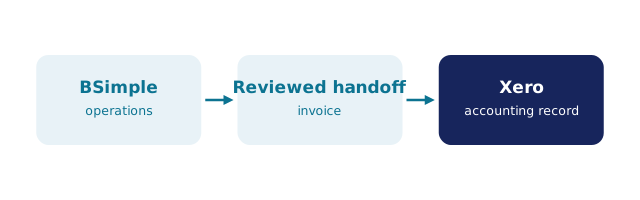
We build BSimple, so weigh that: it is not free — Starter $180, Professional $250, Organisation $399 AUD monthly — and it does not file GST itself. What it does is the narrow thing above, properly: GST-inc and ex-GST reconciliation pages for purchasing, tax codes carried on invoice lines, and invoices pushed to Xero or MYOB (US integrations rolling out) where the return is calculated and lodged. For businesses where GST interacts with stock at production depth — inputs consumed into batches, mass-balance reporting for organic certification — that layer is in the core plans rather than behind a module.
If the budget genuinely says free, the honest sequence is the spreadsheet with clean tax columns, then a free tier once the caps pinch — and a trial of the paid alternative (the full product) before the handoff workarounds calcify into staff habits, because that is the hidden cost no pricing page shows.
Frequently Asked Questions
Is there truly free inventory software that handles GST?
At the simple end, yes: a spreadsheet keeps inc/ex prices and tax columns, and the bookkeeper files from it. At the operational end, be sceptical — free tools commonly gate multi-rate tax, mixed invoices or the accounting export. Whatever the tool, GST filing itself happens in the accounting system.
Does BSimple calculate and file GST?
No, and no inventory tool should claim to: GST is calculated and lodged in the accounting system. BSimple keeps the tax codes on every line, handles GST-inc and ex-GST reconciliation in purchasing, and hands finished invoices to Xero or MYOB.
What should I check in a free tool's GST handling?
Three things: whether it separates taxable and tax-free lines on one invoice, whether prices can be kept inc and ex without manual conversion, and what the accounting export actually contains. Run one sale and one purchase into the books and count the manual steps.
Why is GST handling often behind the paywall?
Because it is the feature tied to money — the point where free users become billable. Free tiers are designed to cap at growth points, and tax-plus-export is a classic one. Read the gated list before your data is in.
How does BSimple's GST support compare with free tools?
Depth and automation: GST-aware purchasing reconciliation, tax-coded invoices pushed to the books automatically, and batch-level cost tracking for production businesses. From $180/month AUD — the trial tests the handoff against your own products before the comparison is believed.
BSimple