
Guide / computers and stock
Computer inventory software free: which search are you running?
Tracking the laptops your team owns and selling computers as products are different jobs with different tools. Here is the honest picture for both — and where BSimple fits.
The short answer
- IT asset tracking (who has which laptop, serials, licences) is a different job from hardware retail stock (buying and selling computers as products).
- Free for IT assets: a disciplined spreadsheet works for small fleets; dedicated IT asset tools are paid.
- Free for hardware stock: the same free ladder as any product business — spreadsheet, free tiers, trials.
- BSimple is built for the second — buying and selling — not the first, and this page will not blur the two.
- 01The short answer
- 02If you mean tracking IT assets
- 03If you mean selling computers and parts
- 04Where BSimple fits
If you mean tracking IT assets
The job: know which devices the organisation owns, who holds each, serial numbers and warranty dates, software licences, and what happens when someone leaves. The free answer is a spreadsheet with one row per device, disciplined at every handover — genuinely workable below a few dozen devices. The paid answer is dedicated IT asset management software, which adds check-in/check-out workflows, licence tracking and audit reports.
BSimple is the wrong tool for this job and says so: it is built for stock a business buys and sells, not for equipment it lends to staff. Asset-style tracking exists in BSimple only where assets attach to customer jobs — the projects feature keeps warranty and service history per installed item — which is a trade-job pattern, not an internal IT department.
If you mean selling computers and parts
Hardware retail and wholesale is normal product stock with two quirks: serial-number traceability (which unit went to which customer, for warranty returns) and fast price movement on fast-moving lines. The free ladder is the familiar one: a spreadsheet while the catalogue is small; free trials of real systems to test structure; a paid plan when allocation, purchasing and channels need one record.
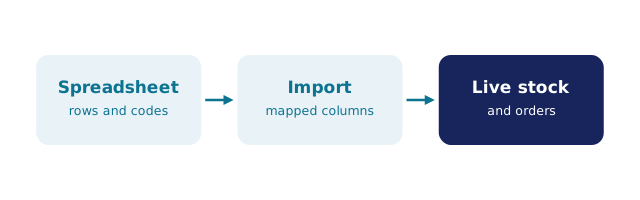
BSimple fits this job: live multi-location stock with multi-level units, scanning from any phone browser, reorder levels driving purchase orders from demand, a customer ordering portal for trade accounts at their own pricing, batch and serial detail where provenance matters, and invoicing handed to Xero or MYOB — from $180/month (AUD). The free stock management guide prices the crossover, and the basic free options cover the small end honestly.
Where BSimple fits
We build BSimple, so weigh that, and note the search's trap: "computer inventory free" returns two industries' tools wearing each other's keywords. Decide the job first — internal assets versus products for sale — then pick the category. For products for sale, BSimple's core from $180/month (AUD) with the free trial is the honest test; for internal IT fleets, an IT asset tool or a disciplined spreadsheet will serve better.
For the wider category structure, the inventory software types guide separates asset-style tracking from trading stock, and the inventory management overview shows what one record does for a hardware business.
Frequently Asked Questions
Can BSimple track laptops assigned to employees?
Not as an internal IT asset register — that is a different category, and BSimple does not pretend otherwise. Its asset capability attaches to customer jobs through projects: items installed at a customer site, with service and warranty history per job. Internal fleet tracking belongs in an IT asset tool.
Does BSimple track serial numbers for warranty returns?
Where provenance matters, batch and lot tracking with traceability search is core — each unit or lot can carry its detail and be traced from supplier receipt to customer sale, in both directions. For hardware businesses handling warranty returns, that trail is the feature that answers "which unit did we sell this customer, and when".
Is there a genuinely free option for a small computer shop?
A spreadsheet, genuinely — while one person maintains it and the catalogue is small. Free tiers of paid tools exist with caps; trials are the honest way to test structure. The joined workflow — scanning, purchasing, portal, accounting handoff — is the paid product across this market.
We both sell hardware and track our own fleet. What now?
Two tools doing two jobs is legitimate: BSimple (or similar) for the stock you buy and sell, an IT asset tool or a disciplined spreadsheet for the internal fleet. The mistake is forcing one product to do both — the compromises land on the record that pays the bills.

BSimple