
Guide / IT hardware, honestly
Computer hardware inventory, free: the honest ladder
Hardware in boxes is stock — with serials, warranties and staff issue that make it fussier stock. Here is what free covers, and why a shared record beats the famous spreadsheet of serials.
The key facts
- The boundary: hardware on shelves is stock; what is already plugged into the network is IT discovery — different tools (explained here).
- What hardware stock needs: serial/asset numbers, purchase records for warranty, locations, issue-to-staff, and counts.
- Free covers the list: spreadsheet or free tiers; serial-level traceability and the accounting handoff are the paid layer.
- BSimple tracks hardware as stock — serials via batches, locations, issue, invoicing — from $180/month (AUD), free to trial.
- Context: the full inventory system holds the wider system, this page one stop in it.
- 01The key facts
- 02What computer hardware stock needs
- 03What free covers
- 04How BSimple carries hardware stock
What computer hardware stock needs
Hardware is stock with an identity problem: every unit has a serial, a warranty start, an owner and a location, and the questions that matter are all serial-shaped. Which laptops are still under warranty? Who has the projector that left the cupboard in March? What did that spare switch cost, for insurance? A spreadsheet can hold the answers and cannot guarantee them — nothing stops two people issuing the same spare, and the warranty dates drift from the invoices.
So the record needs: serial or asset numbers per unit, purchase details attached (warranty runs from the invoice, not the memory), locations (store room, branch, van, staff member), issue and return as recorded movements, and counts that reconcile what the list says with what the shelf holds.
What free covers
The spreadsheet rung is genuine for a small kit list — item, serial, location, owner, warranty date — while one disciplined person maintains it. Free tiers add a real database with phone counts, capped on users and volume. The serial-level behaviour — issue-to-staff as transactions, warranty traceable to purchase, counts with an audit trail — is the paid layer nearly everywhere, because it is the part that is genuinely hard to build. The free ladder and the free tools list map the rungs.
Do not confuse this with network inventory — scanning what is plugged in and running is an IT-discovery job with its own (often open-source) tools. BSimple is the stock record for hardware that is still in a box, a cupboard, or a van.
How BSimple carries hardware stock
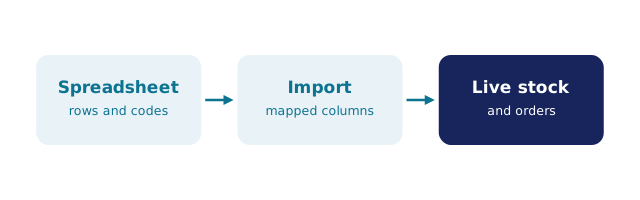
We build BSimple, so weigh that. Hardware is stock like any other, with the identity handled: receive units against purchase orders (the warranty anchor), track them across locations, issue to staff as recorded movements, count from any phone browser, and invoice with the Xero or MYOB handoff where hardware is sold — one record, from $180/month (AUD), everything in the core plans. The stock-record mechanics explain the movements underneath.
The honest test: trial one cupboard — receive three units with serials, issue one to a staff member, count the rest. If the chain reads clean, the famous serial spreadsheet can retire.
Frequently Asked Questions
Is there free computer hardware inventory software?
A spreadsheet, genuinely — serial, location, owner, warranty date, one maintainer. Free tiers add a real database with phone counts and caps. Serial-level issue tracking with an audit trail is the paid layer nearly everywhere.
Can BSimple track serial numbers and warranties?
Serials and batches are core: units are received against purchase orders — so warranty dates trace to invoices — and issue-to-staff is a recorded movement. BSimple does not discover what is running on the network; it tracks what is still in the box.
Is BSimple free?
No — plans start at $180/month (AUD), every feature in the core plans. The trial is the full product with your own hardware list, no card to start.
What is the difference between this and network inventory tools?
Network tools discover what is connected — software, licences, configurations. Hardware inventory tracks what is not yet deployed: shelves, spares, issues and returns. IT teams often need both, as two tools doing two different jobs.

BSimple