
Guide / vendor landscape
Companies that build business management software — and how to choose one
The product matters, but so does the company behind it: who builds it, who answers support, and what happens when your business outgrows a spreadsheet. A plain map of the landscape.
The key facts
- Four kinds of company build this software: global enterprise vendors, horizontal SMB suites, vertical specialists, and focused operations makers.
- Judge the company, not the feature grid: support reality, roadmap direction, implementation effort, and what happens after year one.
- BSimple is an Australian company building for wholesale, manufacturing, distribution and trade businesses — operations-first, with accounting left to your accounting system.
- Beware any listicle (including comparisons of us): verify claims on the vendor's own site and in a trial.
- 01The key facts
- 02The four archetypes of business management software company
- 03How to judge the company behind the product
- 04Where BSimple sits — and its limits
The four archetypes of business management software company
Global enterprise vendors sell the heavy suites — ERP-scale systems with modules for everything and prices to match. Genuinely excellent at scale; for a 20-person distributor they are usually the wrong weight class, a point the ERP comparison unpacks.
Horizontal SMB suites sell one product to every industry — general enough to fit everyone, specific enough to fit no one perfectly. Strong on breadth; check how deep their inventory, production and wholesale workflows actually go before believing the demo.
Vertical specialists build for one industry and fit it tightly — but the same focus makes them brittle if your model changes, and some are one-person companies with bus-factor risk.
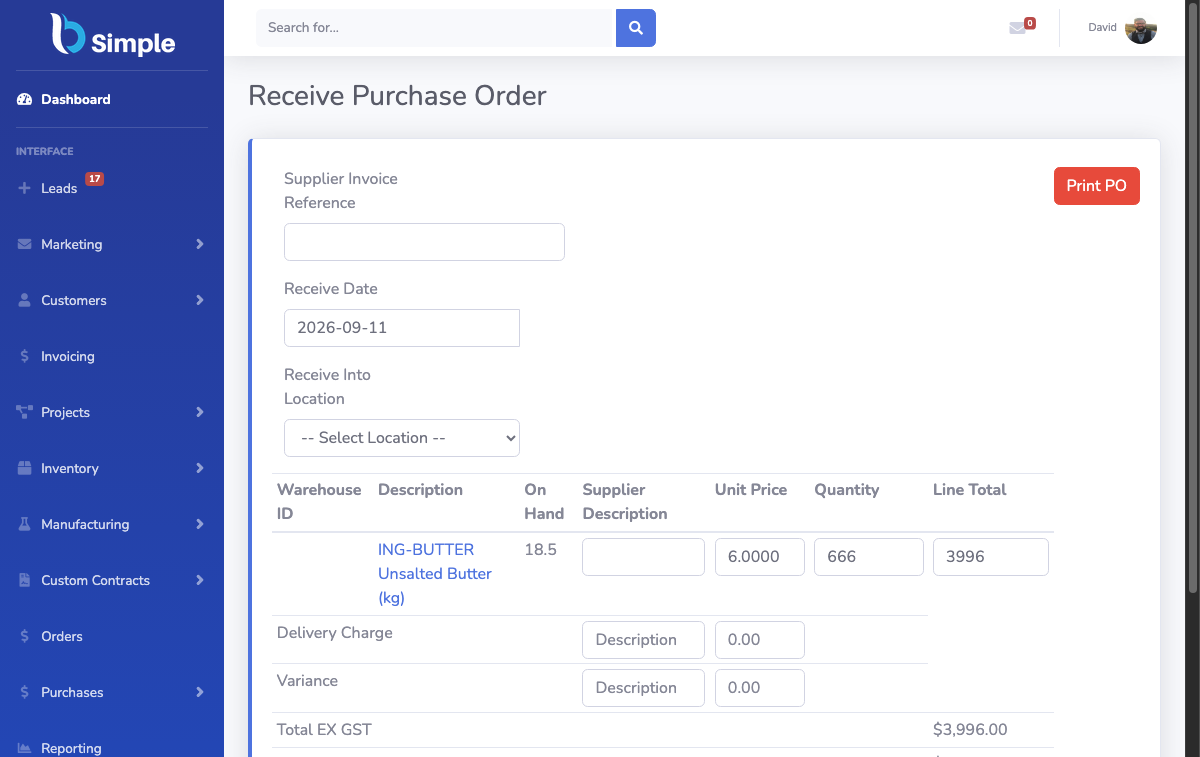
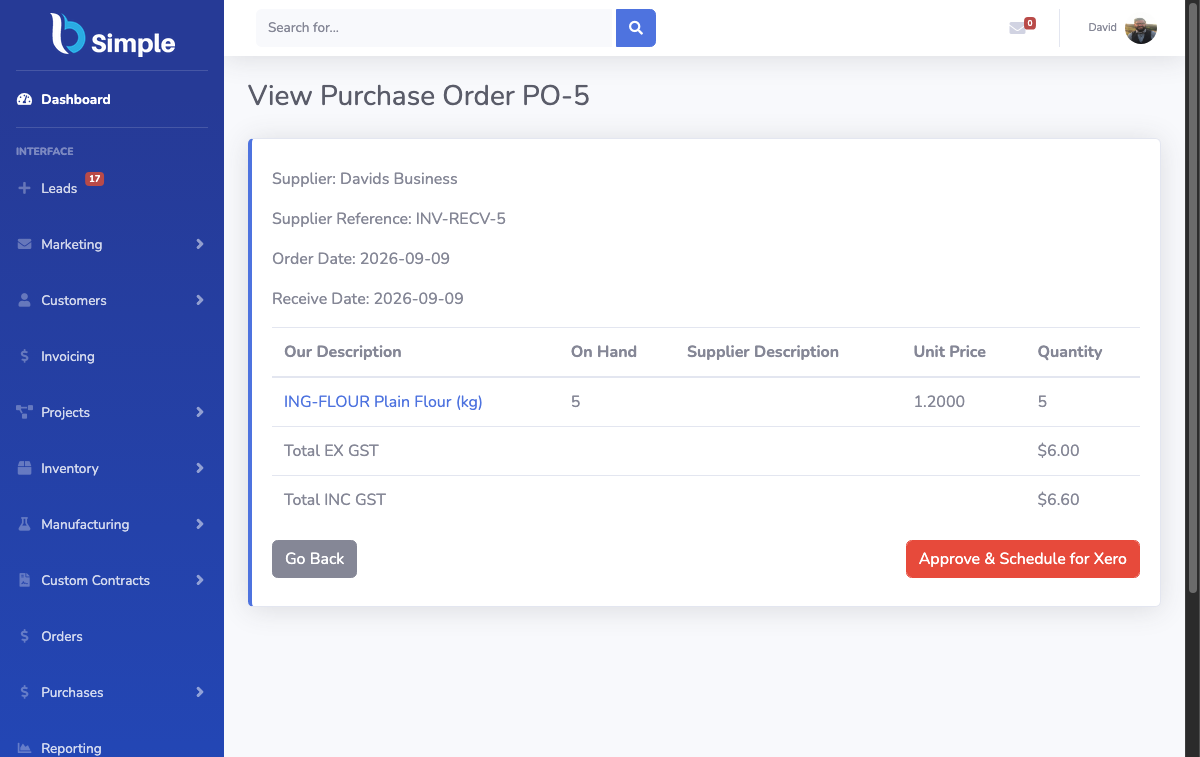
Focused operations makers — BSimple's category — build the operational layer (inventory, orders, purchasing, invoicing, portals) and deliberately leave accounting to the accounting system. The bet is that a business of 10–200 people needs a superb record, not a second ledger.
How to judge the company behind the product
- Support is a product feature. Ask who answers when something breaks mid-stocktake — a person you know, a ticket queue, or a forum. The honest answer matters more than the marketing.
- Roadmap over feature grid. Every vendor's checklist looks identical on a comparison site. What ships, how often, and in response to which customers — that is the real product.
- Implementation is the hidden price. A cheap product that takes six months to configure costs more than its sticker. Ask what a realistic go-live looks like for a business your size.
- The accounting question settles the category. Vendors that want to replace your books are selling a different (bigger) product. BSimple integrates with Xero and MYOB — US accounting integrations rolling out — and leaves compliance where your accountant already works.
Where BSimple sits — and its limits
We build BSimple, so weigh that. BSimple is made in Australia for wholesale, manufacturing, distribution and trade businesses that have outgrown spreadsheets but do not need an ERP: live multi-location stock, batch and expiry tracking, customer ordering portals, purchasing from demand, and an audit trail throughout. Plans start at $180/month AUD, and the whole operations dashboard — orders, invoices and stock values — works on the same record.
The limits are deliberate: no HR or payroll, no MRP scheduling, no built-in storefront (Shopify orders sync in instead), and no free tier — the trial is how you evaluate instead. If your needs sit outside operations — heavy CRM, marketing automation, HR — the wider software landscape is the honest map, and the shortlist angle covers how the categories compare.
Frequently Asked Questions
What company makes business management software?
Many, across the four archetypes above — enterprise vendors, horizontal suites, vertical specialists and focused operations makers. BSimple is in the last group: an Australian company building the operations layer for wholesale, manufacturing, distribution and trade businesses.
Should we buy from a local company or a global one?
Local helps where your reality is local — tax handling, support hours, vocabulary. A Sydney business and its bookkeeper share a working day with an Australian vendor; a global suite may not. But judge support quality directly rather than assuming either way.
How do we verify a vendor's claims?
Trial the product with your own data, ask to speak with a customer in your industry, and treat every comparison list — including ones mentioning BSimple — as a starting point, not evidence. Vendor claims are marketing until they survive contact with your workflows.
What questions expose a weak software company fast?
"What did you ship last quarter, and why?" (roadmap), "Who answers a mid-stocktake support call?" (support), "Show me a business our size that went live this year, and how long it took" (implementation). Vague answers to any of the three are information.
How does BSimple price compared to the big suites?
Plans are $180/$250/$399 per month AUD with core features — including recipes, batches and the customer portal — in every plan. Enterprise suites typically start an order of magnitude higher once implementation is counted; price both at your real shape.

BSimple