
Guide / vendor categories
Business process management software vendors
BPM vendors sell a different product from business management software, and the labels blur in marketing. What each category does, honest vendor questions, and where BSimple sits — and does not.
The key facts
- BPM vendors sell process orchestration: modelling, automating and monitoring multi-step workflows across systems and departments.
- Operations software runs the record: stock, orders, purchasing and invoicing on one live dataset, with the workflow built into the data.
- Complements, not competitors — most SMBs need the record first, the orchestration later, if ever.
- BSimple is not a BPM suite: it is operations software where the process (order → pick → invoice → accounting handoff) is built into how the record works.
- The wider system: inventory management end to end maps the whole record this page sits in.
- 01The key facts
- 02What BPM vendors actually sell
- 03BPM software versus operations software
- 04Questions that separate a good vendor from a good demo
- 05Where BSimple sits — plainly
What BPM vendors actually sell
The business process management category grew out of enterprise IT: tools that model a process as a diagram — approvals, routing rules, handoffs between departments — then execute and monitor it. Vendors here sell the orchestration layer: forms, rules engines, case management, dashboards of process bottlenecks. At enterprise scale that is genuinely useful; a large organisation has dozens of systems that need a conductor.
The catch for a small or mid-sized business is that BPM assumes there is a process worth orchestrating and systems holding the underlying records. If your stock lives in a spreadsheet and your orders live in email, a BPM suite is automating the traffic between rooms that have no furniture. The category that fixes the underlying record first is usually the one SMBs actually need — it just has a less exotic name.
BPM software versus operations software
BPM software coordinates work between systems and people. It does not know what a purchase order is; it knows a form must route to a manager, then to finance, then close. Value arrives when the underlying systems are solid and the process crosses many of them.
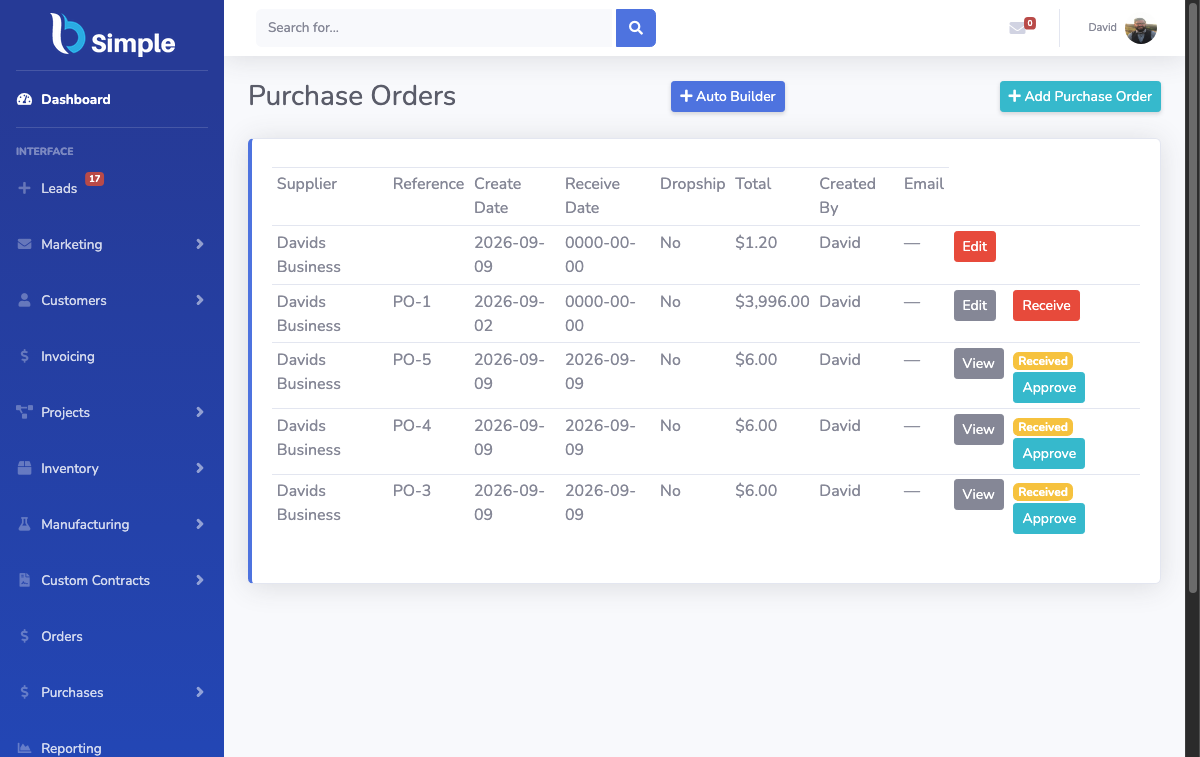
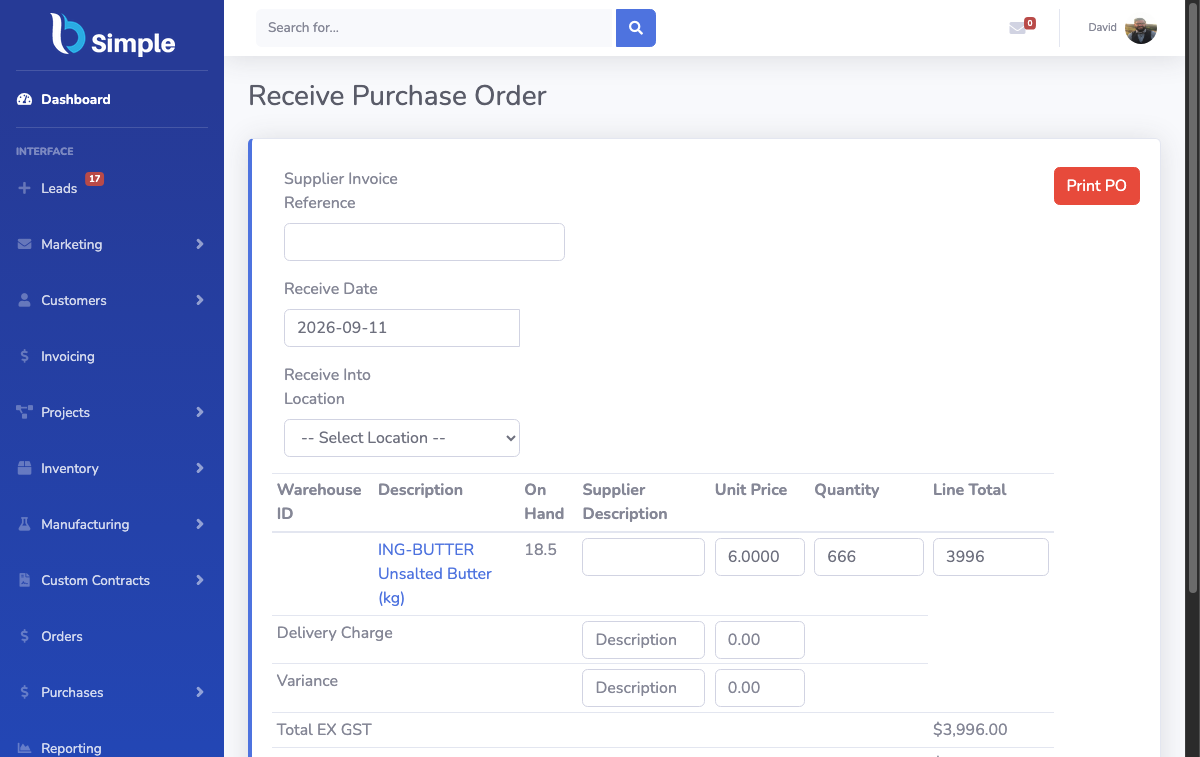
Operations software holds the record and embeds the process. In BSimple, the workflow is not a diagram layered over the data — it is how the data moves: an order from the customer portal becomes a pick list, then an approved invoice, then a push to the accounting system. Purchase orders rise from demand against reorder levels. There is nothing to model, because the process ships with the record.
The practical test: if your question is "which system holds our stock and order truth?", you are shopping in operations software. If it is "how do we coordinate approvals across five existing systems?", you are shopping in BPM. Our examples rundown and the BPM-versus-business-software comparison walk the boundary in more detail.
Questions that separate a good vendor from a good demo
- Where does the record live? If the vendor's answer does not include stock and order truth, you are buying orchestration for records you do not yet have.
- What happens when the process changes? Ask to see a change made — by your team, not their consultants.
- Who maintains the integrations? Every handoff between systems can break; ask who notices first and who fixes it.
- What does it cost at your size? Enterprise-priced platforms routinely land with SMB buyers; ask for the total including implementation.
- Could the process just live in the operations system? Often the honest answer is yes, and one system beats two.
That last question is why many SMB evaluations end where they started: business management software with the workflow built in covers what a BPM project would have been built to achieve.
Where BSimple sits — plainly
We build BSimple, so weigh that. It is not a BPM suite and we do not sell process modelling. It is operations software for wholesale, manufacturing, distribution and trade businesses: inventory, orders, purchasing, invoicing and customer portals on one record, with accounting handed to Xero or MYOB (US accounting integrations are rolling out). The processes most SMBs need — order to invoice, demand to purchase order, count to adjustment — are built into how the record works.
If you genuinely need cross-system orchestration — many systems, complex approval routing, compliance workflows spanning departments — then a BPM vendor is the right call, and BSimple's REST API and MCP endpoint are the honest way to connect us to it. If you are still mapping categories, the order management guide shows what an operations system does with a process end to end.

Frequently Asked Questions
What is business process management (BPM) software?
Software that models, automates and monitors business processes — routing work, approvals and handoffs across systems and departments. It is an orchestration layer over your existing records, not the record itself.
Is BSimple a BPM vendor?
No. BSimple is operations software — inventory, orders, purchasing, invoicing on one record with the workflow built in. If you later need genuine cross-system orchestration, the REST API and MCP endpoint are the connection points.
Do small businesses need BPM software?
Usually not first. SMB processes are few enough to live inside an operations system; standalone orchestration arrives with many systems and complex approval routing — an enterprise pattern. Fix the record first.
Is BPM the same as ERP?
No. ERP suites bundle the records — finance, inventory, HR, manufacturing — into one large system; BPM orchestrates processes across whatever systems exist. BSimple sits deliberately between spreadsheets and ERP: the operational record without the enterprise overhead.
BSimple