
Guide / boundaries
Business management system on WordPress
The honest answer: WordPress is a publishing platform, not an operations system — and BSimple is not a WordPress plugin. What WordPress genuinely does for a business, where plugins fill gaps, and the boundary where a real record has to take over.
The key facts
- What WordPress is: the web's dominant content management system — superb for sites, blogs and marketing pages, with WooCommerce extending it into a storefront.
- What it is not: an inventory and operations record. Plugins can bolt shop functions onto the site, but the stock ledger, purchasing and audit trails are database properties WordPress was never built to hold.
- BSimple's boundary: no WordPress plugin, no WooCommerce integration claimed — the stated e-commerce surface is Shopify order import by webhook.
- The architecture that works: WordPress for presence and selling, an operations system for the record, with the seam tested for re-keying.
- 01The key facts
- 02What WordPress genuinely does well
- 03The architecture that works
- 04Choosing honestly between the two
What WordPress genuinely does well
WordPress runs the front of the business: the marketing site, the content that earns search traffic, and — with WooCommerce — a storefront capable of taking orders. For presence and publishing it is a legitimate, often excellent choice, and its plugin ecosystem can stretch a site surprisingly far into light commerce: order forms, simple stock decrements, payment gateways.
The stretch is the risk. The moment the business holds real stock across real locations, buys from suppliers against orders, and invoices into an accounting system, the requirements change from "display and take money" to "keep a record true under multiple users". That is a database discipline — movements, derived quantities, audit trails, guardrails — and a content management system's architecture, optimised for pages and posts, does not provide it. Plugins that try end up maintaining a shadow ledger of their own tables, with the reconciliation and trust problems this site keeps warning about.
The architecture that works
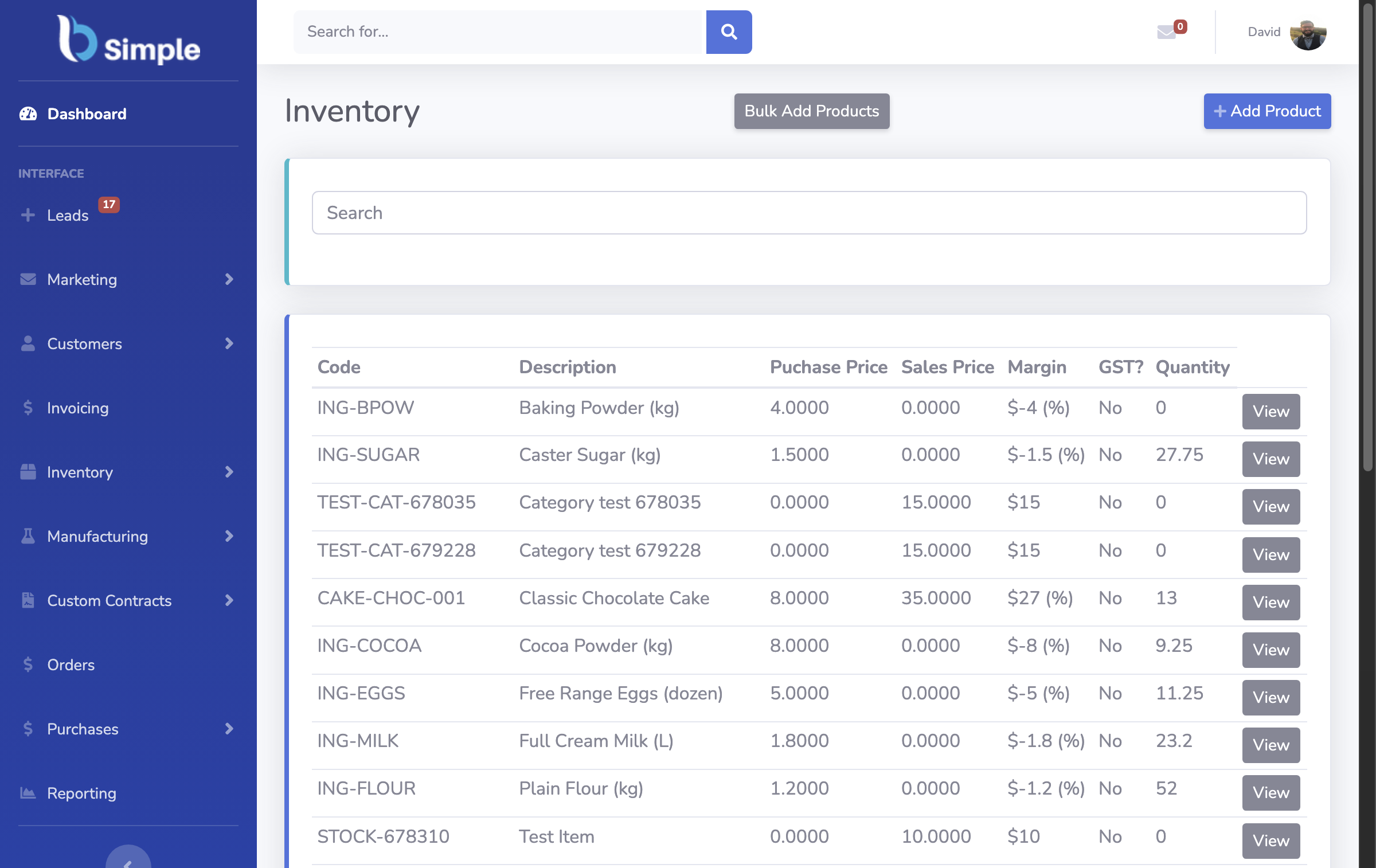
The durable pattern separates the layers: WordPress owns presence — site, content, storefront if WooCommerce runs there. An operations system owns the record — live stock across locations, purchase orders raised from demand, orders moving through pick and pack to invoicing, the accounting handoff intact. The seam between them must be tested, not assumed: follow one online order from the storefront into the record and count the manual steps — that count is the real integration score, whatever the marketing says.
We build BSimple, so weigh that: it does not ship a WordPress plugin, and we claim no WooCommerce integration — the e-commerce surface we maintain is Shopify order import by webhook, feeding orders into the same fulfilment record the warehouse works from. A business running WordPress for content and Shopify for the store, with BSimple underneath as the record, is a well-formed architecture; a business trying to make WordPress the record itself is buying reconciliation work by the month. From $180/month AUD, with the trial as the full product to test the record side — and the inventory pillar documenting what that record holds.
Choosing honestly between the two
The decision test is where the difficulty lives. If the hard part is presenting and selling — content, traffic, checkout — WordPress and its ecosystem are the right investment. If the hard part is operations — stock that disagrees with the shelf, orders re-keyed by hand, purchasing from memory — no plugin rescues that; the record needs a system built for it. Businesses that conflate the two usually discover it at the first stocktake after a busy quarter, which is the expensive way to learn the boundary — the same line apps for business management and all-in-one free platforms tend to blur.
Frequently Asked Questions
Can WordPress be used as a business management system?
For content and a storefront, yes — that is what it is built for. As the operational record (stock truth, purchasing, audit trails), no: the discipline those need lives in a database architecture WordPress does not provide, however many plugins are stacked on top.
Is there a BSimple WordPress plugin?
No — BSimple is browser-based cloud software, not a WordPress plugin, and we claim no WooCommerce integration. The maintained e-commerce surface is Shopify order import by webhook; the trial shows the record it feeds.
Can WooCommerce and an operations system work together?
In principle, yes — storefront and record are complementary layers. The honest check is the seam: one order followed end to end, manual steps counted. We do not publish a WooCommerce connector, so that seam would be yours to build or broker.
What is the biggest mistake businesses make here?
Treating the storefront system as the record. Stock decrements at checkout are not inventory management — no purchasing loop, no batches, no counts, no audit trail. The two layers answer different questions and both must be held by something built for them.
Where does BSimple fit a WordPress-based business?
As the operations layer underneath: stock, purchasing, orders, production and invoicing on one record, with the storefront — wherever it runs — feeding it. The features overview maps the layer, and the trial tests it on your own products.

BSimple