
Guide / startup staging
Business management software for startups, honestly
The startup failure with software is not buying too little — it is buying too much too early, or too late with data everywhere. Here is the staging that works.
The short answer
- Stage one: accounting plus a disciplined spreadsheet — the cheapest honest stack, and a legitimate phase.
- Stage two: the first system of record, when orders start promising stock — bought on a trial, not a pitch.
- What a product startup actually needs in software: stock, orders, purchasing, invoicing on one record, accounting handed off.
- BSimple serves stage two — from $180/month (AUD) with a free trial — and will not sell stage one software.
- The full picture: how the inventory record works is the hub page for everything above.
- 01The short answer
- 02The staging that works
- 03Where BSimple fits
The staging that works
Stage one — before allocation matters. Accounting software (Xero, MYOB) plus a disciplined spreadsheet: products, movements, orders in an email thread. It is genuinely enough while one person controls the stock and nothing sells faster than the sheet is updated. Spending here buys sophistication the business cannot use yet — and the data model it should build is the five-register template, because that structure becomes the migration later.
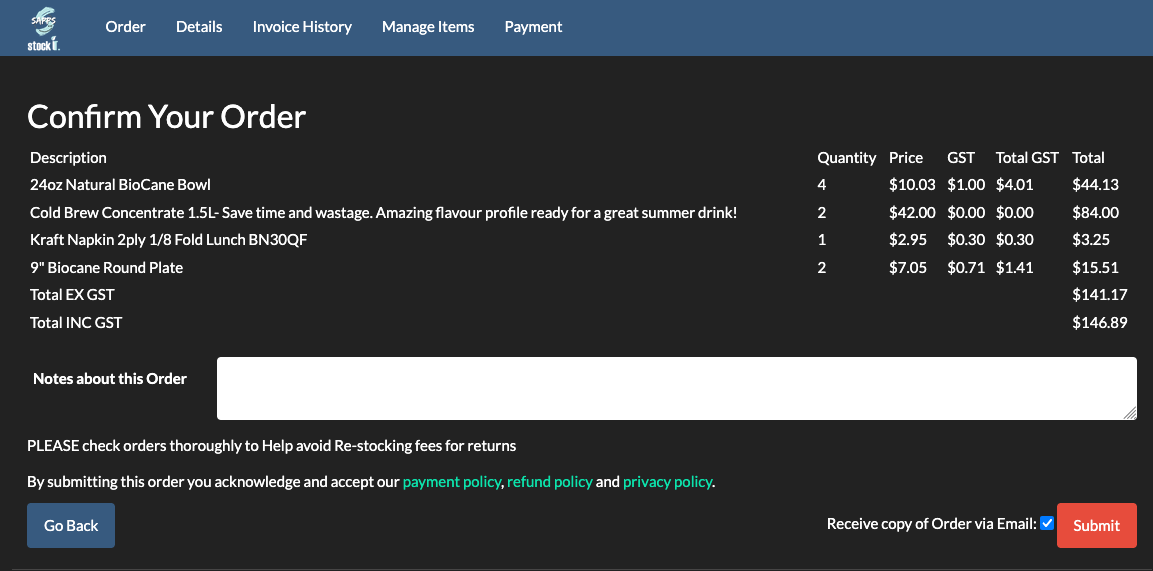
Stage two — the first promise. The moment an order must respect stock — a pre-sale, a trade account, a second sales channel — the spreadsheet stops being able to referee. The first system of record earns its place: live quantities, allocation, purchasing raised from demand, invoicing handed to the ledger. Buy it on a trial with your own data, after the crossover — not before it, out of ambition. The free ladder marks the crossover, and the vendor guide the trial process.
Where BSimple fits
We build BSimple, so weigh that. For product startups — the ones making, importing, wholesaling or distributing something physical — stage two is where BSimple lands: live multi-location stock, orders with a customer portal for the first trade accounts, purchasing from demand, batch tracking where provenance matters, invoicing handed to Xero or MYOB. From $180/month (AUD) with the free trial. The flat pricing and the included-everything scope exist because startups cannot afford module surprises in either direction.
The boundary, plainly: BSimple is not startup-everything software — no CRM pipelines, no marketing automation, no HR. It runs the operations record; the rest of the startup stack stays whatever it was. The business "best" criteria help judge the whole stack on the same honest terms.
Frequently Asked Questions
What software does a startup actually need?
Accounting first, always. Then — for a product business — the operations record when orders start promising stock. Communication, documents and marketing tools come from wherever they are cheapest. The discipline of staging beats the comfort of buying the suite early.
When should a startup buy inventory software?
At the first allocation problem: an order promised against stock that was already gone, or a second person needing the same truth. Before that, the spreadsheet is honest value; after it, the spreadsheet is the most expensive thing in the building.
Is BSimple good for pre-revenue startups?
If you are pre-revenue with no stock promises, the spreadsheet phase is the honest answer — BSimple will still be there. If you are building stock, taking pre-orders or running trade accounts, the trial is free and the fit question is worth answering early.
What should a startup test in a trial?
The next twelve months, not the five-year plan: receive a delivery, take a real order, invoice it, count a shelf. Software that handles the next year cleanly scales further; software sold on the five-year vision gets paid for years the business may not have.
BSimple