
Guide / interior design
Business management software for interior designers
Interior design runs on two kinds of software: studio tools for concepts, specifications and time, and an operations system for stock, orders and installs. BSimple is the second kind — this page is about exactly where it fits and where it does not.
The key facts
- Two software halves. Studio tools handle concepts, specifications and billable time; an operations system handles stock, client orders, purchasing and invoicing. One product rarely does both well.
- Where BSimple fits: design businesses that order, hold and install product — furniture, joinery, fittings, fabrics and materials — tracked per client and per job.
- Projects group the work: inventory and on-site assets sit under a customer, items can be reserved without consuming stock, and stock is consumed when the invoice is approved.
- Where it does not fit: pure studio practice management — time billing, proposals and mood boards stay in the tools built for them.
- Accounting stays in Xero or MYOB (US integrations rolling out); BSimple runs operations and pushes the finished invoice across.
- 01The key facts
- 02What an interior design business actually needs to track
- 03Where BSimple fits: the supply and install side
- 04Where it does not fit: studio practice management
- 05How the workflow looks in practice
What an interior design business actually needs to track
Strip away the mood boards and an interior design business that supplies or installs product runs on a short list of physical facts: what stock is on hand and where, which pieces are committed to which client, what is on order from suppliers, what has been delivered to site, and what was installed and invoiced at which property. In most studios those facts live in spreadsheets and email threads, and each one is a re-typed number that can drift from reality.
The failures are predictable: two clients shown the same pendant light and both expecting it, a joinery order damaged in storage before the site is ready, a warranty call a year later that nobody can answer because no record says which batch the door hardware came from. These are record-keeping problems, not accounting problems — which is why the inventory management page treats stock truth as the foundation everything else sits on.
Where BSimple fits: the supply and install side
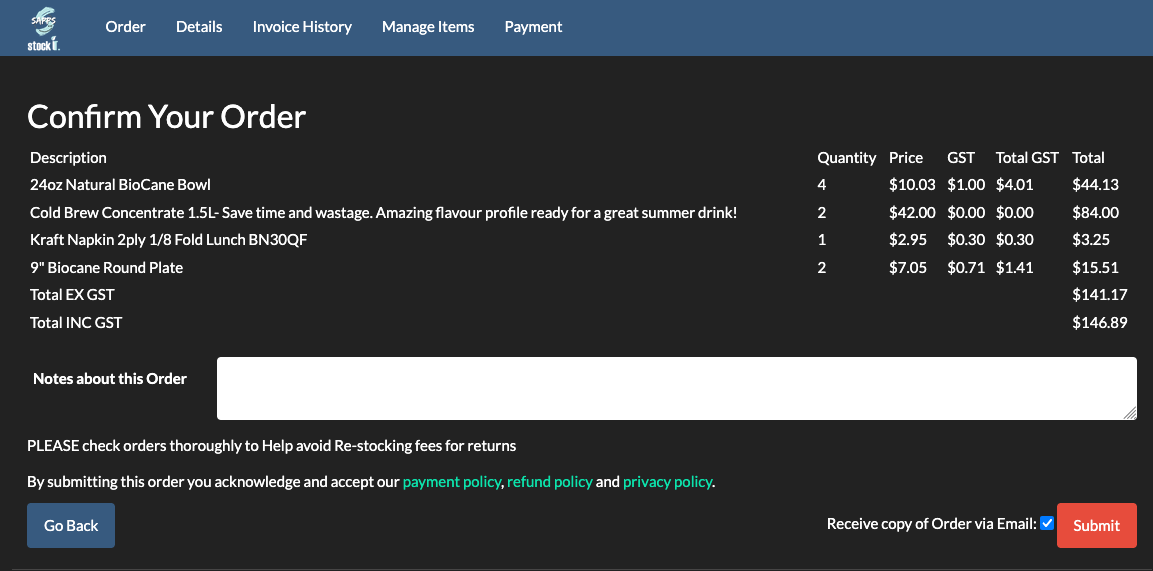
BSimple is built for businesses that buy, hold, sell and install physical product, and design studios with a supply side are squarely in that pattern. Stock is tracked live across locations with reorder levels, so the showroom and the warehouse agree with the system. Clients can order through their own ordering portal — each customer gets a private link with their own product list and pricing, which replaces the email-and-screenshot dance for repeat orders.
The piece that matters most for design and install work is Projects: inventory and on-site assets are grouped under a customer for the lifetime of the relationship. Items are reserved against a project without consuming stock, then installed and consumed when the invoice is approved — so a piece committed to one client cannot quietly sell to another. After installation, the project carries the warranty, maintenance and service history for that job — exactly the record a client expects when they call about a fault two years later.
Where it does not fit: studio practice management
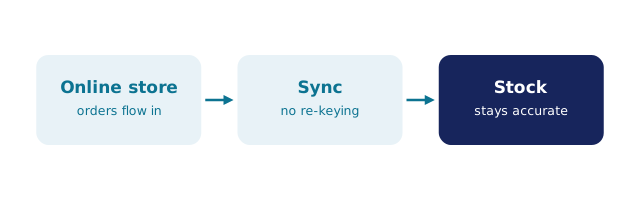
The other half of an interior design business — concept development, specification documents, mood boards, timesheets and fee proposals — is not what BSimple does. There is no time tracking, no proposal builder and no design library, and pretending otherwise would waste your trial. Studios that need that half keep their design tools and connect BSimple underneath for operations: stock, orders, purchasing and invoicing, with accounting in Xero or MYOB.
That split is deliberate: BSimple sits between spreadsheets and a full ERP for wholesale, manufacturing, distribution and trade businesses — and a design studio with a supply side is a trade business with better taste. If you never touch product, a practice-management tool is the right first purchase, not this one.
How the workflow looks in practice
A typical run: a client confirms selections, and their pieces are reserved under their project — stock stays visible and sellable to no one else. Purchase orders go to suppliers for whatever the project needs that is not on the shelf, with price variances flagged when the supplier invoice does not match the order. On install day, items are consumed against the project as the invoice is approved, pushed to the accounting system with payment status mirroring back. One record from selection to installation — and a free trial long enough to load your own products and walk a test project through that exact path before paying anything.

Frequently Asked Questions
Do interior designers need business management software?
If the business only designs and specifies — no stock, no installs — probably not this kind. The need arrives when product is involved: pieces held for clients, materials ordered against jobs, installations that carry warranty obligations. That is operations, and it is where records kept in inboxes start costing money.
Does BSimple handle project-based work like installations?
Yes — that is what Projects are for. Inventory and on-site assets are grouped under a customer, items can be reserved without consuming stock, installation consumes them on invoice approval, and each job keeps its own warranty and service history.
What about proposals, mood boards and time tracking?
Those are studio tools and BSimple does not replace them. It runs the operations layer underneath: stock, purchasing, orders, projects and invoicing. Most studios keep both — design tools above, operations and accounting below.
What does it cost?
Plans start at $180 per month AUD (Starter), with Professional at $250 and Organisation at $399 — no separate charge for projects, recipes or the customer portal. The free trial is the full product, so the workflow above can be tested with real stock before committing.
BSimple