
Guide / vendor landscape
How do you read a warehouse software vendors list?
Vendor lists mix WMS platforms, SMB operations suites and spreadsheet-era tools. Here are the shapes behind the names, the questions that sort them, and our place in it.
The facts about warehouse software vendors
- Three vendor shapes dominate: enterprise WMS vendors, SMB operations vendors, and component tools that do one warehouse job.
- The shape predicts everything else: implementation style, pricing model, support depth, and who the product quietly assumes you are.
- Published pricing is the fastest sorting signal — it tells you who expects to win on fit rather than negotiation.
- Ask every vendor the same three questions: where does the record live, what integrates with accounting, and who answers the phone.
- BSimple is an SMB operations vendor: warehouse work on one record with orders and invoices, from $180/month (AUD).
- The wider system: inventory management end to end maps the whole record this page sits in.
The three shapes behind the vendor names
Enterprise WMS vendors sell depth: directed put-away, wave picking, labour management, dock scheduling. Their sales motion assumes a distribution centre, an implementation partner and a budget line to match. If that is your operation, these are your people; if not, their demo will be a tour of features you will never switch on.
SMB operations vendors — BSimple's shape — sell the whole record: warehouse work (receiving, pick/pack, stocktakes, locations) joined to orders, purchasing, a customer portal and the accounting handoff to Xero or MYOB. The assumption is a small-to-medium product business without an IT department.
Component vendors do one job — scanning apps, shipping labels, cycle-count tools. Useful additions; dangerous foundations, because a warehouse run on components has no single record to trust. The warehouse category guide maps these shapes against the work the software must do.
- 01The facts about warehouse software vendors
- 02The three shapes behind the vendor names
- 03Three questions that sort any vendor list
- 04How to run a vendor bake-off in one afternoon each
- 05Where BSimple sits in the vendor landscape
Three questions that sort any vendor list
Where does the stock record live? A vendor whose record sits beside your orders and invoices — the same data — will keep the warehouse honest; a vendor whose record floats alone will drift. What does the accounting handoff look like? Ask to watch an invoice land in Xero or MYOB live. Vendors who export CSVs are selling you a typing job with the software attached. Who answers after go-live? Product-knowledgeable support, in your hours, in your language of compliance — this is where local vendors quietly outperform global ones for Australian businesses.
Then let pricing finish the sort. Published plans — BSimple from $180/month (AUD), everything included — mean the vendor expects the product to win on fit. Quote-only pricing means a sales process, and sales processes are sized for enterprises.
How to run a vendor bake-off in one afternoon each
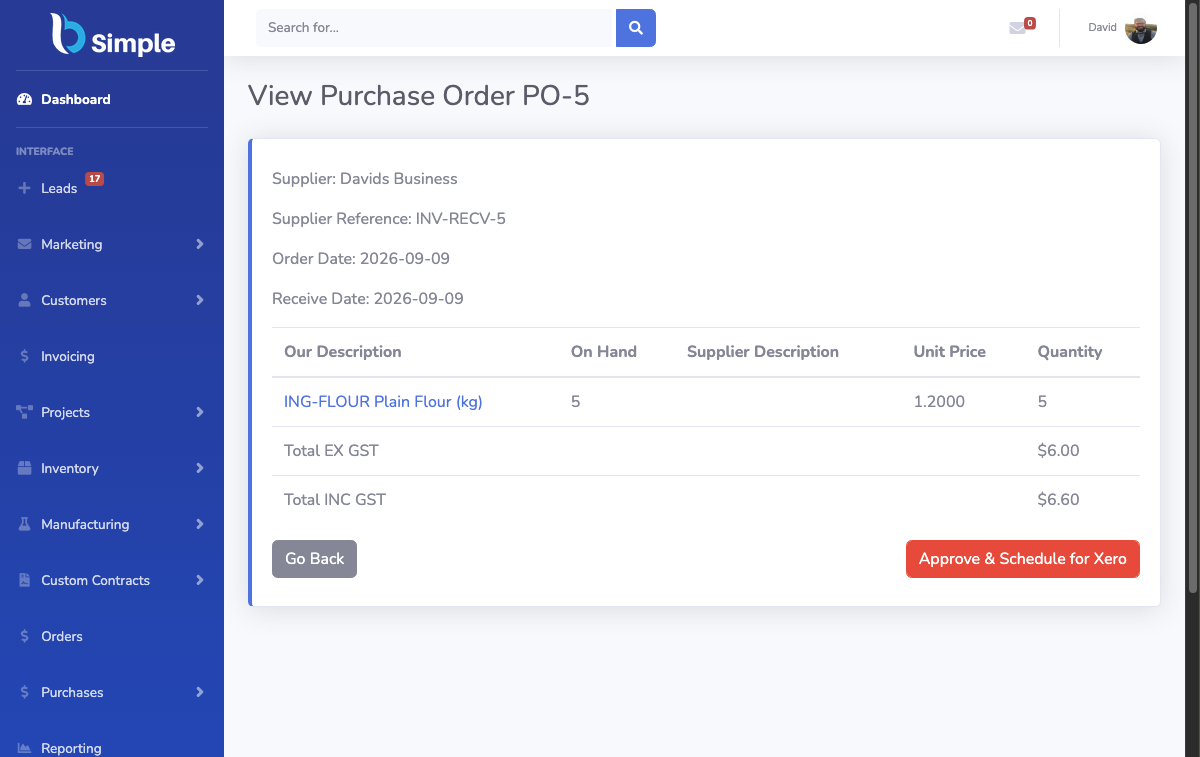
Give every shortlisted vendor the same afternoon: receive a real delivery, pick a real order — including one deliberate wrong item — run a mini stocktake, and push the invoice through to the accounting system. Score four things: did the record update in the moment; did the wrong pick get caught; could your newest team member do it unaided; and did every number agree at the end.
The exercise is vendor-agnostic by design — it works on BSimple exactly as it works on our competitors, and any vendor who resists a trial with your own products has told you something important. The small-business warehouse comparison applies the same bake-off logic to the SMB shape specifically.
Where BSimple sits in the vendor landscape
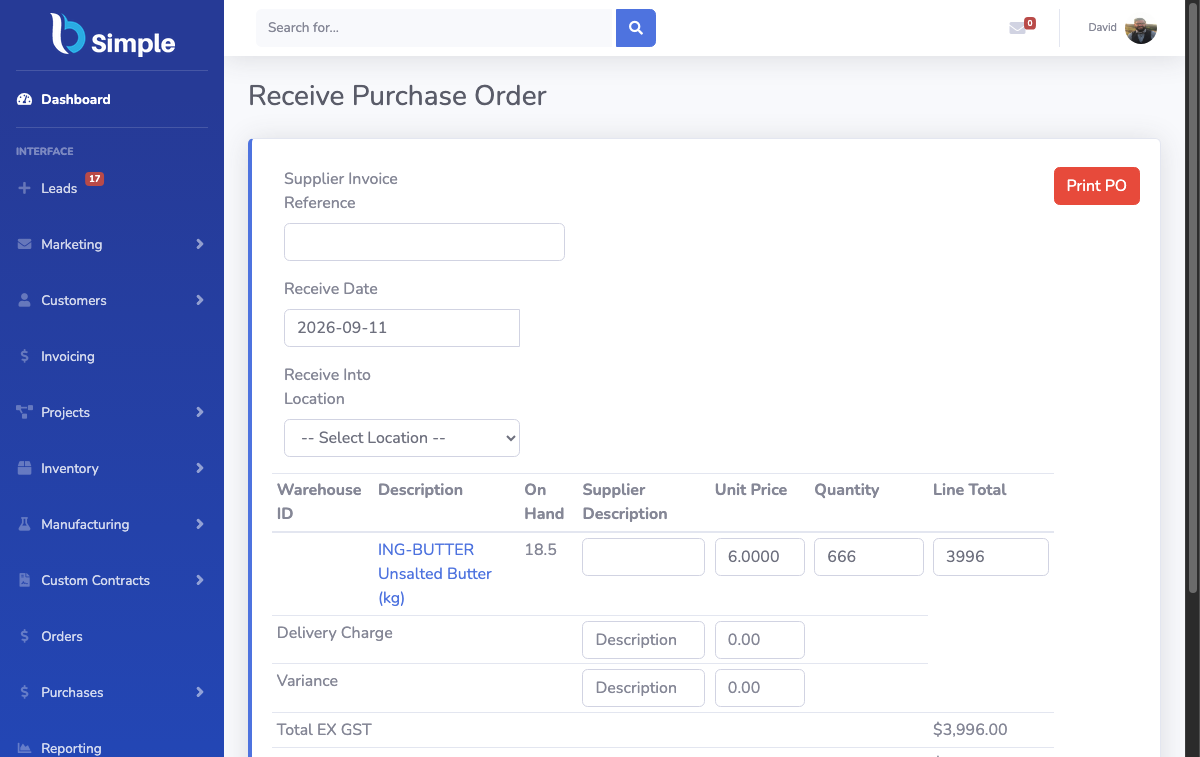
We build BSimple, so weigh that. Among warehouse software vendors we are the SMB operations shape: Australian-built, cloud-based, warehouse jobs — receiving against purchase orders, multi-location stock, pick/pack with packing slips, stocktakes and cycle counts, batch tracking with expiry — on the same record as orders, a customer portal and invoicing, handing off to Xero or MYOB. Pricing is published from $180/month (AUD), all features included, with a free trial instead of a demo gate.
We are not an enterprise WMS — no slotting, wave picking or labour management — and if your operation measures picking lines per hour across a distribution centre, the enterprise shape is the right one. If the fit is a growing warehouse that needs one true record, start the trial and run the bake-off afternoon on us first.
Frequently Asked Questions
Who are the main warehouse management software vendors?
Lists usually mix enterprise WMS platforms, SMB operations suites like BSimple, and single-job component tools. The names reshuffle constantly; the shapes do not. Sort vendors by shape first, then compare within the shape that matches your operation.
What should I ask warehouse software vendors before buying?
Where the stock record lives, what the accounting handoff looks like live, who supports the product after go-live, what the software deliberately does not do, and whether you can trial it with your own products. Evasive answers on any of the five are the decision.
Is it better to buy from a local vendor?
For Australian product businesses, usually yes — support hours, GST and EOFY context, and integrations with Xero and MYOB come built-in rather than bolted on. Global vendors bring breadth; local vendors bring fit. BSimple is the local shape, Australian-built and supported.
How much do warehouse software vendors charge?
SMB vendors publish: BSimple starts at $180/month (AUD) with all warehouse features included. Enterprise WMS vendors quote after sales processes, and the quotes vary with the negotiation. Treat published pricing as both a cost signal and a culture signal.
Can we trial multiple vendors at once?
Yes, and you should — the same products, the same afternoon test, each vendor. A bake-off with real stock is the only comparison that survives contact with your workflow, and vendors confident in their product make it easy rather than difficult.
BSimple