
Guide / lab supply loops
Lab inventory and order management systems
Labs run two loops — stock going out to benches, orders coming in from suppliers — and the software that joins them must respect lot numbers and expiry dates. Here is what that system does, the LIMS boundary, and where BSimple fits.
The key facts
- The outbound loop: stock issued to benches and experiments — quantities per location, lot and expiry respected on the way out.
- The inbound loop: reorder levels raise supplier purchase orders before reagents run out mid-experiment; goods receipts update the record.
- The standing boundary: sample tracking and assay workflows are LIMS territory — BSimple is not a LIMS and says so plainly.
- Where BSimple fits: lab storerooms run like stockrooms, and the suppliers who stock them — batch, expiry, traceability, ordering on one record.
- The full picture: the full order flow is the hub page for the order side.
- 01The key facts
- 02The two loops a lab runs
- 03The LIMS boundary, restated plainly
The two loops a lab runs
Stock going out: reagents, consumables and media leave the store for benches, and each issue should decrement the right lot at the right location — because "how much do we have?" and "is it still in date?" are the same question in a lab. Lot numbers and expiry dates make the difference between inventory and archaeology: first-expired-first-out enforced by the record, and every issue carrying the lot it drew from. Orders coming in: supplier purchase orders raised against reorder levels before a critical reagent empties mid-experiment — the classic lab failure — with goods receipts updating quantities and part-paid or split supplier invoices reconciling cleanly afterwards.
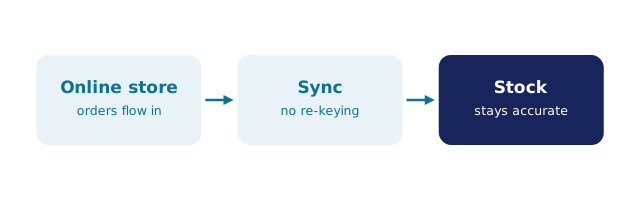
The system's job is joining the loops: consumption drives reorder, receipts feed availability, and every movement carries its evidence. That join is also what a spreadsheet loses first — the two lists diverge within a month, and the reconciliation never quite finishes.
The LIMS boundary, restated plainly
What a combined inventory-and-ordering system does not do: register specimens, track samples through assays, record results, or produce accreditation-specific documentation. That is Laboratory Information Management System territory — a regulated, specialised category — and no inventory product should imply otherwise. If the requirement starts at the sample, the decision is already made.
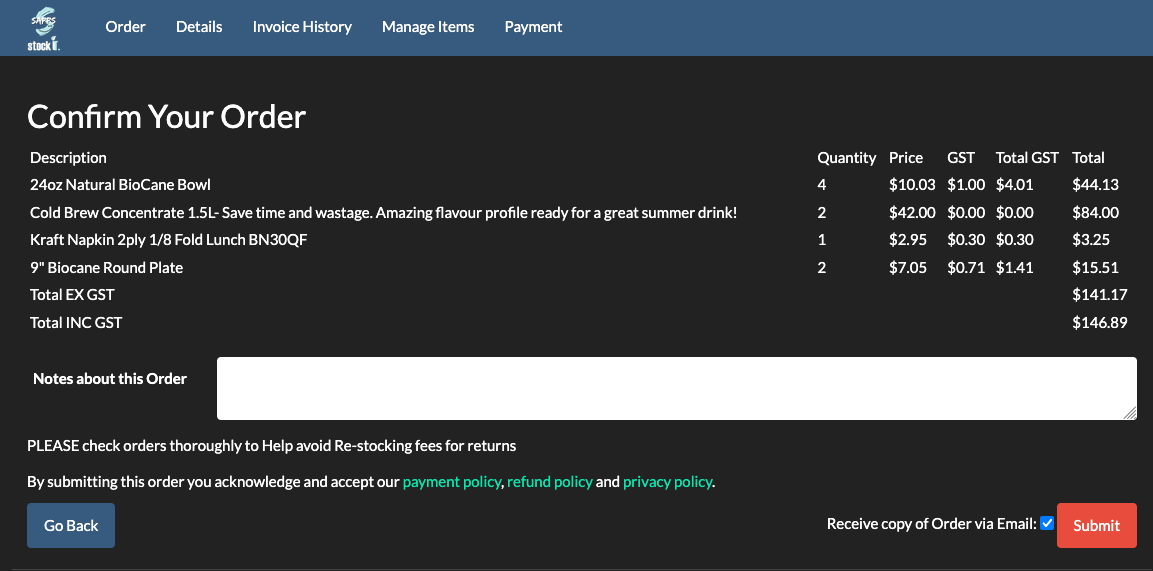
Where the combined loops fit: lab storerooms run like stockrooms (reagents and consumables with lots and expiry, locations from freezer to annex, cycle counts keeping the record honest), and the supply side — companies distributing reagents, consumables and equipment to labs — which is wholesale distribution with traceability: customer ordering through a portal with contract pricing, purchasing from demand, invoicing with the accounting handoff to Xero or MYOB. We build BSimple, so weigh that: it is the second and the storeroom version of the first, from $180/month AUD with batch tracking in the core plans — the lab-specific fit and healthcare inventory, the wider sector cover the adjacent ground, and the trial tests it on your real catalogue.
Frequently Asked Questions
Is BSimple a laboratory information management system?
No. Sample registration, assay workflows and accreditation records are LIMS territory. BSimple runs the stock and ordering loops — quantities, lots, expiry, purchasing — for lab storerooms and lab suppliers.
Can it reorder reagents automatically when stock runs low?
Reorder levels raise supplier purchase orders when quantities touch the level you set — the trigger is automatic, the send is your review. Goods receipt then updates the record when the delivery lands.
Does it track which lab used which lot?
Issues are recorded against locations and, where issues are made per team or project, against that context — with traceability search following lots from receipt to issue. Formal per-experiment sample lineage remains LIMS work.
We supply labs rather than run one — fit?
Directly: batch and expiry traceability, live quantities, client portal ordering with contract pricing, and invoicing with the accounting handoff. Start the trial with your real catalogue.
What does it cost?
Starter $180, Professional $250 and Organisation $399 per month (AUD) — batch tracking and traceability are in the core plans, not behind a laboratory module.

BSimple