
Guide / laboratories and stock
Inventory management software for labs
Labs track two different things: samples flowing through assays, and stock sitting on shelves — reagents, consumables, media. Software differs sharply by which one you mean. Here is the honest split, and what BSimple does and does not cover.
The key facts
- Sample tracking is a LIMS job: chain of custody, assay workflows, compliance records. BSimple does not do this and does not pretend to.
- Stock on shelves is inventory management: reagents and consumables with lot numbers and expiry dates, locations, reorder levels, stocktakes.
- BSimple's relevant strengths: batch/lot tracking with expiry, traceability search from receipt to issue, multi-location quantities, reorder levels.
- Best fit: labs run like storerooms, and the suppliers who stock them — not research sample workflows.
- 01The key facts
- 02First, which problem are you solving?
- 03What transfers from industrial inventory to lab stock
- 04Honest boundaries, stated plainly
First, which problem are you solving?
If the search is really about samples — registering specimens, tracking which assay they are in, recording results with an audit trail for accreditation — you need a Laboratory Information Management System. That is a specialised, regulated category, and BSimple is not it. Buying operations software to manage samples would fail an audit and, more importantly, fail the science.
If the problem is stock — the lab store, reagent fridges, the consumables that run out mid-experiment — that is inventory management, and the requirements look like any perishable-goods business: know what you have and where, respect expiry dates, trace which lot a consumption came from, reorder before you run out. This is the job BSimple is built for, and the rest of the page is about it.
What transfers from industrial inventory to lab stock
- Batch and lot tracking with expiry. Every receipt of a reagent or medium becomes a tracked lot with an expiry date; first-expired-first-out becomes a workflow rather than a memory test.
- Traceability search. The question "where did this lot go, and which lots did this batch of results consume?" has a searchable answer from supplier receipt to issue — the same machinery food and pharmaceutical producers use for recalls.
- Locations done properly. Quantities live per location, so the freezer, the store room and the annex each hold a truthful count.
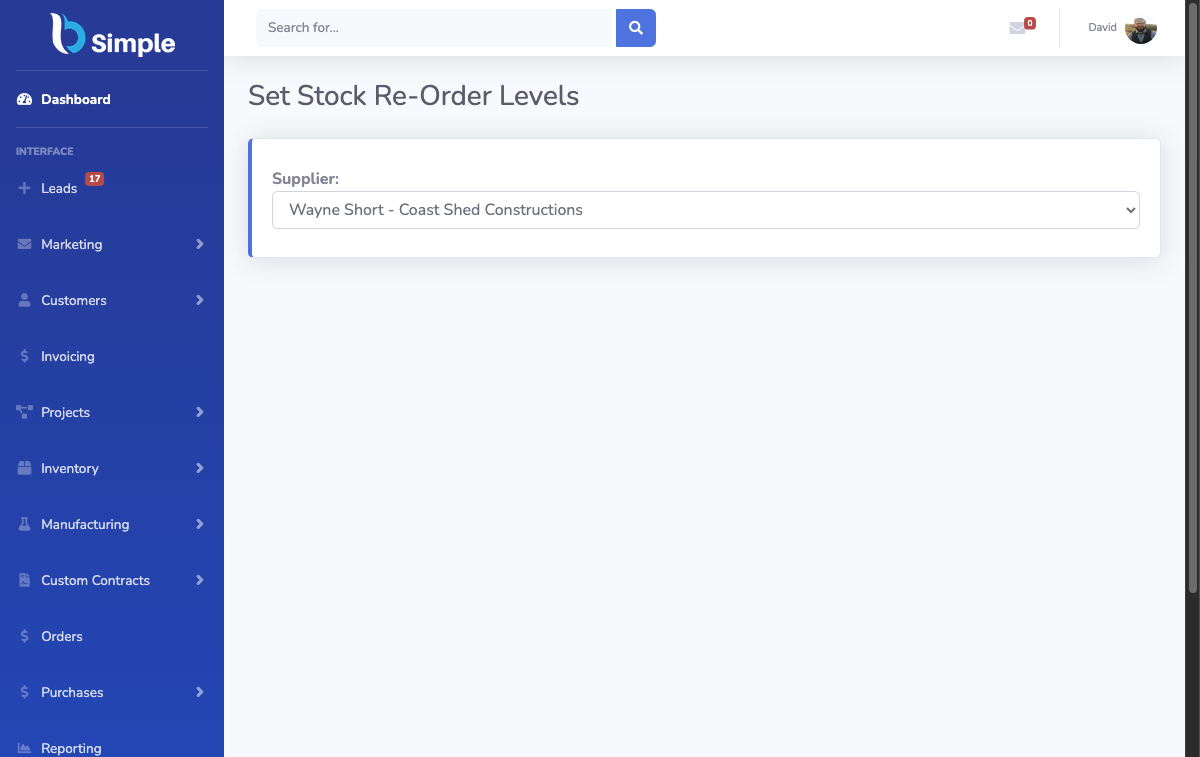
- Reorder levels and stocktakes. Par levels raise the reorder before the shelf empties; cycle counts keep the record honest without a full shutdown.
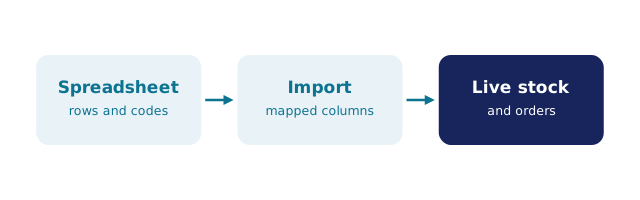
- A clean start. Existing spreadsheets import — the Excel-and-barcode workflow many labs start with maps directly onto live records.
We build BSimple, so weigh that. It is used for stock where traceability matters — organic-certified producers report mass balance against ACO, NASAA and OFC requirements — but it is not sold as laboratory software, and accreditation-specific record-keeping lives elsewhere.
Honest boundaries, stated plainly
BSimple is cloud operations software for stock-carrying businesses: inventory, purchasing, orders, invoicing on one record, with accounting handed to Xero or MYOB, from $180/month AUD. It has no sample registry, no assay workflows, no instrument integration, and no validation documentation for regulated laboratory use. If those are requirements, a LIMS or ELN is the correct category and no amount of inventory software substitutes for it.
If you are a supplier to labs — distributing reagents, consumables or equipment — rather than a working lab, the fit is direct: that is wholesale distribution with batch and expiry tracking, and the inventory management pillar shows the whole picture. Adjacent reading: inventory management in healthcare settings and free options for asset and equipment tracking, which covers the non-consumable side of a lab.
Frequently Asked Questions
Is BSimple a LIMS?
No. A LIMS manages samples, assays and compliance records for accredited laboratories. BSimple manages stock — quantities, lots, expiry, purchasing and ordering. Labs that need sample workflows need a LIMS, full stop.
Can BSimple track reagent expiry and lot numbers?
Yes — that is existing capability: batches and lots carry expiry dates, and traceability search follows a lot from receipt through to issue. It is the same machinery used for perishable and certified-goods stock.
We supply reagents to labs — is BSimple a fit?
That is wholesale distribution: purchase orders from demand, live quantities across locations, batch traceability, customer ordering through a portal, and invoicing with an accounting handoff. Start the free trial with your real catalogue to test it.
How does BSimple handle audit trails?
Every action lands on the audit trail under the account that made it — receipts, adjustments, approvals. That answers "who changed what and when" for stock movements, though it is not a substitute for validated laboratory record-keeping.
What does it cost?
Starter $180, Professional $250 and Organisation $399 per month (AUD), with batch tracking and traceability in the core plans — not gated behind a laboratory or traceability module.

BSimple