
Guide / offline and open source
Offline, open-source inventory — the honest trade
Two requirements in one search, each with a price: offline means two copies of the truth, open source means you are the operations team. Who genuinely needs both — and who does not.
The key facts
- Two requirements, one search: offline operation (local data, later sync) and open source (self-hosted, licence-free, self-maintained) — each with its own trade.
- The offline price: sync conflicts and stale quantities; the open-source price: hosting, updates, backups, and being the support desk.
- BSimple is neither offline nor open source — cloud and browser-based, stated plainly; if both requirements are hard constraints, this page maps the route honestly.
- The test: measure the real outage — duration, frequency, and what work must continue during it — before designing around it.
- The full picture: how the inventory record works is the hub page for everything above.
- 01The key facts
- 02Requirement one: offline — and its price
- 03Requirement two: open source — and its price
- 04BSimple's position, stated plainly
Requirement one: offline — and its price
Offline inventory software keeps a local copy so work continues without a connection — and creates the arithmetic problem that defines the category: two copies of the truth now exist, and every offline movement must reconcile against everything that happened elsewhere meanwhile. Sell the last unit offline while an online order promises it, and the conflict surfaces later as a short pick or a quiet adjustment. Offline-first products manage this with sync engines and conflict rules; none repeal it. The offline trade-offs in full apply before the open-source question even starts.
The honest first step is measurement: how long does work actually continue without connection, how often, and at which sites? An occasional drop needs a retry screen; a remote mine needs a different architecture. Most "we need offline" resolves to "we need one access point" — but not all, and the exceptions are real.
Requirement two: open source — and its price
Open source gives you the software free and the responsibility absolutely: a server to run, updates to apply, backups to test, and every bug becoming your support ticket. For teams with the skills, that trade is genuine — control, no subscription, data on your hardware. The open-source inventory comparison and the self-hosted angle cover the landscape and its costs. The specific combination this search asks for — offline-capable, self-hosted inventory — narrows the field further, because offline sync is one of the harder engineering problems a project can volunteer for; evaluate any candidate's sync story with two devices and a dead network before believing the feature list.

BSimple's position, stated plainly
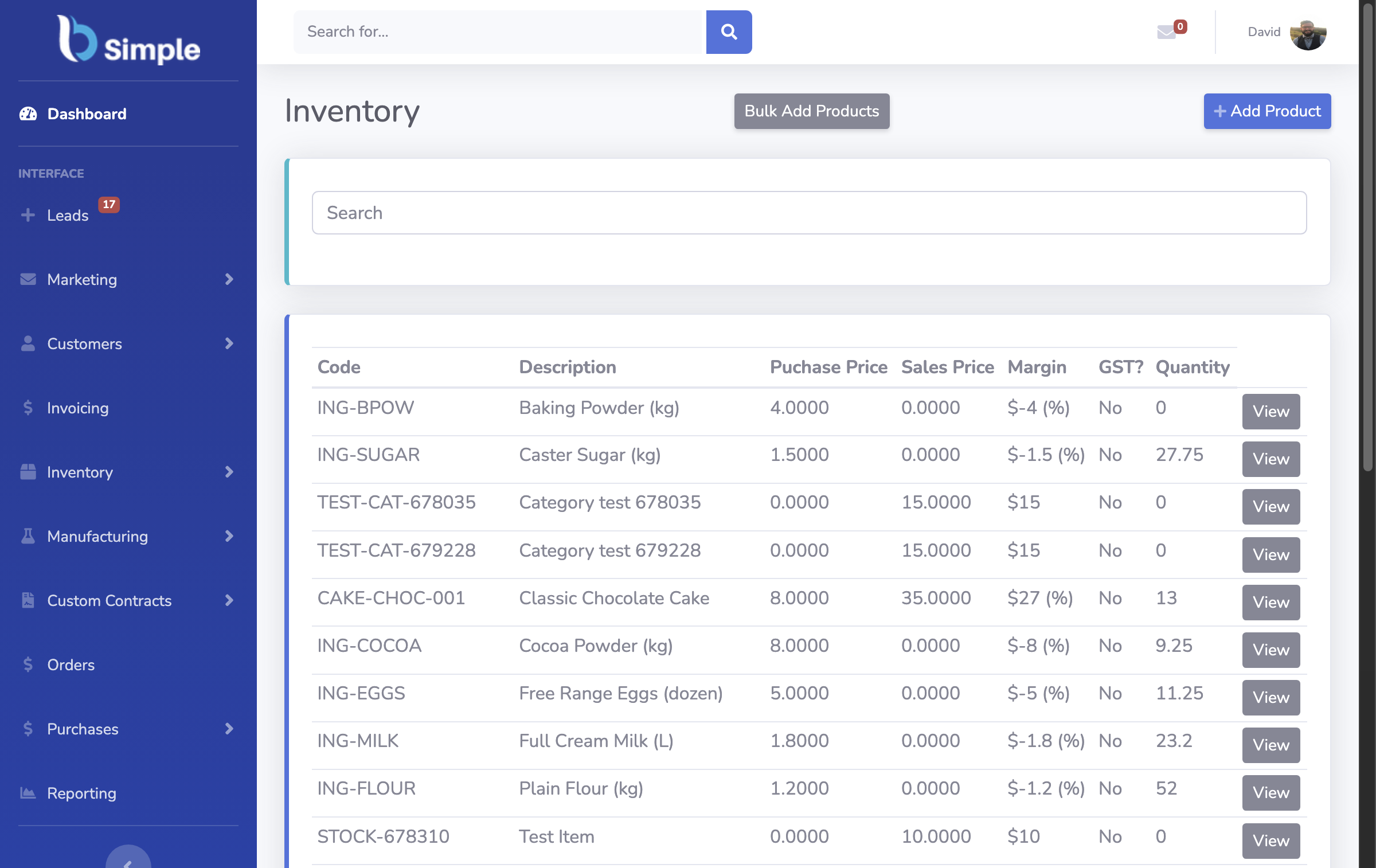
We build BSimple, so weigh that: it is cloud, browser-based, neither offline-capable nor open source — and we would rather disqualify ourselves cleanly than promise either. What it offers instead is everything the cloud model buys: one live record across every location and device, guardrails and audit trails, barcode scanning and portals against live quantities, invoices handed to Xero or MYOB (US integrations rolling out), from $180/$250/$399 per month AUD with the trial.
If offline-plus-open-source is genuinely your requirement — remote sites, sovereignty, self-hosting policy — the route above is honest and the trade-offs are the price of admission, not disqualifiers. The free-download variant of this search deserves the same scepticism it usually gets.
Frequently Asked Questions
Is there good offline open-source inventory software?
There are projects in this space, and quality varies widely — evaluate any candidate by its sync engine, not its screenshots: two devices, one network cut mid-shift, and watch the reconciliation. Free software plus a hard sync problem is where volunteer projects struggle most.
Why does offline create sync conflicts?
Because two copies of the truth changed independently — the offline device sold stock the online system promised elsewhere. Reconciliation needs a rule for who wins; every rule disappoints someone. Fewer copies of the truth is the only clean fix.
Is BSimple open source or self-hostable?
Neither — commercial cloud software, stated plainly. The data is yours to export via its public REST API, but the hosting is BSimple's, permanently.
How do we know if we truly need offline?
Measure: outage duration and frequency per site, and what must continue during them. Minutes-long drops need nothing special; days-long sites with daily transactions genuinely do. Decide from measurements, not from war stories.
What does the cloud alternative cost?
BSimple is $180/$250/$399 per month AUD against self-hosting's server time and sysadmin hours — price both honestly for two years, not one demo. The trial shows what the live record buys on your products.

BSimple