
Guide / choosing inventory software
Is inventory management software suitable for a small business?
Often yes — but not always yet. Three signals decide it: how often orders arrive, what a stock mistake costs, and how many people touch the record.
The facts about suitability
- Suitability is about workflow, not headcount — a five-person wholesaler can need it; a thirty-person service business may not.
- Signal 1 — repetition: orders arriving daily means manual tracking is already losing data.
- Signal 2 — consequence: if one oversold or misplaced order costs a customer, the risk is uninsurable by spreadsheets.
- Signal 3 — hands: two or more people touching the same stock record is where spreadsheets structurally fail.
- Modern SMB systems are priced for small business — BSimple starts at $180/month (AUD) with a free trial, no module fees.
- Staying with a spreadsheet is still a legitimate answer — for the right volumes, it is the correct choice.
- The full picture: how the inventory record works is the hub page for everything above.
- 01The facts about suitability
- 02The honest answer: three signals decide it
- 03When the answer is no — and that is fine
- 04When the answer is yes — what suitable actually looks like
- 05The cheap way to find out
The honest answer: three signals decide it
Repetition. If orders arrive most days, someone is already re-keying them into a sheet, an invoice and maybe a packing slip — three chances to be wrong. Software collapses that to one entry.
Consequence. A dropped stitch in a spreadsheet costs minutes; a promised order that turns out to be sold costs the customer. The higher the consequence of one mistake, the stronger the case for live quantities and guardrails.
Hands. One person who owns the record can run a spreadsheet well. The second person — a teammate packing while the owner sells — is where versions collide and quantities drift.
Score three or more and software will pay for itself; score zero and it will sit unused. Most small product businesses sit at two and are closer than they think.
When the answer is no — and that is fine
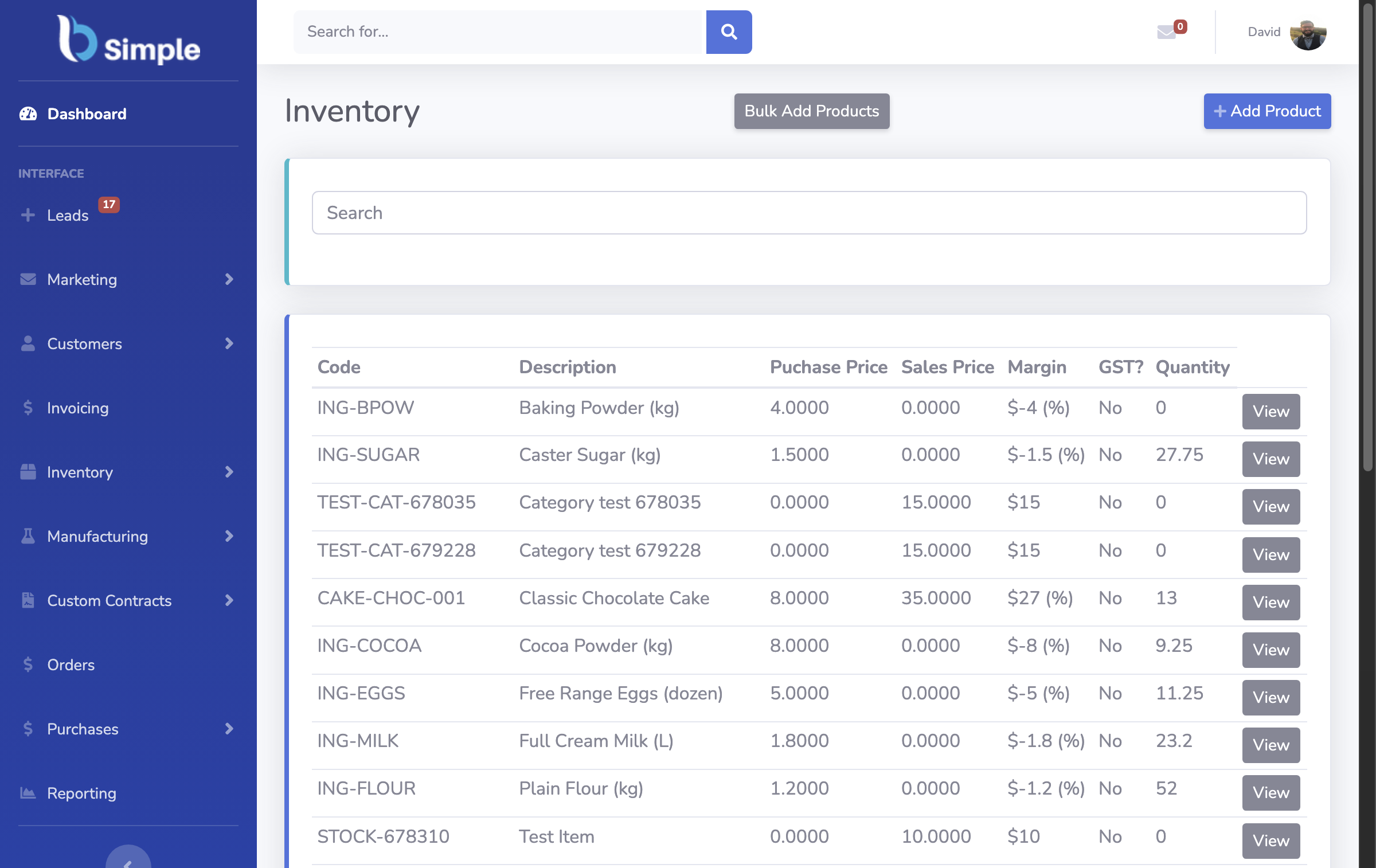
Businesses where the answer is honestly no: very low order volume, one person who owns the numbers, products that rarely surprise on price or expiry, and an accountant happy with a clean export at BAS time. For those, a well-run spreadsheet or a basic free tool is not a compromise — it is the right-sized answer, and spending $180 a month to manage forty products slowly would be the wrong call.
There are also shapes of business software cannot fix: stock so variable that counts are meaningless, or workflows that change weekly. Fix the process first, or the software will just record the chaos faster.
When the answer is yes — what suitable actually looks like
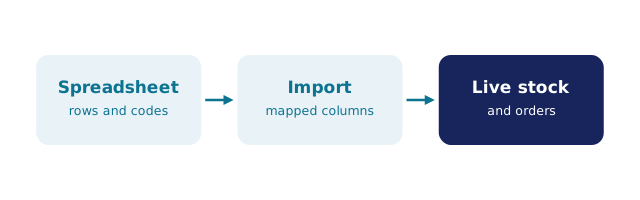
Suitability is not just "has the features". The system your team keeps updated beats the one that impresses in a demo. Look for: published pricing (no sales call to learn the cost), setup measured in days (products and opening stock imported from your existing sheet), a workflow your picker can run without training wheels, and accounting that hands off to Xero or MYOB without re-entry. What an inventory system actually does is worth ten minutes if the category is new.
Be equally clear about what small businesses do not need: MRP scheduling, ERP implementation projects, per-module pricing games. If a vendor's small-business plan needs a consultant to configure, it is not a small-business plan.
The cheap way to find out
Run the test before believing anyone — including us. Load your ten fastest-moving products into a free trial, receive one real delivery, sell one real order, and check the invoice lands in your accounting system with the GST intact. An afternoon, no card required. BSimple's trial is built for exactly this, and the comparison guide for small business applies the same test to the category.
If the trial saves you the week's usual friction, the answer to "is it suitable" is yes for your business, not just in theory. If it changes nothing, stay free a little longer — the top-five shortlist guide will still be here. And if forecasting is what you are chasing, the AI inventory guide explains what is realistic versus marketing.

Frequently Asked Questions
At what business size does inventory software become worth it?
There is no headcount threshold — the triggers are repetition, consequence and shared access. A two-person wholesaler shipping daily hits all three; a studio selling weekly at markets may never. Judge by workflow, not staff count.
Is inventory software too expensive for a small business?
SMB pricing has changed the maths: BSimple starts at $180/month (AUD) with all features included. Set that against the cost it removes — oversold orders, stocktake overruns, bookkeeper reconciliation hours — and break-even is usually a single avoided mistake per quarter.
How long does it take to set up?
On modern SMB systems, days: import products and opening stock from your existing spreadsheet, set reorder levels, connect Xero or MYOB. The longer tail is habit change, which is why the trial test with real products matters — if the team can run it on day one, adoption will stick.
Can I use inventory software without an accountant?
Yes — the software keeps the operational record; your accountant keeps compliance. BSimple hands invoices to Xero or MYOB and mirrors payment status back, so whoever does your books works from the same numbers the warehouse does.
We are small but growing fast — start now or wait?
Start the trial now, not because growth demands it yet, but because migrating is easiest while records are small. Loading two hundred products is an afternoon; loading two thousand, while training new staff, is a project.
BSimple