
Guide / AI in practice
Using AI for inventory management
AI is useful for inventory exactly where it meets a true record — answering questions, drafting follow-ups, surfacing patterns — and useless where the record is fiction. Here is the practical version.
The key facts
- What AI does well today: querying records in plain language, drafting supplier and customer text, surfacing patterns in reports.
- The precondition: a record that is true — live quantities, recorded movements. AI amplifies the truth or the fiction, either way.
- The design that works: AI reads the record through a scoped interface; writes stay in the system with the audit trail.
- BSimple: an MCP endpoint and public REST API over the live record — suppliers, PAR, reorder, stocktakes, purchase orders — from $180/month (AUD).
- The full picture: how the inventory record works is the hub page for everything above.
- 01The key facts
- 02Using AI practically: three real jobs
- 03The design that works — and the one that fails
- 04How BSimple opens the record to AI
Using AI practically: three real jobs
Asking questions. "How many of SKU X across all locations, what is the reorder point, and when will we breach it at current velocity?" — answered from the record in seconds, in plain language. This works when the AI can read live data; it misleads when it reads last week's export.
Drafting. The supplier chase-up, the reorder email, the customer backorder note — text-shaped work over record-shaped facts. AI drafts; the human approves; the system sends.
Surfacing patterns. Slow movers, margin outliers, seasonal swings in the reporting views. A model is a convenience over honest data — and a confident liar over dishonest data.
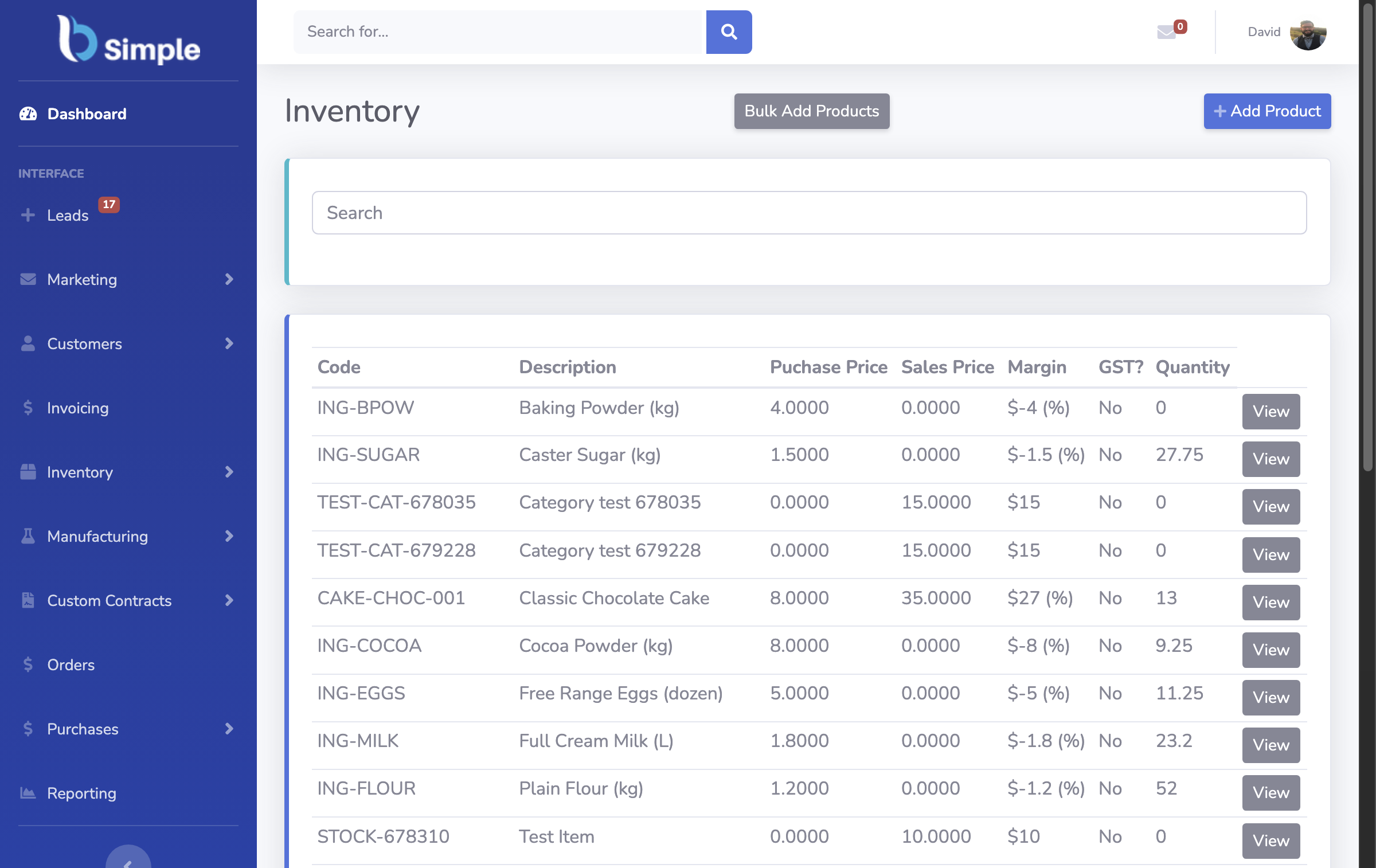
The precondition runs through all three: the record. AI cannot forecast from quantities corrected monthly, and it cannot answer questions the record does not hold.
The design that works — and the one that fails
The working design separates layers: the record, its guardrails and audit trail live in the inventory system; AI reads through a scoped interface and never writes directly. Reads give the assistant the truth; the absence of writes keeps a confident wrong answer from becoming a wrong quantity.
The failing design bolts a chat box onto a dashboard, or worse, lets AI move stock autonomously with no accountability. The recurring failure is not hallucination — it is stale data: confident answers computed from yesterday's export. The wider AI-claims guide covers the marketing patterns, and the free-AI reality covers the no-budget version.
How BSimple opens the record to AI
We build BSimple, so weigh that. BSimple does not sell an AI feature; it opens the record to the AI tools you already use: a public REST API with scoped API keys and an MCP endpoint that lets MCP-capable assistants read live operations data — suppliers, locations, PAR levels, reorder positions, stocktakes, purchase orders, transfers. Your assistant answers operational questions from the real record; movements still happen in BSimple, with the audit trail intact. Plans start at $180/month (AUD).
The honest test: start the trial, connect an assistant, and ask it the three questions your team asks you most. If the answers are right and fresh, the design works.
Frequently Asked Questions
Can AI manage my inventory for me?
No — AI reads and drafts well; it does not own the record. Movements, approvals and purchases stay human, inside the system with the audit trail. AI is the analyst and the typist, not the manager.
How does BSimple connect to AI assistants?
Through an MCP endpoint and a public REST API with scoped keys — read projections over suppliers, locations, PAR, reorder positions, stocktakes, purchase orders and transfers. Writes stay in the product by design.
What should I not use AI for in inventory?
Autonomous purchasing without human approval, forecasting you cannot inspect, and any answer computed from a stale export. AI over a false or old record is confidently wrong at scale.
Is BSimple free?
No — plans start at $180/month (AUD). The trial is the full product: connect your assistant, ask your questions, and judge the record beneath the AI before paying.

BSimple