
Guide / Xero integration
Inventory software that integrates with Xero
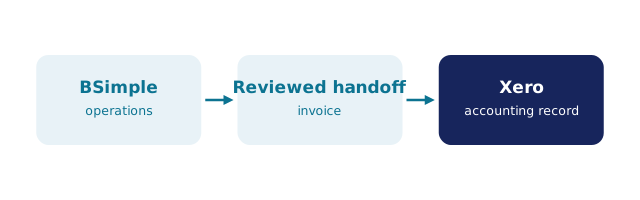
The integration is the boundary: operations stay in the inventory system, the books stay in Xero, and the handoff between them is automatic — approved invoices pushed across, payment status mirrored back.
The key facts
- The handoff that matters: approved invoices push to Xero automatically — no export, no re-keying.
- Payment status mirrors back: paid and voided states in Xero appear against the order in operations.
- Purchasing reconciles with GST handling: purchase orders reconcile including GST-inc/ex-GST pages.
- Contacts import selectively; the tax-code model is extensible beyond GST.
- BSimple also handles MYOB, with US accounting integrations rolling out.
- 01The key facts
- 02What "integrates with Xero" should mean
- 03Where Xero stops and your inventory system starts
- 04How BSimple does it — and the edges beyond Xero
What "integrates with Xero" should mean
The phrase covers everything from a CSV export to a proper handoff, so it is worth spelling out the real thing. An inventory system that integrates with Xero should:
- Push approved invoices automatically. Approval in the inventory system is the trigger; the invoice lands in Xero with the right contacts, quantities and prices — nobody exports anything.
- Mirror payment status back. When the customer pays and Xero records it, the operational order shows paid — so the team stops asking the bookkeeper who has settled up.
- Handle the purchasing side. Purchase orders reconcile against supplier invoices, including GST-inc and ex-GST views, because supplier paperwork is where hidden margin leaks live.
- Keep contacts coherent. Selective contact import means customer and supplier details stay consistent without clobbering what Xero already holds.
Anything less and the "integration" is a monthly reconciliation job wearing a badge.
Where Xero stops and your inventory system starts
Xero is the system of record for the books — GST, ledgers, reconciliation, filing. It is not an operations system: it does not drive picking, manage multi-level stock, run recipes or give wholesale customers a portal. An inventory integration works when both sides stay in their lane: the operations layer runs the physical business and produces the finished transactions; Xero records them and mirrors the money state back.
That division is also the evaluation. Ask any vendor what crosses the line — invoices, credits, payments, purchase orders — and what does not. If the answer includes "everything syncs both ways", be careful: two systems trying to own the same record is how duplicates happen. The Xero integration page documents exactly what crosses the BSimple–Xero line and what stays put, and the shortlist of Xero-integrated inventory systems compares candidates on that script.
How BSimple does it — and the edges beyond Xero
We build BSimple, so weigh that. The Xero handoff is established: approved invoices push across, payment status mirrors back, purchase orders reconcile with GST-inc/ex-GST views, and contacts import selectively. MYOB is supported alongside Xero, and US accounting integrations are rolling out. The tax-code model is deliberately extensible beyond GST — the aim is that the operational record stays clean whichever tax regime the accountant works in.
Beyond accounting, the same record carries the rest: the customer ordering portal, purchasing from demand, batch tracking, and Shopify order import by webhook for businesses selling online. Plans start at $180/month (AUD). If your business also needs QuickBooks, note that the QuickBooks Desktop question is a live edge case — the honest answer there is still evolving. The test that matters: run one order through to Xero in the trial and check the invoice lands the way your accountant wants it.
Frequently Asked Questions
Does BSimple integrate with Xero?
Yes — it is the established handoff: approved invoices push to Xero automatically, payment status mirrors back to the operational record, purchase orders reconcile with GST handling, and contacts import selectively. The books stay in Xero; operations stay in BSimple.
Do I still need Xero if I have inventory software?
Yes — for GST, ledgers, reconciliation and filing, the accounting system remains the system of record. The inventory system produces clean transactions and mirrors payment state; it does not replace the accountant's tools.
Does the integration handle GST?
On the purchasing side, yes — purchase orders reconcile including GST-inc and ex-GST views. The tax-code model is extensible beyond GST as well. Filing itself stays in Xero, where it belongs.
What if we use MYOB or QuickBooks instead?
MYOB is supported alongside Xero; US accounting integrations are rolling out. For QuickBooks Desktop, the honest current state is worth reading before committing — and the trial will always show you the actual handoff, not a brochure.

BSimple