
Guide / multi-location
Inventory software for multiple locations
Two sites do not double the inventory problem — they change it: every quantity now needs a where, every transfer needs a trail, and every promise needs to know which shelf it comes from. What a multi-location record requires, and how BSimple handles it.
The key facts
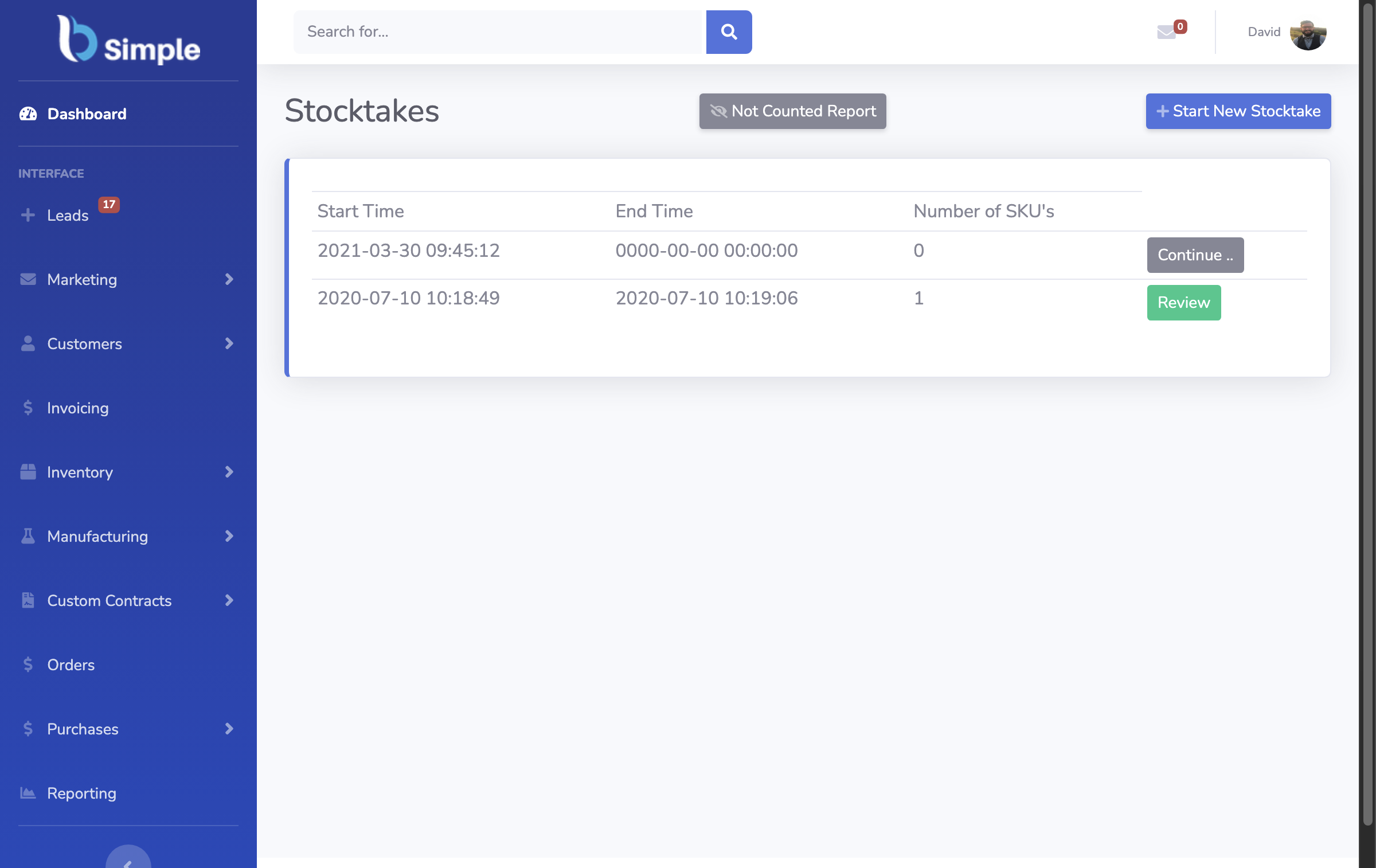
- The requirement set: per-location on-hand, allocated and on-order; transfers as paired movements; location-aware reorder levels; counts per site without freezing the others.
- The failure it prevents: the two-sites-two-truths problem — spreadsheet replicas that drift until nobody knows which site holds what.
- BSimple's approach: live quantities across locations on one record, transfer movements written at both ends, location-aware purchasing signals, and per-site stocktakes — in the core plans from $180/month AUD.
- The boundary: BSimple coordinates the sites on one record; it is not a WMS for bin-level pick-path management inside a warehouse.
- 01The key facts
- 02What multi-location actually demands
- 03How BSimple handles the second shelf
- 04Where the boundary sits
What multi-location actually demands
Quantities with a where. The moment stock sits in two places, "how many do we have?" is two questions: how many here, how many there — and a promise made at site A against site B's shelf is a lie. The record must carry location on every quantity: on-hand, allocated and on-order per site, visible live.
Transfers as first-class movements. Stock moving between sites is an outbound movement at one and an inbound at the other — written together, visible in transit, and reconcilable when the truck arrives. The spreadsheet version (two sheets, one email) is where multi-site drift is born.
Location-aware purchasing. Reorder levels per site: site A can be short while site B has surplus, and the purchasing signal needs to know which shortage it is filling — or that a transfer beats a buy.
Counts per site. A stocktake at one location must not freeze the others, and its variances are corrected as movements with the site attached — so the post-count history answers where the drift happened, not just that it did.
How BSimple handles the second shelf
BSimple tracks live quantities by product and location on one record: every movement — receipt, sale, transfer, adjustment — names its site, and the on-hand figures per location are derived from that history rather than typed. Transfers move stock as paired movements, so nothing is ever "in between" without a trail, and the promiseable quantity at each site is always the derived truth rather than last week's export. Purchasing runs location-aware: reorder levels per site raise demand where the shortage is, and ordering portals can show customers product availability rather than a hopeful single number.
The accounting seam stays simple: one record, invoices to Xero or MYOB (US integrations rolling out), so the books never need to know how many sites the truth was gathered from. From $180/month AUD, with the trial long enough to open two locations and run a transfer between them on your own products — the fastest test of the model there is.
Where the boundary sits
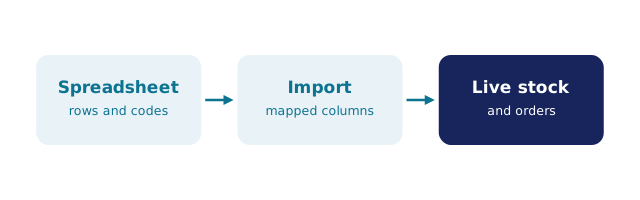
Multi-location inventory is not the same as warehouse management at bin level. BSimple keeps sites honest — which site holds what, moving where, promised to whom — but it is not a WMS for pick-path optimisation, bin-level slotting or scan-verified putaway inside four walls. Operations that grow into those needs add a WMS layer beside the record; what they must never do is let the WMS become a second stock truth — the record design stays the single source both layers read. For businesses deciding whether their second site is a location or a warehouse-with-racking, the WMS question draws the line in detail.
Frequently Asked Questions
How does inventory software track stock across locations?
Every movement carries its location, and on-hand per site is derived from the movement history — live, with transfers written at both ends. The test of any system is whether the two sites' figures are one truth or two copies.
Can I set different reorder levels per location?
With BSimple, yes — reorder levels are location-aware, so the purchasing signal reflects the shortage where it actually is, and transfers can be considered before a new purchase order is raised.
How do transfers between sites work?
As paired movements: outbound at the source, inbound at the destination, visible in transit. The receiving site confirms arrival — so the trail exists, and a late truck is a status, not a mystery.
Can we stocktake one site while the other keeps trading?
Yes — counts are per location: the counted site's variances are corrected as movements with reasons attached, while the other sites' records stay live and untouched.
Does multi-location cost extra?
No — locations are part of the core product across the $180/$250/$399 AUD plans, with capacity (not features) deciding the tier. The trial opens two sites on your own products to prove the model.
BSimple