
Guide / local stack
Inventory management system on XAMPP
XAMPP — Apache, MySQL, PHP on your own machine — is how thousands of students and developers build their first inventory app. Where that route genuinely leads somewhere, what a business record needs before it can be trusted, and when to move on.
The key facts
- What XAMPP is: a free, bundled local server stack — Apache, MySQL/MariaDB, PHP — that runs a web application on one machine.
- What it is good for: learning, coursework, and prototyping an inventory schema with real SQL in an afternoon.
- What it is not: a business deployment. Local hosting means the backup, security, uptime and access-control problems are all yours, unpatched and unsolved.
- The graduation path: same schema, real hosting — or adopt a maintained system and skip the operations burden entirely.
- The full picture: how the inventory record works is the hub page for everything above.
- 01The key facts
- 02What the XAMPP route actually is
- 03Why it stays a learning tool
- 04From XAMPP to a trusted record
What the XAMPP route actually is
Search "inventory management system XAMPP" and the results are coursework: PHP-and-MySQL inventory apps — product CRUD, stock in/out forms, an Excel export — written to run on a laptop. As a way to learn how an inventory record works, this is genuinely valuable: the developer meets transactions, foreign keys and the temptation of editable stock totals, and discovers why the totals must be derived from movements instead. The schema that makes it work is the same on a laptop as anywhere else, which is exactly the point.
As a way to run a business, it is a different story. The stack that made the prototype easy — everything on one machine, no authentication beyond the app's own, no update pipeline — is precisely what makes production hosting hard. The code does not fail; the environment around it does.
Why it stays a learning tool
Backups. A record that lives on one disk with no tested restore is not a record; it is a rumour. Production needs automated, off-site, tested backups — the first thing the XAMPP route skips and the first thing a real deployment needs.
Security. A business inventory system holds supplier lists, customer orders, costs and pricing. Running that on a default-configured stack open to a network is a liability exercise: patched runtime, TLS, hardened database access, least-privilege users — none of it optional.
Concurrency and access. Real stock operations are multi-user: two people receiving goods while a third invoices. XAMPP coursework is single-user by habit, so the failure modes — races, double-entry, silent overwrites — have never been met, let alone solved.
The tail. PHP and MySQL versions move on. Someone owns the updates forever, and that someone is the person who installed XAMPP. The build-route arithmetic prices this honestly.
From XAMPP to a trusted record
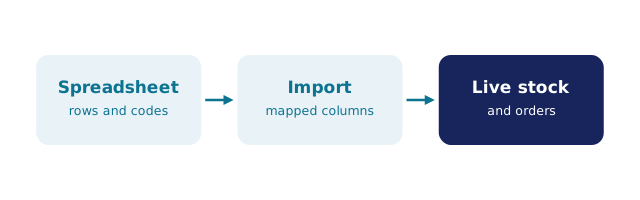
The graduation is less dramatic than it looks. The schema is already right if it was built on movements: the same tables deploy to a managed host or a cloud database, with authentication, backups and monitoring added around them. That is the right next step for a developer or a business that wants to own its system — and it is a real commitment, because the environment, not the app, is the ongoing work.
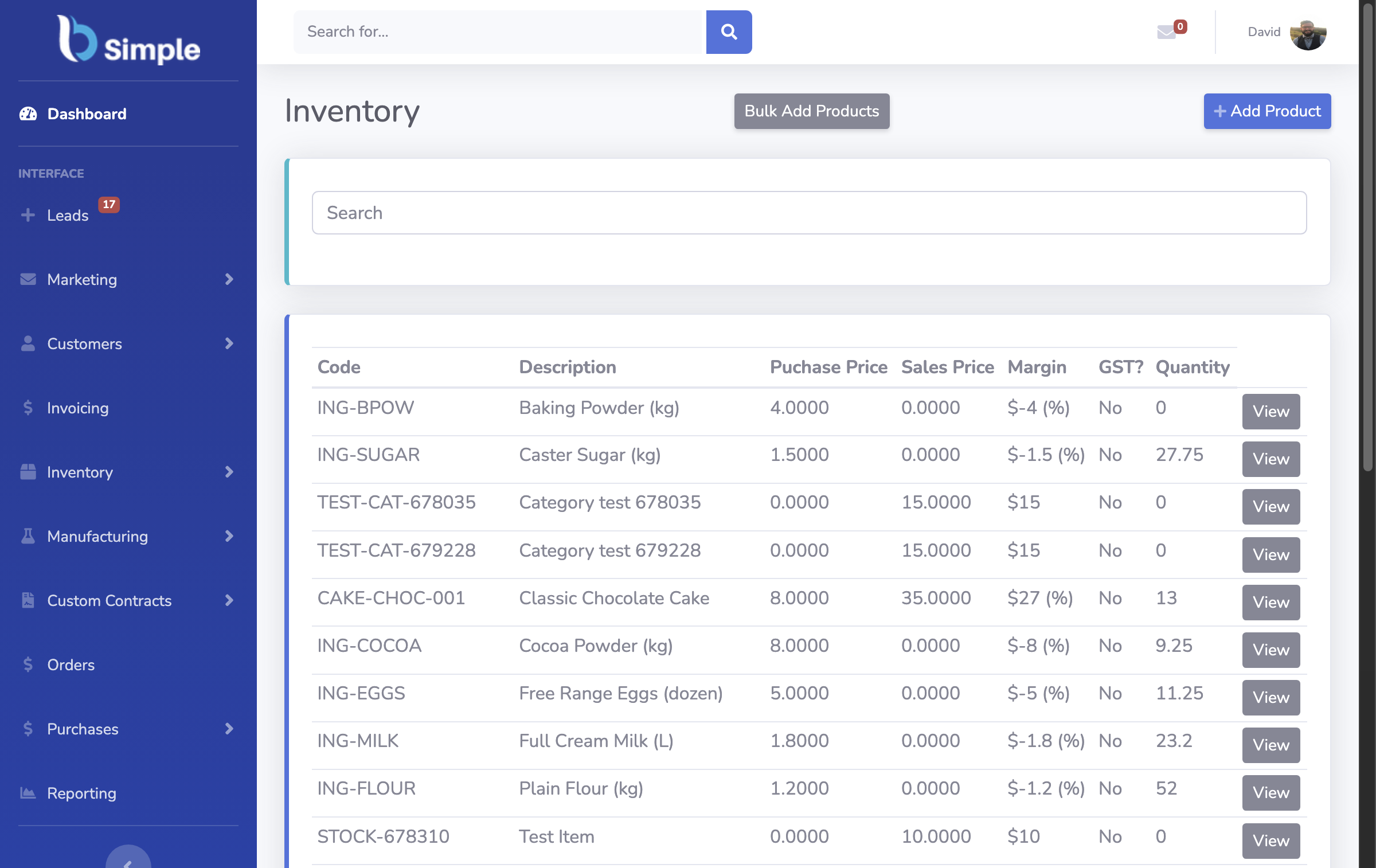
The alternative is to keep the learning and lose the operations: adopt maintained software whose record is already hardened. BSimple runs the same conceptual model — products, locations, movements, reorder levels — as live multi-location cloud software with purchasing, ordering portals, invoicing handoff to the accounting system, and no servers to patch. For a business whose real goal is trustworthy stock rather than a hobby stack, the trial answers the question faster than a production-hardening project, and the PHP project route covers the middle ground of reusing coursework code properly.
Frequently Asked Questions
Can I run a real business inventory system on XAMPP?
Technically the code will run; practically it should not. Backups, security patching, access control and multi-user integrity are all unsolved on a default local stack. Treat it as a development environment, and move to managed hosting with real hardening before real data lands in it.
Is XAMPP free for inventory software projects?
The stack is free, and so are most of the tutorial apps built on it. The costs arrive later: hosting, hardening, updates and the hours of whoever maintains the deployment. Free-to-download is not the same as free-to-operate.
What database does an XAMPP inventory system use?
MySQL or MariaDB, bundled with the stack — both fully capable of running an inventory record. The schema matters far more than the choice: movements stored append-only, quantities derived, and no editable stock totals anywhere.
How do I move a XAMPP project to production?
Deploy the same schema to a managed database host, add TLS, least-privilege database users, real authentication, automated off-site backups and an update routine — then test a restore before going live. If that list reads like a second project, that is because it is one.
Is there a simpler path for a small business?
Yes — adopt a maintained system instead of hardening a homemade one. BSimple keeps stock, purchasing and orders on one audited record from $180/month AUD, with the full-product trial to test the model on your own products first.

BSimple