Inventory Management System With Excel with Xero

Inventory Management System With Excel helps Australian wholesalers and manufacturers manage inventory, orders, and purchasing. Xero integration, customer po...

Prefer to talk? Call 1300 980 598
  • Real-time inventory visibility across multiple warehouse locations and stock movements
  • Automated purchase order generation based on customisable reorder points and demand forecasting
  • Seamless Xero integration for automatic synchronisation of sales, purchases, and stock records
  • Customer self-service ordering portal with real-time stock availability and order history tracking
  • Negative inventory tracking for pre-orders and allocated stock management across production
  • Mobile-enabled stocktake management with barcode scanning and instant discrepancy reporting
  • Comprehensive supplier performance tracking and purchase order automation for efficiency

Welcome to our guide on inventory management system with Excel — see also our Inventory Management Software for the full picture. Many Australian wholesalers, manufacturers, and distributors start their inventory journey with spreadsheets. Excel is familiar, it's free, and it feels like you've got control. But here's the thing: as your business grows, managing stock levels, purchase orders, and customer demands through manual spreadsheets becomes a nightmare. You're double-entering data, chasing discrepancies, missing reorder points, and spending hours on stocktakes that should take minutes. The real problem isn't Excel itself—it's that Excel wasn't designed for the complexity of modern inventory management. When you're running a Sydney coffee roaster juggling multiple warehouse locations, or a Melbourne manufacturing operation tracking components across production lines, spreadsheets create bottlenecks. Staff members overwrite each other's work, version control becomes impossible, and by the time you realise stock levels are wrong, you've already lost sales or over-ordered. That's where a proper inventory management system comes in. It automates the tedious bits, integrates seamlessly with your accounting software, and gives you real-time visibility across your entire operation. If you're serious about scaling your business without the headaches, it's time to move beyond Excel.

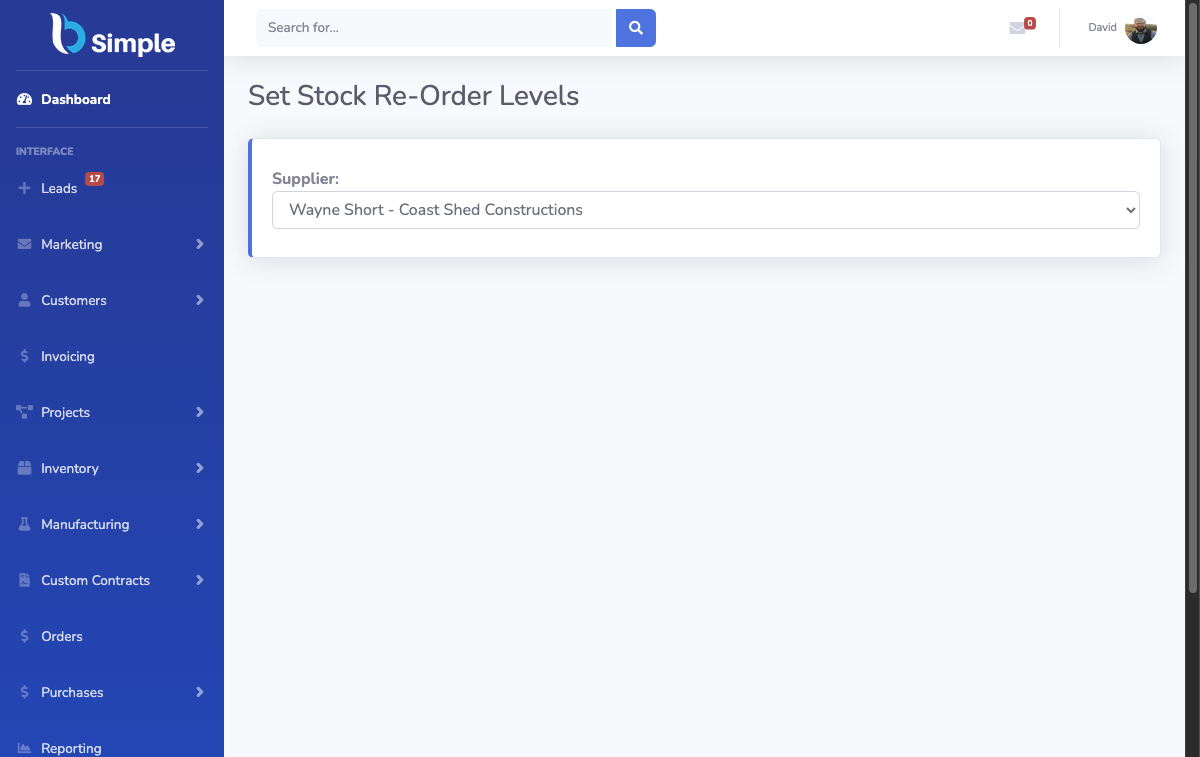
BSimple inventory management dashboard

Why Excel Falls Short for Inventory Management

The limitations of Excel for inventory management become painfully obvious once you start scaling. Sure, a simple spreadsheet works when you're tracking 50 SKUs across one location. But what happens when you're managing hundreds of products, multiple warehouses, and dozens of suppliers? Excel simply can't handle the complexity without creating massive inefficiencies. One of the biggest issues is data integrity. When multiple team members access the same spreadsheet, you're constantly battling version control problems. Someone forgets to save, another person overwrites critical information, and suddenly your stock counts are completely unreliable. You can't track who changed what, when, or why. This becomes a compliance nightmare, especially when you're approaching EOFY and need accurate stocktake records for tax purposes. Another critical limitation is the lack of real-time updates. With Excel, you're always working with yesterday's data. If a customer places an order, that information doesn't automatically flow through to your purchasing team. If a supplier confirms delivery, you're manually updating stock levels. This lag creates stockouts, overstocking, and missed sales opportunities. Australian distributors we've spoken to often tell us they've lost business because they didn't know they were out of stock until a customer complained. Excel also makes it nearly impossible to implement just-in-time inventory practices. You can't set automated reorder points, you can't track negative inventory, and you certainly can't generate purchase orders automatically. Every ordering decision requires manual intervention, which is both time-consuming and error-prone. When you integrate with Xero integration, you get automatic synchronisation between your inventory and accounting records, eliminating manual data entry and reducing reconciliation headaches significantly.

Enquire Now

BSimple inventory control software

Real-Time Visibility and Automated Ordering

A dedicated inventory management system transforms how you operate. Instead of wrestling with spreadsheets, you get a platform built specifically for the complexities of wholesale, manufacturing, and distribution. The difference is immediate and tangible. Real-time inventory visibility means you always know exactly what you have in stock, across all locations. When a customer places an order through your ordering portal, stock levels update instantly. When you receive goods from a supplier, you scan them in and inventory adjusts automatically. This eliminates the guessing game and ensures you're making decisions based on accurate, current information. Automated purchase order generation is a game-changer. Set your reorder points, and the system automatically generates POs when stock falls below those thresholds. No more manual calculations, no more wondering if you've already ordered something. For a Melbourne brewery managing grain inventory across multiple production batches, this automation means they never run out of critical ingredients mid-production. Negative inventory tracking is another feature that Excel simply can't do effectively. Sometimes you need to allocate stock before it arrives, or you might oversell slightly knowing a shipment is coming. A proper system tracks this intelligently, showing you exactly what's committed versus what's physically on hand. This visibility prevents double-selling and keeps customer relationships intact. The order management capabilities go far beyond what Excel can offer. You can manage customer orders, supplier orders, and internal transfers all in one place. You can set approval workflows, track order history, and generate reports that show you exactly what's moving and what's sitting on shelves gathering dust. For Australian SMBs trying to optimise cash flow, this insight is invaluable. You can identify slow-moving stock, make better purchasing decisions, and free up capital that's tied up in inventory.

More features

BSimple order management interface

Customer Portals and Supplier Management

Customer ordering portals are a feature that completely changes the dynamic between you and your wholesale customers. With Excel-based systems, ordering is often a painful process. Customers email you, call you, or fill out order forms. You manually enter their orders into your system, check stock, confirm availability, and send back a confirmation. It's slow, it's error-prone, and it ties up your team's time. A self-service ordering portal lets customers place orders directly into your system. They can see real-time stock availability, place orders whenever they want, and get instant confirmation. Your team doesn't have to manually enter anything. The order flows directly into your system, stock is reserved, and if you've got Xero integration, an invoice is automatically generated. This is particularly valuable for Australian distributors serving multiple retailers or restaurants. A Sydney coffee roaster selling wholesale to cafes across the city can give each customer their own portal. Customers log in, see what's available, place their order, and get a confirmation email—all without talking to anyone. Your team is freed up to focus on fulfillment and customer service rather than order entry. The portal also gives customers visibility into their order history, pricing, and account balance. They can see what they've ordered before and reorder with a single click. This reduces friction in the buying process and often leads to larger, more frequent orders. For your business, this means more predictable demand patterns and better inventory planning. You can see what customers are ordering, anticipate future demand, and adjust your purchasing accordingly. The negative inventory tracking feature works beautifully with ordering portals because you can allow customers to pre-order items that haven't arrived yet, giving you visibility into future demand and helping you make better purchasing decisions.

Create a free account

BSimple purchase order workflow

Scaling Your Business Beyond Spreadsheets

Scaling your business with an inventory management system is fundamentally different from trying to scale with Excel. As you grow, the complexity increases exponentially. More SKUs, more locations, more customers, more suppliers—each addition multiplies the complexity of your spreadsheet-based system. At some point, Excel simply breaks down. You're spending more time managing the spreadsheet than actually running the business. A scalable inventory system grows with you. Whether you're managing 100 SKUs or 10,000, the system performs consistently. Whether you're operating from one location or ten, you can manage everything from a single dashboard. Whether you're serving 10 customers or 1,000, the system handles the volume without breaking a sweat. This scalability is built into the architecture. The system is designed to handle the complexity that comes with growth. As you add more locations, you can configure stock transfers between them. As you add more customers, you can set up customer-specific pricing and ordering rules. As you add more suppliers, you can manage relationships and performance tracking for each one. Beyond operational scalability, there's the financial aspect. When you're using Excel, scaling means hiring more staff to manage the spreadsheets. You need someone to enter orders, someone to track shipments, someone to manage stocktakes. As volumes increase, you need more people. With a proper system, you automate most of these tasks. You can handle significantly more volume without proportionally increasing your team size. This is where you see real return on investment. The system pays for itself by reducing labour costs and preventing costly mistakes like stockouts or over-ordering. For Australian businesses focused on profitability, this efficiency gain is critical. You're not just growing revenue; you're growing profit margins because you're operating more efficiently. The just-in-time inventory approach becomes feasible at scale, allowing you to minimise working capital requirements while maintaining service levels.

Learn more

BSimple stocktake and inventory tracking

Frequently Asked Questions

Can I really replace Excel with an inventory management system?

Absolutely. Modern systems like BSimple are designed to do everything Excel does for inventory, but better and faster. You'll eliminate manual data entry, reduce errors, and gain real-time visibility. The transition is straightforward, and you'll see benefits within weeks.

How does Xero integration improve my accounting?

Xero integration automatically synchronises your inventory transactions with your accounting records. Sales automatically create invoices, purchases automatically update payables, and stock movements are recorded instantly. This eliminates reconciliation headaches and ensures EOFY accuracy.

What's the benefit of a customer ordering portal?

Portals let customers place orders directly into your system without manual intervention. They see real-time stock availability, place orders anytime, and get instant confirmation. This reduces your team's workload and often increases order frequency and size.

How does negative inventory tracking work?

Negative inventory tracking lets you allocate stock before it arrives or oversell slightly when you know replenishment is coming. It shows committed stock versus physical stock, preventing double-selling and improving customer satisfaction.

Will an inventory system really save me money?

Yes. You'll reduce labour costs by automating manual tasks, prevent costly stockouts and over-ordering, improve cash flow through better inventory planning, and operate more efficiently as you scale. Most businesses see ROI within months.

Is the system difficult to learn?

No. Modern inventory systems are designed for ease of use. They're intuitive, require minimal training, and most teams are productive within days. You don't need technical expertise to use them effectively.

Can I use the system if I have multiple warehouse locations?

Absolutely. You can manage stock across unlimited locations, track transfers between warehouses, and see consolidated inventory levels. This is particularly valuable for Australian distributors with multiple regional warehouses.