
Guide / BSimple
Inventory Management System What Is It: Your Practical Guide
An inventory management system is essentially the digital backbone that tracks, organises, and controls all the stock moving through your wholesale, manufacturing, or distribution business.
- Real-time stock tracking across multiple locations with instant visibility and automated alerts
- Automated purchase order generation based on reorder points and demand forecasts
- Seamless Xero integration for automatic accounting synchronisation and EOFY compliance
- Customer ordering portals enabling 24/7 self-service access and reducing support workload
- Negative inventory tracking preventing overselling and managing backorders effectively
- Stocktake management tools streamlining physical counts and quick discrepancy identification
- Comprehensive reporting and analytics for demand forecasting and business insights
- 01Understanding Inventory Management Systems Fundamentals
- 02Real-World Benefits for Your Business
- 03Choosing the Right System for Your Business
Welcome to our practical guide on what an inventory management system actually is — see also our Inventory Management Software for the full picture. An inventory management system is essentially the digital backbone that tracks, organises, and controls all the stock moving through your wholesale, manufacturing, or distribution business. Think of it as your business's nervous system — it constantly communicates what you have, where it is, and what you need to order next. For Australian SMBs operating in competitive markets like Melbourne's craft beverage scene or Sydney's specialty food wholesale, having visibility over inventory isn't just helpful, it's absolutely critical to staying profitable. Without a proper system, you're flying blind: stock sits gathering dust, you miss sales because items are out of stock, and your team wastes hours manually counting shelves or chasing down suppliers. An inventory management system automates these headaches. It tracks stock levels in real-time, alerts you when items fall below reorder points, generates purchase orders automatically, and integrates seamlessly with your accounting software like Xero. Whether you're managing hundreds of SKUs across multiple warehouses or tracking raw materials for manufacturing, the right system gives you complete visibility and control. The beauty of modern cloud-based inventory systems is that they're designed specifically for businesses like yours — not massive enterprises with unlimited budgets. They're affordable, easy to use, and they actually solve the problems you face every day.
Understanding Inventory Management Systems Fundamentals
How Inventory Management Systems Work in Practice
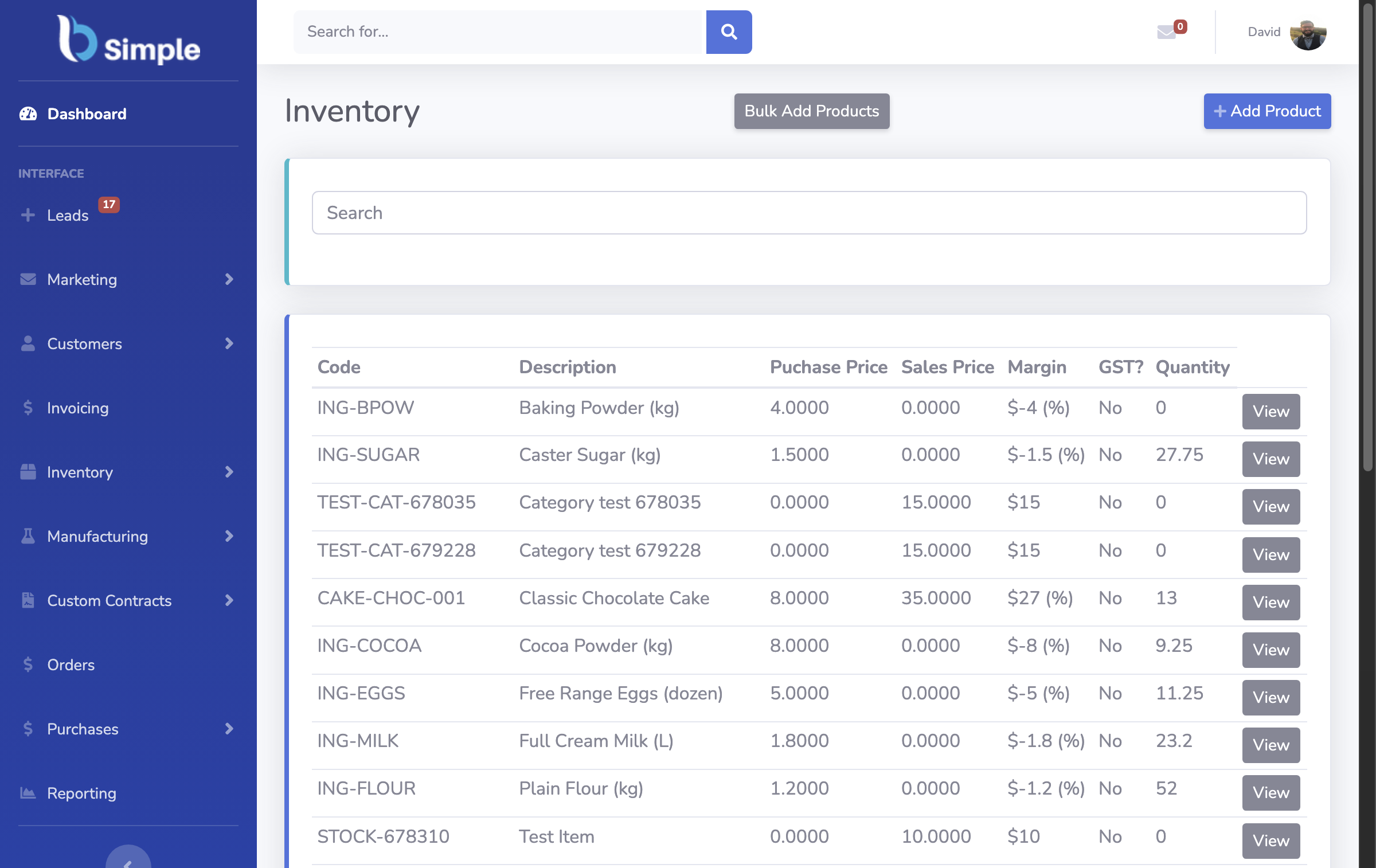
At its core, an inventory management system operates through a few key mechanisms that work together to keep your stock organised and flowing smoothly. When you receive goods into your warehouse, the system records them — automatically updating your stock counts and flagging what's now available for sale or use in production. As customers place orders or you use materials in manufacturing, the system deducts those quantities in real-time. This constant updating means your stock levels are always accurate, not some vague approximation from last week's manual count.
Most modern systems, like those built into Order Management Software, work on what's called a "push" and "pull" model. The push side automatically generates purchase orders when stock hits predetermined reorder points — so you're never caught short. The pull side tracks what customers are ordering, giving you insights into demand patterns. For a Sydney coffee roaster, this might mean the system notices that medium roasts sell faster during winter months, so it automatically adjusts reorder quantities. For a Melbourne brewery distributor, it tracks which retailers consistently order certain craft styles, helping you forecast seasonal demand.
The system also manages multiple locations seamlessly. If you have stock split across a main warehouse and a smaller regional depot, the inventory system shows you exactly what's where. When a customer orders, the system can automatically allocate from the nearest location, reducing shipping costs and delivery times. Many systems also track serial numbers and batch dates, which is essential if you're dealing with perishable goods, pharmaceuticals, or products with warranty requirements. The integration with Xero means your stock movements automatically flow into your accounting records, eliminating double-entry and keeping your financial records accurate — particularly important around EOFY when you need to reconcile stock for tax purposes.
Real-World Benefits for Your Business
The Real-World Benefits for Your Business
Let's be honest: the biggest benefit of an inventory management system is that it frees up your time and your team's time. No more spreadsheet wrestling matches or handwritten stocktake sheets. No more arguments about whether you actually have 50 units or 47. No more surprise discoveries that you're out of a critical component mid-production run. For manufacturing businesses especially, an inventory management system prevents costly production delays by ensuring raw materials are always available when needed.
Cash flow is another massive win. When you're not tying up capital in excess stock, you've got more money to invest in growth, marketing, or equipment. The system helps you identify slow-moving items that are just sitting there draining resources, so you can make smarter decisions about what to reorder and what to clear out. For wholesale distributors, this means better margins — you're not forced to discount old stock because you've got visibility and can manage rotation properly. Just-in-time inventory becomes achievable, meaning you order exactly what you need, exactly when you need it, minimising storage costs and waste.
Customer satisfaction improves too. When you have accurate stock information, you can tell customers immediately whether you have something in stock or when it will arrive. No more promising delivery dates you can't meet because you didn't realise stock was already allocated. Integration with customer ordering portals means your clients can check availability themselves 24/7, reducing support emails and phone calls. For B2B operations, this self-service capability is gold — customers appreciate the transparency and control. Compliance and reporting become straightforward as well. Whether you're managing GST stock movements for tax purposes or conducting EOFY stocktakes, the system generates accurate reports instantly rather than requiring days of manual counting and reconciliation.
The operational efficiency gains compound over time. Your team spends less time on administrative tasks and more time on value-adding work — customer service, business development, or process improvement. For businesses managing negative inventory tracking, the system prevents overselling and backorder chaos by giving you complete visibility of committed stock versus available stock.
Choosing the Right System for Your Business
Choosing the Right System for Your Business
Not all inventory management systems are created equal, and what works for a large manufacturer might be overkill or completely wrong for a small wholesale distributor. The key is finding a system that matches your business model, complexity, and growth ambitions. Cloud-based systems have become the standard for good reason — they're accessible from anywhere, automatically updated, and you don't need an IT team to maintain them. They're also typically more affordable than old-school on-premise software that requires expensive installation and ongoing technical support.
For Australian businesses, Xero integration should be near the top of your requirements list. If your accounting system is already in Xero (and it probably is if you're an Australian SMB), having your inventory system talk directly to Xero means your stock movements, costs of goods sold, and financial records stay perfectly aligned. No more manual reconciliation, no more discrepancies between what your accountant thinks you have and what's actually in the warehouse. This integration is particularly valuable around tax time when you need accurate COGS figures for profit calculations.
Consider your industry's specific needs. Manufacturing businesses need bill-of-materials functionality and production tracking. Distributors need multi-location management and customer ordering portals. Wholesalers need supplier management and purchase order automation. Look for systems that offer automated PO generation — this alone can save your team hours each week, and it reduces ordering errors because the system calculates exact quantities needed based on stock levels and demand forecasts. Stocktake management features are essential too, especially if you conduct regular physical counts. The system should let you conduct counts efficiently, quickly identify discrepancies, and automatically adjust records.
Scalability matters more than you might think. You want a system that grows with your business — as you add product lines, expand geographically, or increase order volume, the system should handle it without becoming unwieldy or requiring expensive upgrades. The best systems are flexible enough to adapt to your unique processes rather than forcing you to change how you work. Look for platforms that offer customer support tailored to Australian businesses, understand local compliance requirements like GST, and provide training resources so your team can get up to speed quickly. Integration capabilities beyond Xero matter too — can it connect to your shipping provider, your CRM, or other tools you use daily? These integrations eliminate manual data entry and reduce errors across your entire operation.

Frequently Asked Questions
What exactly is an inventory management system and why do I need one?
An inventory management system is software that tracks stock levels, automates ordering, and provides real-time visibility of inventory across your business. You need one to eliminate manual counting, prevent stockouts and overstock situations, improve cash flow, and ensure accurate financial records for compliance and decision-making.
How does an inventory management system integrate with Xero?
Modern inventory systems like BSimple connect directly to Xero, automatically syncing stock movements, costs of goods sold, and supplier transactions. This eliminates manual data entry, prevents discrepancies, and ensures your accounting records always reflect your actual inventory position, which is critical for accurate financial reporting and tax compliance.
Can an inventory management system handle multiple warehouse locations?
Yes, cloud-based systems manage multiple locations seamlessly. The system shows exactly what stock is where, automatically allocates orders from the nearest location, and provides consolidated reporting across all warehouses. This reduces shipping costs, improves delivery times, and gives you complete visibility of inventory spread across your business.
What's the difference between manual inventory tracking and using a system?
Manual tracking is time-consuming, error-prone, and provides only a snapshot at the time of counting. A system tracks inventory in real-time, automatically generates alerts and purchase orders, prevents overselling, and provides instant reporting. Most businesses save 10-15 hours per week in administrative time alone.
Does an inventory management system work for manufacturing businesses?
Absolutely. Manufacturing-focused systems include bill-of-materials functionality, production tracking, raw material management, and work-in-progress tracking. These features ensure you have the right materials when needed, reduce production delays, and provide accurate costing for finished goods.
How does automated purchase order generation save money?
Automated PO generation calculates exact quantities needed based on stock levels, demand forecasts, and reorder points. This prevents over-ordering (which ties up cash and creates waste) and under-ordering (which causes stockouts). The system also reduces errors and ensures consistent supplier relationships through timely, accurate orders.
What features should I look for in an inventory management system?
Essential features include real-time stock tracking, automated reorder points, Xero integration, multi-location support, customer ordering portals, purchase order automation, stocktake management, negative inventory tracking, and comprehensive reporting. Choose a system that matches your industry's specific needs and offers scalability as your business grows.
BSimple