
Guide / build route
Inventory management system in React
React is a good choice for the screens of an inventory system — component-driven, fast to iterate, mobile-friendly. It is also the easy half: what decides success is the backend record the screens sit on, and that part is framework-agnostic.
The key facts
- React fits the job: list-heavy views, forms, dashboards and optimistic updates are its home ground, and one codebase covers desktop and mobile browsers.
- The framework is not the hard part. Stock accuracy is decided by the backend model — append-only movements with derived quantities — which no frontend choice can rescue or ruin.
- The usual shape: React (or Next.js) frontend calling an API that owns products, locations, movements and reorder levels in a transactional database.
- The shortcut: adopting instead of building — BSimple is browser-based cloud software with a public REST API, so a custom React front end can sit on a maintained record rather than a homemade one.
- The wider system: inventory management end to end maps the whole record this page sits in.
- 01The key facts
- 02What React is genuinely good at here
- 03The backend that decides whether it works
- 04The build path, honestly staged
- 05The alternative: build screens, not systems
What React is genuinely good at here
Inventory interfaces are the kind of application React was built for: dense product tables, filterable lists, movement forms that update a running total without a page reload, and dashboards that reflect state the moment it changes. Components map naturally onto the domain — a ProductRow, a MovementForm, a ReorderList — and state libraries or server-state tools keep the on-hand figures in sync across views. A responsive build covers the shop floor tablet and the office desktop from the same code.
None of that is unique to React; Vue or Svelte would say similar things. The honest framing: any modern component framework serves the screens well, so the choice deserves little of the project's decision budget.
The backend that decides whether it works
The screen can only show what the record says. That record should be unglamorous: a products table, locations, an append-only movement table (product, location, signed quantity, timestamp, reference, reason), and quantities derived by summing movements rather than stored as editable numbers. Add reorder levels, and the system can raise the purchasing suggestions that make an inventory tool feel alive.
Two backend requirements the React layer cannot fix: transactional integrity (two users selling the last unit at the same moment must resolve to one sale and one rejection) and an audit trail (every adjustment carries a who and a why). The database-design walkthrough builds this schema step by step, and the source-code arithmetic is worth reading before committing to hosting it forever.
The build path, honestly staged
Start smaller than the demo: products and movements in a database, a thin API, one React view proving a stock adjustment end to end. Then grow — reorder levels, purchasing views, role-based access, stocktake corrections. Expect the first serious wall to be process, not code: concurrent edits, correction discipline, and who is allowed to fix a wrong count. Teams that survive that wall usually conclude the maintenance tail — updates, backups, security patches, new requirements — is the real product, and it never ends.
The alternative: build screens, not systems
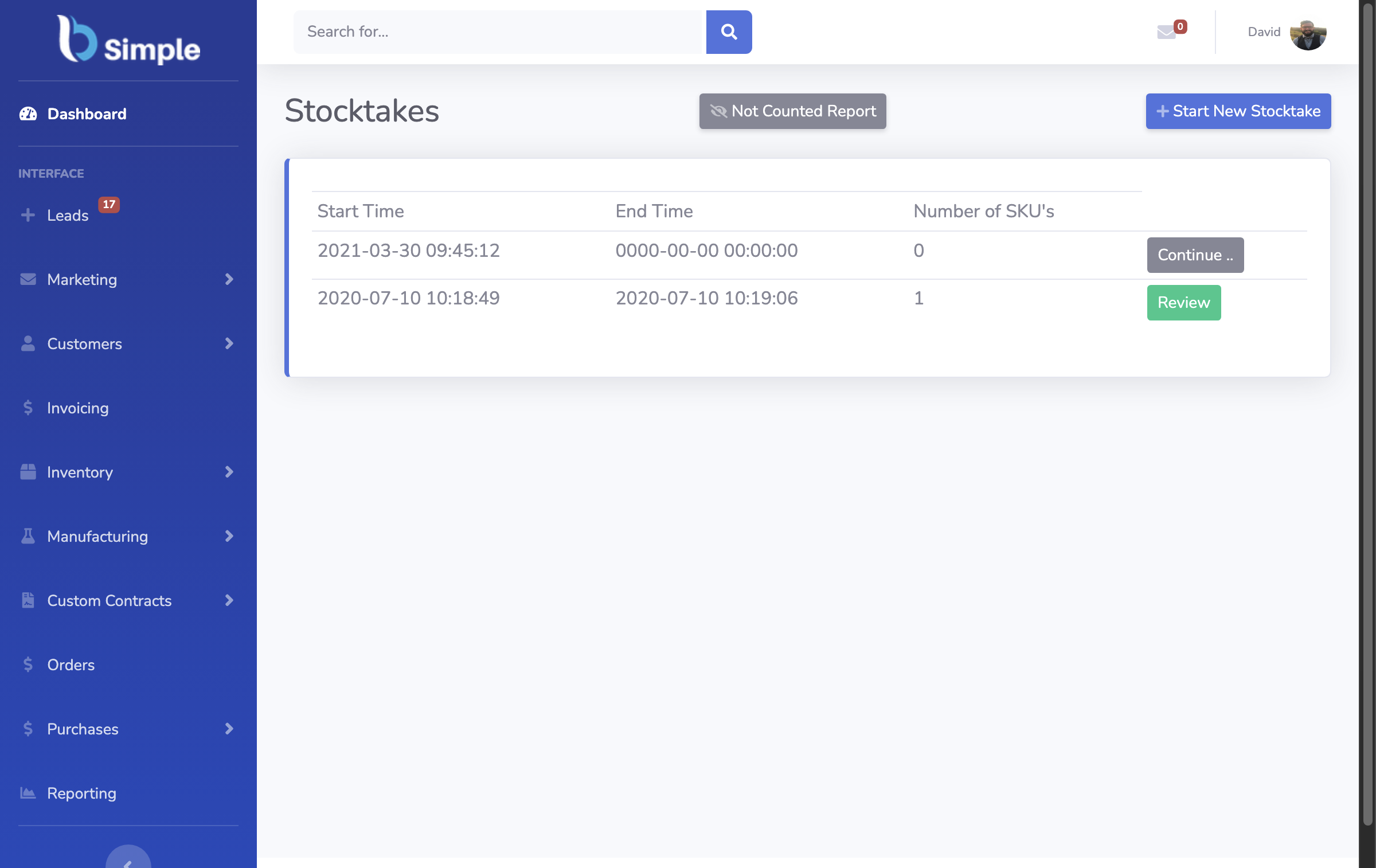
There is a middle route for teams who want the React work without owning the record: adopt maintained software and integrate. BSimple keeps the operational record — live multi-location stock, batches, purchasing, orders, invoicing handoff to the accounting system — and exposes a public REST API with scoped keys and read projections for reorder levels, stocktakes and purchase orders. A custom front end built against that API gets true data on day one, and the trial confirms the data model before a single component is written. For most businesses the whole question dissolves into the inventory app they already have versus one interface that finally fits how they work.

Frequently Asked Questions
Is React a good choice for an inventory management system?
Yes, for the frontend: inventory screens are list-and-form applications where React performs well. Just budget the project accordingly — the framework is a small fraction of the work compared with the data model, transactions and audit requirements underneath.
What backend should a React inventory system use?
Any stack the maintainer knows well, as long as the database is transactional and the model is movement-based: an append-only movement table with derived quantities. The API between React and the database should own all validation, not trust the client.
How long does it take to build one?
A working prototype — products, movements, one stock view — is days for an experienced developer. A trustworthy multi-user system with purchasing, stocktakes and audit history is months, and the maintenance tail after launch is permanent. Price both honestly before starting.
Can I build a React UI on top of BSimple instead?
Yes — that is what the public REST API is for. Scoped keys and read projections (reorder levels, stocktakes, purchase orders, suppliers, locations) let a custom front end render live BSimple data while the record, the guardrails and the integrations stay maintained.
Does BSimple itself use React?
BSimple is browser-based cloud software; we do not publish our internal frontend stack, and it should not influence the choice — what matters for buyers is the record, the workflow and the API, all of which the trial exercises directly.
BSimple